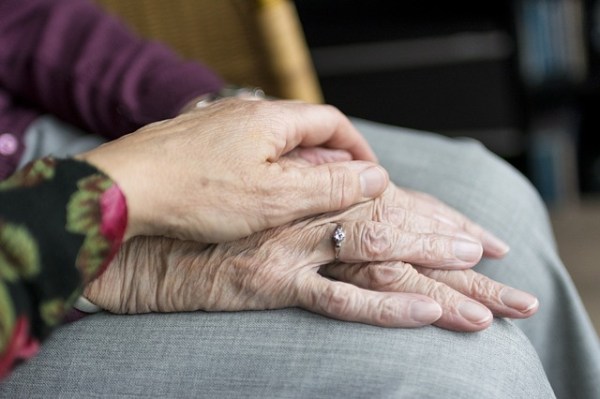
Dark lines
Dirt ingrained
Working hands
Racked with pain
Swollen joints
Twisted fingers
Broken nails
Stains that linger
Hands now useless
Still and cold
When did we
Become old?
Dark Lines
Two Women and Some Books
Dark lines
Dirt ingrained
Working hands
Racked with pain
Swollen joints
Twisted fingers
Broken nails
Stains that linger
Hands now useless
Still and cold
When did we
Become old?
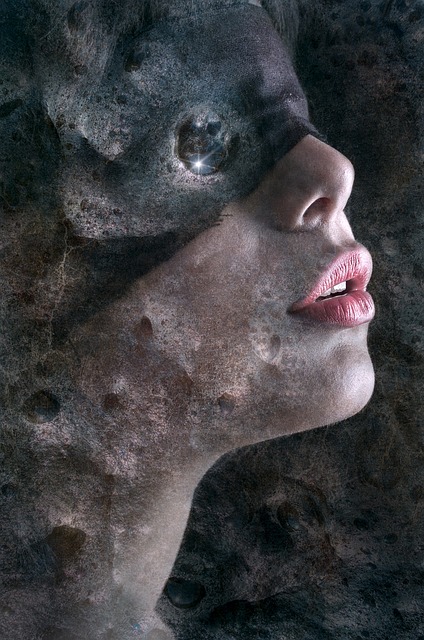
She sat alone in absolute blackness, just as she had always done. From far away she could hear the music of Carnival, under her cold little feet she could feel the rhythm of the drums, and her nose twitched as the smells of torches, and burnt sugar, and heated humanity, penetrated the narrow blackness of her cell.
She wondered what it might be like to be outside, but that wasn’t what Carnival held for her.
She was the sacrifice. The bastard seed whose mother had not survived her birth. They had, they said, taken her in out of the kindness of their hearts. Tonight she was to repay their care.
They would blindfold her and carry her through the streets to the temple, where the High Priest would put out her eyes. They had offered her poppy juice, but even though she was deathly afraid she had her pride.
Heavy footsteps in the corridor warned her that the time had come and she stood and faced the wall with. A voice outside the door bade her make ready and she closed her eyes. From behind her eyelids she became aware of the yellowness of lamplight, and she tried to keep that warmth in her head, even when hands came around her face and tied the blindfold tightly.
They hustled her out of her own space and took her in a direction she had not been before. Her nose caught the sense of water and something sweet before she was roughly pushed into a room with a cool smooth floor. Soft arms caught her before she fell and female voices cooed soothingly.
“Come lady.”
They bathed her and perfumed her, rubbed oils and unguents into her skin, and combed out her long hair. All the time they were careful to remind her to keep her eyes closed, but at least their hands were gentle. When she was polished to their satisfaction they dressed her in smooth soft draperies and covered her face with a mask. The final touches were soft boots and a fur-lined cloak to beat the cold of the longest night. She couldn’t remember the last time she had felt really warm, and the unaccustomed luxury of it almost undid her carefully cultivated serenity.
The fluttering women led her to a door she was sure was not the one by which she had entered the bathhouse.
It must have opened immediately, because she sensed space in front of her. Hands reached out to grasp her forearms, but they touched her with more respect than she was used to. This frightened her. It was, she thought, as if they were giving her dignity just in time to snatch it from her. For a moment she wished she had taken the poppy juice, but then her spine stiffened. She would endure.
They shepherded her down a long flight of shallow steps. The group halted at the bottom and two large hands spanned her waist, lifting her onto she knew not what. She was gently pressed into a seat. Then hands that felt almost apologetic fastened jingling chains to her wrists and ankles. They moved away and she understood where she was. She was outside. There was sky above her head. As she tried to process the irrational fear she felt, whatever she was sitting on rose into the air and began to move. Once her stomach settled, she understood, she was about to be carried at shoulder height out into the mayhem of Carnival.
The smell of street food reminded her that she hadn’t been fed for some days. Then music stabbed her ears like a tidal wave of sound. She wanted to laugh, to cry, to dance. But all she could do was sit in a swaying litter knowing that the crowds stared and pointed even though she was blind. The eunuchs bore her onward, and she thought ‘I’m alone here, why not open my eyes’. She peeped through her lashes to discover the gauzy mask actually allowed her to see. To see bright lanterns, multicoloured sparking lights in the sky, and the upturned faces of many many people. For somebody whose only glimpses of life had been taken at the risk of severest punishment, Carnival should have been terrifying. But it wasn’t, it was exhilarating and the sights and the sounds and the smells sang in her blood. For a while she even forgot her impending doom in the sheer thrill of the night.
Then it happened. There must have been something spilled on the street, because the left-hand bank of bearers all lost their footing together. The palanquin tilted at a crazy angle before falling into a foetid ditch with its helpless passenger still chained to the seat.
The next thing she knew was voices.
“Why didn’t she jump clear?”
She felt hands at her wrists.
“She couldn’t. The bastards chained her to the litter.”
“Why’d they do that? The sacrifice is willing ain’t she?”
She found her voice, although it sounded strange in her own ears. “Of course I’m willing. Willing to have my eyes ripped out. And whatever else they decide to do with me. Just like I was willing to be kept in a windowless cell all my life.”
She didn’t expect to be believed, but something in her voice must have told them she spoke truth because she heard the sound of splintering wood and she was thrown across a brawny shoulder. Then they were off and running, wriggling through the crowds with the ease of long practice. Out through the city gates they sprinted, long before the temple guard managed to fight its way to the crippled palanquin.
They brought her to the old woman who runs the menagerie that follows Carnival from city to city – who nodded just once.
Life as a keeper of big cats may be hard, but every morning she looks at the sunrise and is thankful for her eyes.

Build me a house for my dreams to indwell
Where hope forms the frame of each door
Build it of bricks that are solid and true
Each one a plan without flaw
With a meadow behind of the flowering kind
Enclosed with a fence that withstands
Where the crazy ideas I’ve had down the years
Gallop and gambol and expand.
Build it so high it caresses the sky
So the pinnacle of my ambition
Can fit safe ‘neath its roof from uncomfortable truth
And one day e’en come to fruition.
Make it a place where the sun always shines
And the rain falls so softly as well
A place where my dreams nurtured by sunbeams
Can grow to make heaven of hell.
Time is certainly a tricky thing. Mumsie seems to have scant grasp of it for sure. The amount of occasions she has declared she would be visiting the local tawdry tavern for ‘a quick one’, vowing to return within the hour, only to roll back inebriated post-midnight, are too numerous to count.
Indeed, it was whilst awaiting her return one such evening that I came upon a slender tome, a mere novella, which claimed to be a true classic of speculative fiction by a gentleman who preferred to be known by his initials, as is now such a modern trend. I recalled reading some platitudinous parable by the same author when I was at school, the story of a sighted man who discovers a country where everyone else is blind. But this, the cover blurb assured me, was no such. It was science fiction!
So to the review.
A man makes a time machine and is doing a lecture tour about it. He uses the device, goes hundreds of thousands of years into the future and lands in a social allegory. Here the effete and pretty Eloi (think elves) are hunted by the troglodytic Morlocks (think orcs). Our hero completely messes up when he tries to save the day, loses the girl (who is killed) and runs off in his time machine. He then stops at a couple more pointless and empty places on equally ridiculous timescales, before he somehow winds up back where he started in time for his next lecture.
One star for encouraging the entrepreneurial spirit by advocating lecture tours for scientists.
Moonbeam Farquhar Metheringham IV
You can find more of IVy’s profound thoughts in How To Start Writing A Book courtesy of E.M. Swift-Hook and Jane Jago.

“Papa. You have to fire Baba,” Eunice declared.
Her father looked at her.
“Why would that be?”
“Because she’s a Shinny. They are cannibals.”
“Cannibals? Wherever did you get that idea?”
“I read it on Scuttlebut.”
Papa raised his brows.
“Do you have any idea what scuttlebut is?”
“It’s the place where you go to find out stuff.”
“No. It’s not. It’s gossip. The word even means gossip.”
Eunice looked mulish. “Don’t be silly, Papa. If it’s on the web it must be true.”
“Oh child.”
He sent Baba away, afraid for her safety in the face of electronic lies.
An extract from The Long Game by Jane Jago.
‘… as it seems we have a while to wait I promised your wife I would tell you my story. But before I begin my part of the tale there are things I need to say about the thirteen houses, things that are secrets and must never leave these four walls.’ Her listeners nodded, so she carried on. ‘Many of the houses prize purity of line above anything. They marry cousin to cousin, and sometimes closer than that. This is, as anyone who breeds animals must know, not a good thing. The pure bloodlines of many of the families have been contaminated by inbreeding. There are idiots and deformed children who are quietly disposed of, but the inbreeding goes on. Consequently, the Neders are congenital idiots. The C’hin carry the falling sickness. Most of the Shaughnessy women are barren. The Frankish men are generally impotent. And the Schiapetti are just plain depraved. I could go on, but I’m sure you have the picture.’
‘My own story begins when I was fourteen years old. Until that time, I lived with my parents at Massimo Schiapetti senior’s quinta two days’ ride south of the city. Just after my birthday, some women came from the big house and examined me to make sure I was a virgin, and that I was physically ready to bear children. Then they took me away from my parents to the house. There were a dozen or so of us, all told, gathered from the Schiapetti holdings, and after we’d been at the house for a few days we were bathed and nicely dressed and then paraded in front of the master and three strange men. The master pointed out a redhead from the distrada, and the three men indicated an interest in two other girls, myself and a shepherd’s daughter. I later came to understand that the Schiapetti sold me that day. Sold both of us. My companion was about seventeen, and as blonde as a wheat field, with impressive breasts and a stoical temperament, I was tiny, white blonde and scared out of my wits. If I had not had that older girl with me I don’t honestly know how I would have managed. Her name was Breda, and as we were whisked across the country in a closed carriage, she explained exactly what was likely to happen to us. She made it seem bearable and told me it wouldn’t be forever. She knew of other girls who had been taken this way and were later returned to their families more or less unharmed, and with a gift of money.’
‘After what seemed to me to be an endless journey we were brought to a hunting lodge where there were about twenty girls ranging in age from seventeen to twelve years. We were there to serve the pleasure of Seamus Shaughnessy, and to bear him the children his well-born and well-connected wife could not. The housekeeper wasn’t unkind, but she did make it clear that there was no escape, and that we’d better please the master or else. We never asked what ‘or else’ was, we were too afraid. Seamus was by that time nearing seventy, and a life of dissipation had left its mark on him. I prayed that he wouldn’t want me, but he did. Myself, Breda, and the twelve-year-old were chosen. Then the young one disappeared. I learned many years later that she threw herself off the roof after her first night in the master’s bed. I guess I’m of a more pragmatic turn of mind as I managed to take Breda’s advice and concentrate on the prospect of a good breakfast while the old sot was fumbling about me. At the end of a fairly unpleasant fortnight he returned to the city and we waited. As it turned out we were both with child. Seamus was tickled pink and we were brought to the family’s estate by the great river to give birth. Lady Shaughnessy was also brought to the estate to await the delivery of ‘her’ children. She was, it turned out, a deeply maternal woman, who wanted babies to love and care for. She was even kind to us.’
‘I went into labour first, and a long difficult time I had of it. I was really much too young and too small to have a baby, but, fortunately for me, I come of tough stock and I survived. I only saw my daughter for a few moments before they took her away. My friend Breda’s son was born dead. The cord was around his throat, and the midwife they employed wasn’t skilled. Breda managed to creep into my room three days after my baby was born to tell me that she had plenty of good milk and was feeding my little girl, also that the family had decided to keep her on as wet nurse and then nursemaid. She told me that my baby had been named Anita, and promised to love her. With that I had to be satisfied. I never saw either one again.’
‘I was sent home after my body healed, with a large present of money. It was enough for my family to leave the quinta, and buy a small inn in a valley close to the Imperial highway. I went north to learn healing and midwifery, determined to protect women from the unskilled and ham-fisted ‘care’ that cost Breda her child and almost cost me my life. I spent the next twenty-plus years in hospitals and monasteries, biding my time until my youthful looks faded and I could return to the city and ply my trade.’
‘In the meantime, my daughter grew to be a real beauty, as famed for her gentle kindness as the loveliness of her face. She was, it is said, very much in love with a half cousin from a humble branch of her father’s family, but such a marriage for Seamus Shaughnessy’s only daughter was not to be countenanced. And when she was nineteen her father married her to the forty-year-old Massimo Schiapetti. It was, by all accounts a loveless match, although Massimo was kind enough to his wife, and pleased to find her fertile. A year after the wedding she presented him with a son, who they named Rodrigo: he died of influenza at the age of four. Two years after Rodrigo’s birth Anita fell pregnant again, this time she gave Massimo a daughter, but lost her own life in the process. I arrived back in the city in time to learn that I was a grandmother, and my daughter was dead.’ An paused for a moment and wiped her tears cheeks with her wrinkled old hands.
‘My granddaughter was name Anaya, and she inherited her mother’s beauty, but her father’s nature, growing more and more vicious and depraved as she grew older. She had a succession of lovers and was notorious for her treatment of her servants. When she was twenty-five her father negotiated a marriage with the Emperor’s only son. It was a politically splendid move, but on a personal level it could scarcely have been worse. She loathed him because he either couldn’t or wouldn’t satisfy her sexually, and he despised her because she was stupid and vicious. Even so, they remained married, and I oversaw five accouchements in which she presented her lord with six children. Five sons and Princess Ana.’
‘So there you have it. My daughter, conceived by rape, and married for politics. My granddaughter, conceived for politics, married for politics, and murdered for politics. And my great-granddaughter, also conceived for politics, but with half a chance of making a life of her own…’
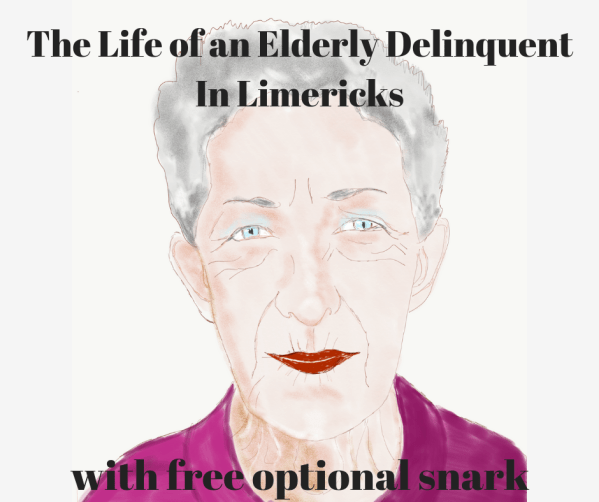
The life of an elderly delinquent in limericks – with free optional snark…
I am old, which in turn makes me proof
Against all of the follies of youth
I don’t think that the net
Is the coolest place yet
Or that reading it makes it the truth
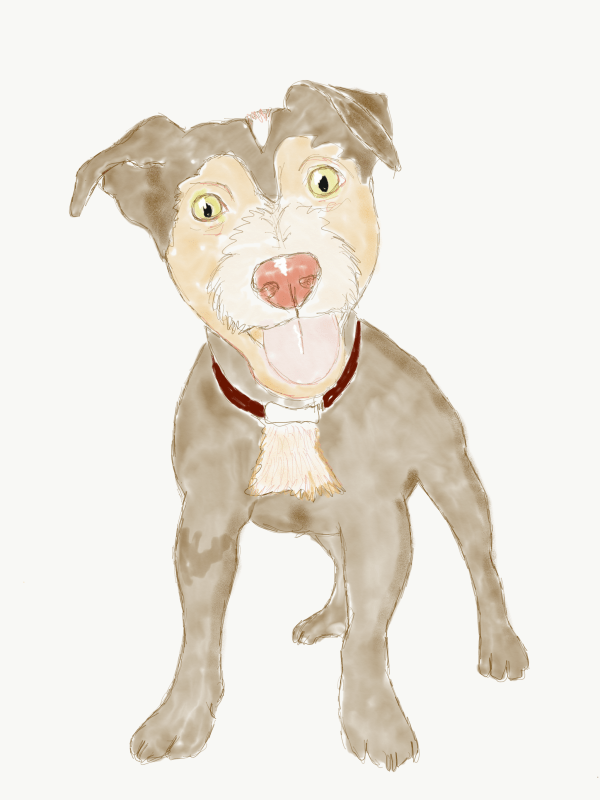
Tom nursed Mollie through the ravages of the cruelest of wasting diseases. When he finally closed her eyes the rest of his life stretched empty before him.
His daughter turned up with a shivering puppy under her arm, and he snarled at her.
“What makes you think I want a dog!”
“I don’t think you do, but I promised Mum.”
So Chunky came to stay.
Tom awoke one morning to the memory of Mollie’s voice.
“We always wanted a dog.”
Tom smiled at Chunky and understood at last.
The only thing he could do for Mollie now was to live.
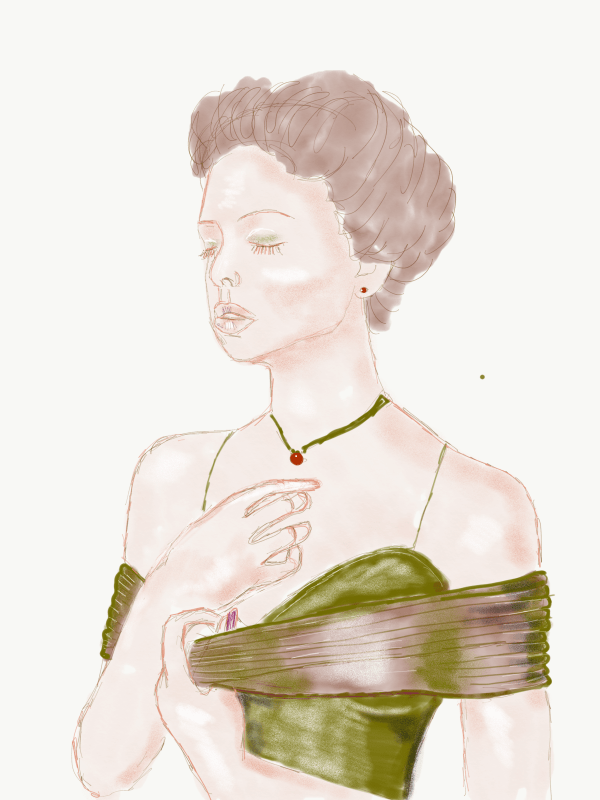
She loved him so much, closing her eyes to his little vanities and the pinpricks of disrespect. He was, she knew, so ingrained in her heart that she would always forgive him. Even after a night when all she could do was cry, he only had to touch her cheek and the sun started to shine again.
She loved him so much. Feeling superior to her friends whose husbands were not the centre of the universe, she overlooked his meanness and his mistrust.
When he began criticising her every move she accepted that she must be doing something wrong and tried everything she could do to ameliorate his disgust. She knew it was just one more storm to weather and kept her face turned towards the sun.
Only it didn’t seem as if he was going to come around any time soon. And it hurt her heart to see the contempt in his eyes.
One night, when he was ‘away on business’ she sat looking at the television through dull unseeing eyes, when a phrase leapt out of the screen and forced her to wakefulness.
‘Abuse doesn’t always leave bruises.’
She felt herself falling, and curled into a foetal lump on the rough tweed carpet where she fell prey to the cruel claws of the cold place in her chest where her too-trusting heart had been.
She loved him so much that when he returned from his tryst with his latest mistress he found her still curled on the carpet. He pulled at her shoulder with an impatient hand, only to have her lifeless body roll onto its back.
It seemed to him that he would never forget the sadness in her dead eyes.

From Iconoclast: Mistrust and Treason, a Fortune’s Fools by E.M. Swift-Hook.
The building was huge. Even the elevator was a comfortably furnished room with ambianced views through false windows clearly streamed from the grounds outside.
Having reached an upper floor, the aide led him through a series of rooms which formed a corridor of adjacent chambers. These contained some kind of art gallery or museum, or most probably both, with real objects sitting on plinths and the ambiance set to reflect something of their original culture and history. It was impossible not to stare at some of the more interesting items on display.
“Var Sarava is a great collector,” the aide said, as Grim found himself standing, mouth slightly agape before a gorgeous mythological creature the size of his own head which had apparently been carved from a single, huge gemstone. He was impressed against his will.
When he was shown into the final room, the normality of it was disorienting after the opulence of the gallery. A very human scale and comfortable social room, with its focus where deep-cushioned chairs were set around a delicately inlaid table. There were two windows on adjacent walls, both framed with looping curtains, and showing very different views of the grounds. One wall had shelving with antique ornaments and beautifully bound old-style books. For a moment, as the aide quietly left and closed the door, Grim didn’t realise that there was anyone else in the room.
She stood perfectly still beside one of the windows. A petite and slender figure with softly blonde hair and a face that looked as if it had been flesh-cast from a mould, the sort of preternatural smoothness the extremely elderly achieved. She wore a blue garment, which could only be described as a robe. Its elegance was in its simplicity, its ornamentation in the way the colour was reflected, highlighting the brilliance of the blue eyes that watched Grim as he noticed her presence.
“Vor Dugsdall. I apologise for compelling you here to endure such a garish display of wealth. This was never my favourite home, but it is the one I am now, sadly, obliged to inhabit.”
Grim wondered how he was supposed to take that. He decided that face value was the best way.
“I could think of worse places to have to live,” he said.
A quirk of emotion danced in the dramatically blue eyes. “I am sure that is so.” She moved one hand and the room’s ambiance resolved itself from comfortable social area to plush business office. The curtains vanished to be replaced by neatly folded blinds, the inlaid table became smooth, the flooring changed from wood parquet to sleek moulded tiles, the shelving became a plain wall where art could screen and the ambiant colours shifted from warm browns and dark reds to cooler blues and black. The small woman walked with a very erect and slightly stiff gait across to Grim.
“Now you must try and convince me that I have made a good decision to involve myself in all this again.”

