The life of an elderly delinquent in limericks – with free optional snark…
I am old, and my face is a mess
It looks like a crushed cotton dress
It’s wrinkled and broke
Stained badly with smoke
And my wattles hang down on my chest
Two Women and Some Books

The life of an elderly delinquent in limericks – with free optional snark…
I am old, and my face is a mess
It looks like a crushed cotton dress
It’s wrinkled and broke
Stained badly with smoke
And my wattles hang down on my chest

The rapturous applause ringing in her ears, Zhang Xiu Ying stepped off the podium and returned to her seat. Although it was wonderful to have the sense of support and approval for her unpublished and un-peer-reviewed paper at this symposium, her thoughts were already on the submissions process to the few scientific journals respected in her field.
In the audience, Krish Anand thought the Chinese girl who had been speaking looked cute and he posted a picture of her to his social media. As an afterthought, since he did not want anyone assuming he was sexist, he added a few words about what she had been saying.
Her news blog needed livening up, so Florencia Quezada put the picture of the pretty Chinese academic on her page, read the words Krish had put with it and – as she didn’t really understand it – added some thoughts and ideas of her own to make it into something a bit more substantial.
It was a quiet day on RadioNews247 and Bjorn Olafsson had been searching the internet desperately for something to feed the ravenous maw of twenty-four-hour news coverage. There had been no terrorist attacks – or at least none in any place the 247 audience would have ever heard of or cared about; the politicians’ tweets had been banal to dull and lacking in controversy and he was at his wit’s end. Then he saw it. Grinning with triumph he wrote a few lines to go in the next ‘On The Hour’ bulletin and started phoning a couple of people he knew would be free and willing to comment on air.
Zac Wade had the radio on as he was driving home. He didn’t like TV as that meant you might get noticed somewhere by someone. No cell phone for the same reason and no computer neither. Life off-grid was safest. You could keep out the government and defend your own land. The news bulletin made him put his foot to the floor of his battered old Dodge cab-over pickup. Them aliens was invading – said so on the news.
Waiting to board her plane home, Zhang Xiu Ying glanced at her newsfeed ‘Chinese Scientist Proves Aliens Are Invading’. There was a picture of a narrow, hairless face with black olive-shaped eyes. Clickbait crap. She scrolled on without really thinking more about it. She was just happy her article speculating on tiny anomalous ferric inclusions in a layer of Pleistocene clay as being extra-terrestrial from a meteor shower was being considered for a quality geological journal.
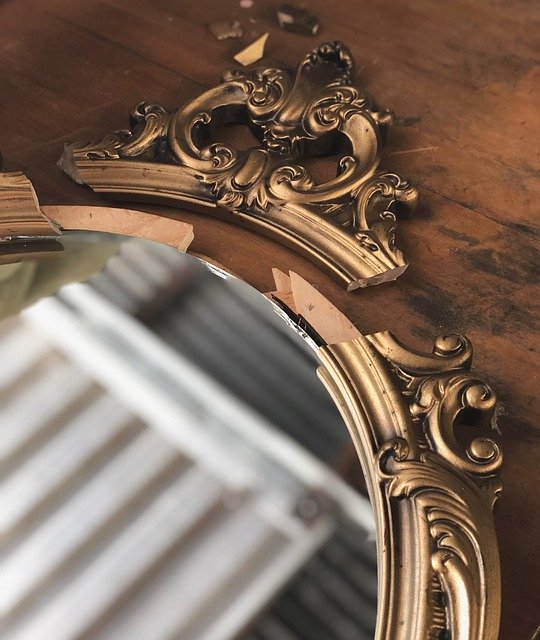
The cruelty of the mirror all but broke her heart. In its blue depths the raised scars cross her face shone like red and purple lightning bolts. She put up a shaking hand and touched her ridged cheek. The nurse made to take the mirror away, but she grasped the handle.
“Leave it,” she snapped. “I have to get use to it. Now go away there’s a good girl.”
The nurse fled.
Her personal physician ran into the room with his white coat flying behind him.
She smiled her twisted smile.
“It’s okay Bastian. I’m just reflecting on my reflection.”

Early November MDCCLXXVII
The golden autumnal weather had given way to a chilly November. Dai Llewellyn sat at his desk by the broad window that looked out over the walled garden of his residence. He still struggled to think of it as ‘home’. Maybe it was the eagle over the door that sneered at him every time he crossed the threshold with its silent message that this was a villa designated sub aquila – Roman only. He wondered if he could arrange to get the facade remodelled on some excuse so above the name of the house, the poppies of its name were wreathed there instead.
He had been absently playing with the silver band around his index finger as he thought these near treasonous thoughts. Then he looked at the ring, it’s intricate blend of Celtic knots and Roman letters and symbols. It marked him out as a citizen – as Roman as his beloved wife Julia and without it she could not be his. She had given him this ring to remind him that their worlds were enriched by each other, not diminished.
Days like this he had to be reminded of that. Sighing, he tried to focus again on the information in front of him. A breakdown of the tenancy of a group of insulae on the rougher edge of Viriconium’s expanding commercial area. The buildings were owned by a Britannia wide property agency – Titus Holdings. They provided housing for over four hundred families – most were single-parent households or impoverished elderly folk who either had no family or whose sons and daughters lacked the space and resources to take them in. It was one of the poorest communities in the city and Dai knew that Titus Holdings did little for its tenants except ensure the structural integrity of the building was maintained. And that was only to avoid facing criminal charges if they should collapse.
He had not visited the estate himself since his return to Viriconium after almost a decade living in Londinium, but his Senior Investigator, Bryn Cartivel had done so and his account had been harrowing.
“I’m not saying I’ve not seen as bad – we both have. Think the dreg ends of the Caligula, but that was Londinium and most there were unregistered and criminals. These people are just desperately poor. Most do seasonal work in the farms around or go begging even. Half the kids look like they’ve not had a decent meal in their lives and most all the old folk are ill from the mould and damp. I was told there is a local joke that the estate has to restock each spring ‘cos so many don’t make it through the winter.” Bryn shook his head at the thought. “It’s grim, Bard.”
“Grim – but not illegal.” Dai had a bitter taste in his mouth as he spoke. “The law says no one forces those people to live there, they choose to do so. That means they choose to accept the conditions the owner offers. After all, if they don’t like it they can always leave.”
“I can see it now you put it that way. They are spoiled for choice with alternatives – sleep on the streets, or under a bridge by the river – or maybe in a nice comfy hedgerow.”
Dai sighed.
“Roman logic. People who can’t imagine what it is like to be so poor the very concept of ‘choice’ about anything in life is meaningless.”
“Not all Romans are rich – your Julia was born in a place not so very different, from what my Gwen tells me.”
“That’s true, but it’s the rich ones that make the laws.”
From ‘Dying for a Home’ a short story in The First Dai and Julia Omnibus by E.M. Swift-Hook and Jane Jago.
The life of an elderly delinquent in limericks – with free optional snark…
I am old, and I number my years
In laughter and fun, not in tears
If there’s one thing I’ve learned
Is that fate can be turned
By friendship and lovers, and beers
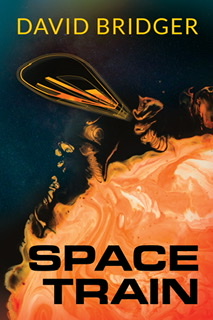
In Space Train by David Bridger Firefly meets Wagon Train. Space pioneers, frontier worlds, alien societies, war refugees rebuilding their lives, heroes with heart, loving relationships of many flavors, and a scarily clever ruthless enemy.
1. Gibson Shipyard, Moon Allegro
Tom planted his magnetic boots firmly apart on Mary Mackin’s roof and stood tall to defy the first sickening wave of vertigo. Before every long transit, he always stole twenty minutes to stand on the highest point of his ship’s enormous whale-like hull, three hundred meters above the refit dock. It was terrifying, but in the two hundred days to come he would treasure the memory of it.
Voices murmured in his earpiece: crewmembers completing their final refit-acceptance checks and reporting the results to his first mate, George, who’d worked and eaten and sometimes even slept down in the control room for the past twelve days straight.
George was Tom’s lifelong friend. He’d been with Mary Mackin from the start, and knew her as well as Tom did. He was every bit as capable of taking her to the stars, and Tom wouldn’t dream of interfering with his work.
Besides, right now was the last chance he’d get to ride his roof for another year.
The enormity of space pressed against the atmosphere dome high above. He lifted his face to see it stretching away forever, and the vertigo surged.
Stars swirled. He closed his eyes and breathed steadily, deliberately, counting, splaying his fingers wide beside his hips to maintain balance until he could crack open his eyelids safely and look ahead again.
The planet Main was rising over Allegro’s ragged black horizon. To its right, Allegro’s distant sister moon Adagio glowed like frozen milk at dawn.
And now, to Main’s left, the first burning blinding bright golden sliver of sun rose too. Voice, the Tempists called it, but Tom didn’t do religion so the sun worked just fine for him.
Main’s cities were lit up across its only living continent, the northern landmass of Manti. Dull yellow glints beneath the blanket of night. In contrast, its three-and-a-half dead continents lay dark and ruined even in the flat light of day. Main’s people had mined out their planet a hundred years ago to feed Manti’s huge cities. Still hungry, they’d mined out its two moons. Then they’d moved on outward to mine the binary planets, Major and Minor, and the asteroid belt.
Vertigo slewed his brain sideways. He managed to stay upright and keep his breakfast down where it belonged, while the universe tilted slowly back to where it belonged.
Major and Minor stood out bold and bright in the black space beyond Adagio, halfway between Willerby, Tom’s home world at the far habitable edge of the system, and the Stiletto Nebula smudged like torn lace across Allegro’s horizon.
Somewhere in that deep pocket of emptiness lived the worst day of his life, still filled with dread after twelve haunted years.
The screams of eighty-seven terrified people dying in flames filled his mind. His seven crewmembers, all resistance volunteers like him and close as family since the first days of the war, and sixteen actual families of refugees. Thirty-nine men and women and their forty-one children, who’d all trusted him to take them to safety.
A Bite of… David Bridger
Our world is terrible, but the one in Space Train is even worse. I’m writing what I see as the inevitable end stage of our blindly suicidal capitalism. However, I would rather live there and then than here and now, because in this book there is an escape route from the planetary carnage. My hero Tom captains a space freighter that takes refugee families to start new lives far away across the galaxy.
Why do I breathe? ☺
Rather a lot, actually, but it’s all fictionalised and completely deniable.
David Bridger settled in England’s West Country after twenty years of ocean-based mischief, during which he worked as a lifeguard, a sailor, an intelligence gatherer, and an investigator.
Then he got hurt, came home a bit physically broken, and for good measure caught a severe Myalgic Encephalomyelitis (ME) virus in a military hospital. Now he writes science fiction and fantasy novels. Sometimes they’re informed by his experiences out on the crinkly blue. You can find him on Facebook, Twitter, Instagram or via his publisher.

She had walked this way many times before, but tonight it was different. There was an indefinable hunger in the muggy night air, while the naked trees seemed to be crowding onto the path and reaching towards her with their twiggy fingers.
When the man leapt from behind the crazily leaning gravestone it was almost a relief. She barely registered his state of semi-undress, and even his evident excitement wasn’t enough to frighten her.
His clawed fingers reached for her unprotected throat, but they never reached her skin.
Behind her his agonised screams went on for quite some time.
Maybe by Jane Jago and E.M. Swift-Hook . Sometimes we walk the edges of realty…
They ate in an atmosphere of surprising companionship and Annis was surprised to see that humans could be mannerly and tidy in their eating habits. Jessica finished her bowl of soup and her share of the flat bread.
“Where do you get…”
“I trade.”
Jessica twined her fingers together and Annis picked up her nervous confusion.
“Not worry. Ask.”
“I’ve been here hours, and by my reckoning it should be morning by now. Why is it still dark?”
“Night is long here…”
“And what is your name? And what was that thing? And why do the cats obey you? And why is the vampire following me? And what are you doing here? And why did you help me? And…”
Annis waited until she finally wound down before showing her teeth in a grin. The female was less passive and stupid than she had seemed, this was good.
“I one question. Then tell.”
“What question?”
“Why you lie?”
“What do you mean?”
“You say not know what boys do. You know. You fear.”
One single tear rolled down Jessica’s cheek.
“You’re right. I do know. It happened to me before. And it broke me. Inside. And outside too.”
Annis looked into the tear-drenched eyes and felt an emotion she didn’t understand. We might call it empathy or pity. She put out a hand and patted Jessica’s arm gently.
“I name Annis. Been here always. Me and cats.”
She was about to say more when the sound of hurdy-gurdy music split the air. Music from a hundred directions, followed by the sounds of laughter and the smell of oil and burnt sugar. Jessica cringed, and Annis took her hand.
“Come see.”
Annis pulled open the rough wooden shutters and the two women stood shoulder to shoulder looking down on the fairground as it must once have been. It was a world of flashing lights and pressing bodies. The sense of excitement was so strong you could almost taste it, as the punters were drawn in by the magic of the fairground at night.
“Look,” Annis pointed and Jessica could see Roald walking among the shades with a puzzled expression on his handsome face.
CHAPTER THREE: JESSICA
It was when Annis opened the shutters and let in the night that Jessica finally began to realise that this was not anything ordinary. Up to that point, the unreality of it had left her cushioned to the strangeness, and she had heard the girl speak of vampires, blood eaters and old ones, but not really felt it was real. Even the huge felines, part of her was convinced were just large dogs she was misperceiving in the dimness.
But then the shutters were open and the night marched in, a grotesque danse macabre of vision in which Roald stood out like a three-dimensional solid against a painted background. The people were there, but not there.
Jessica closed her eyes and counted silently to ten, then opened them again. The insubstantial crowd still jostled its way through the park and Roald had vanished from view. She looked at the girl – the child, Annis and for a moment thought how like the scene outside she seemed. Then the strange dark eyes shifted their gaze to look at her and the illusion vanished.
“We’re not in Kansas anymore are we?” Jessica said, pushing a smile onto her face. That was met with a slight frown, as if Jess had used a foreign language.
“Shelley’s,” the girl insisted.
She seemed a very literal child. Jess wondered if she might have Asperger’s or something similar. It was the kind of mundane thought her mind always came up with when faced with something too difficult. Like the day she had been told her parents were both dead. She had heard the words, then looked at the shoes the policewoman had worn and wondered why there was mud on the side of one of them. Catching herself in the act this time, Jess looked back out of the window and tried to take in what she was really seeing.
Part 8 of Maybe will be here next week…

The wind today’s a hooligan
Playing with roadside mess
Laughing aloud in naked trees
And doing its level best
To drag away our winter hats
And tie knots in our hair
We stumble as it steals our breath
It really doesn’t care
The dogs ahead are jumping mad
And flirting with the blow
They scatter the mud and barking run
With eyes that brightly glow
The wind today’s a hooligan
A dancing dervish child
We are too old to play with him
And he’s too strong and wild
One of the poems you will find in In Verse, a new collection of poems by Jane Jago and E.M. Swift-Hook.
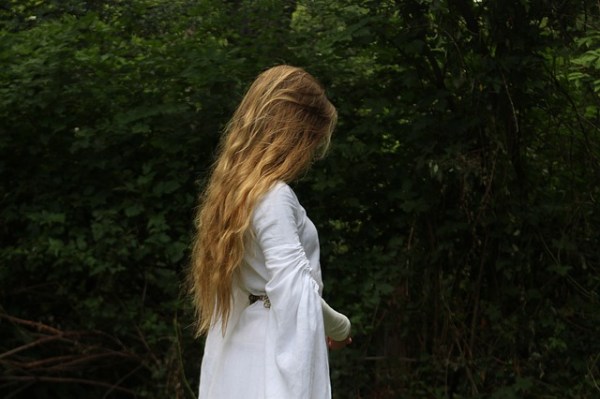
From Times of Change the second book in Fortune’s Fools and volume two of Transgressor Trilogy by E.M. Swift-Hook.
He was waiting in the courtyard for his pony to be brought to him when an excited shriek of glee made him turn. A small human cannonball with vivid golden-red hair threw itself at him and wound thin arms around his neck.
“Tell me a story, tell me a story!” The Most Honoured Princess, the Lady Karlynne Roussal looked up into his face and repeated her demand more insistently. Durban was very aware of the nurse, Turla, looking disapproving a few paces away and in deference to her expression he disentangled himself gently and held the heiress of Harkera at arm’s length returning her smile.
“I will, with the greatest pleasure, Most Honoured Lady, but alas right now I am engaged on your Lady mother’s most urgent business.” Karlynne looked so crestfallen he had to soften the blow. “I will be back soon and then I will tell you a story – I promise.” The child brightened, her face like the sky when the clouds have passed.
“I want a story about a young princess who is rescued from an evil demon by a handsome Vavasor,” she told him firmly. Durban felt a strange sensation of fatality and it took more conscious effort than usual to maintain his warm smile as he looked down into the eager face.
“Ah – well in many stories it is an evil Vavasor who kidnaps the young princess, but the princess is so brave she wins free and lives happily ever after.”
Karlynne seemed to consider the idea seriously for a moment then shook her head vigorously.
“No. I want the Vavasor to be handsome and good and brave,” she insisted. “And he must really kiss the princess – really-truly, not just pretend.”
“You are too old to listen to such stories, Highness.” The old nurse had closed the distance between them and she sounded cross. She never approved of Durban’s effect on Karlynne, feeling it over-excited the child and he knew she had protested so to Jaelya. “And decent folk have more important things to do than storytelling anyways.” This last was accompanied by a strong glare at Durban, who merely shifted his smile to embrace Turla as well.
“No one is ever too old for stories,” he corrected gently. “Storytelling is one of the most revered and respected professions amongst the Northern peoples.”
“Filling a young girl’s head with daft tales?” Turla sounded contemptuous. “You just don’t know where that will lead.” It was as close to an accusation as Durban had ever heard.
“You’re not too busy are you?” Karlynne asked oblivious to the hostile adult undercurrents around her. There was a note of genuine appeal in her tone which tugged at his heart. For a moment he saw the world through her young eyes, where the adults she cared most about were always putting her off with the excuse of eternal important events that needed dealing with – things that were obviously so much more important than Karlynne in their lives.
“Of course I am not,” he told her warmly and saw the delight glow in her eyes. “If your Lady mother agrees, then I shall most certainly tell you a story when I have been to Cressida. But right now, I can see you are about to go riding with your friends.”
On the other side of the courtyard a group of ponies was being led out and three girls, all slightly older than Karlynne, were waiting with an escort. As Durban looked across he saw another figure join them from the palace, a young nobleman whom he recognised. The young man exchanged a familial hug and a few words with one of the girls, who pointed across to Karlynne. The new arrival followed her pointing finger and his expression changed instantly to one of rising anger.
“You do promise?” Karlynne tugged on Durban’s arm. He bathed her in his sunniest, most carefree smile and made a slicing action with one finger over his own throat in the childhood gesture and oath of unbreakable commitment.
“I will, I vow, or may I die,” he promised. This seemed to satisfy Karlynne who embraced him tightly, pressing her cheek against his chest before she allowed the glowering Turla to lead her away to join the group of girls on the far side of the courtyard.
Durban’s pony stood waiting and he took the reins from the groom with a brief word of thanks, flipping a coin to the lad, who caught it grinning. He mounted and was turning to leave the courtyard only to find his way barred by the young nobleman, who was now mounted on a superb pony. His face was dark with anger. Durban smiled at him winningly.
“Honoured One, how may I be of service to the Vavasor Ramyth?”
“Stay away from her, Chola,” the younger man snapped. “I don’t know what you are doing here, like some kind of vulture picking over the bones of Harkeran gossip to sell to the highest bidder, or are you spying for Vyazin perhaps?”
Durban took a moment to realise his rhetoric was not, in fact, rhetorical.
“I am here on business for the Regent,” he replied evenly, there was no point denying that. It would be the gossip of the servant quarters anyway by now.
“Spilling your poison in her ears,” Ramyth snarled, driving his mount closer in towards Durban’s making its ears pull back and its eyes narrow. Durban’s pony, placid and mature, ignored the hostility as did her rider.
“I am the Regent’s most loyal servant in all things, Honoured One,” Durban responded smoothly and with total honesty.
“Loyal servant?” Ramyth rasped, his boyish face now puce with emotion. He spat at Durban, the saliva hitting him full in the face. Durban did not flinch. “If the Princess commands your presence you will make your excuses, do you understand? If I find you have been near her, I will cut your vicious tongue from your mouth and have you flogged for the common rumourmonger you are.”
Durban heard him out without response. Ramyth was a Vavasor and himself a commoner – had he been acknowledged as a Harkeran citizen, that would have given him protection under the law. But the ruling Dewan had yet to be persuaded to extend full legal protection to those who were not Harkeran. So, in theory, the Vavasor could carry out his threat there and then in the courtyard of the palace and be fully within his rights to do so. In practice, Ramyth was probably too wise to take such action against one he knew was considered to be of value by the Regent, but his fury was still intense.
“Your will, Honoured One,” Durban said at last. “We are both the Regent’s to command.”
For a moment he thought he had pushed too far as the Vavasor’s hand went to his sword. But then the young nobleman seemed to come to himself and pulled his pony’s head round, too roughly for the highly bred beast, making it buck briefly and squeal in protest.
Durban remained unmoving until Ramyth had ridden out in the wake of the group of young girls and their escort, then he wiped his face. It seemed the Vavasor was making it a personal chore to ensure the Princess had no further unfortunate encounters whilst out riding.

