Sunday Serial – Dying to be Roman XXVI

Dying to be Roman by Jane Jago and E.M. Swift-Hook is a whodunit set in a modern day Britain where the Roman Empire still rules. If you missed previous episodes you can start reading from the beginning.

Julia was barely conscious, but she was aware enough to know that this respite from beating boded her no good at all. She should hear the woman breathing heavily, almost as if sated by sex, and the man gave a coarse laugh.
“Better now, domina?”
“I am, but it’s such a shame we can’t keep this one to play with. She’s so small it’s like beating a child.”
“You are insatiable. Though you do have a point.”
Julia felt something at her back and realised that somebody was actually licking her wounds. It was all she could do not to scream. She made a huge effort of will and dragged her mind away from the torture chamber, choosing instead to contemplate Dai Llewelyn and all the disturbing emotions he evoked in her that she had kept firmly in check through denial. A furtive tear coursed its way down her cheek as she allowed herself to feel regret that the only hands she was likely to feel on her body would be driven by hatred and perverse lust. The licking stopped and a rough hand tangled itself in her short curls.
“Wake up, lupa. You can’t pass out on us now.”
The man’s other hand slapped her face first one side and then the other. When she opened her eyes, she found his face so close to hers that she could smell the cloves and menthe on his breath. He smiled, and somehow that was more frightening than a snarl would have been.
You are the cause of our downfall,” he whispered. “Because of you we have had to hide in this cellar, without even running water or electricity, and we are likely to lose all we have worked for. Don’t mistake me though, you have only delayed, not defeated us. We have friends in high places in both Rome and Karakorum. This is just an inconvenience, but one you are going to pay for.”
Julia heard the woman’s indrawn breath a second before she felt another searing pain. She had been stabbed in the thigh with something long and sharp and rasping.
The man at Julia’s head hissed irritation. “Stop playing and hand me the sopio,” he ordered.
The woman laughed, low and throaty and Julia heard her move away. A moment later the man grunted. He pulled her head back so viciously he all but dislocated her neck, then he put a metal contrivance right in front of her eyes. He laughed, a surprisingly high-pitched sound before letting her hair go so suddenly that she hit her forehead against the crossbar of the frame she was bound to and saw stars.
“That, my dear,” he gloated, “is the instrument of your death.”
She felt hands parting her nether cheeks and then the metal was forced into her with agonising brutality. She didn’t scream or cry, but she wasn’t sure how much more it would take to break her. The sopio was removed with a vicious twist and Julia concentrated on simply breathing.
She felt breath against her ear, and this time it was the woman who spoke.
“The next time you feel that it will have been heated in the brazier until it glows red. If you aren’t dead by the time it is cool enough to handle, I will snap your neck myself. Enjoy.”
It became very quiet in the dark room and Julia set herself the simple task of dying with as much dignity as possible. She closed her mind to the sounds of excitement as her captors watched the brazier with barely concealed impatience. Once again, her thoughts wandered to a certain moody Celt, whose blue eyes seemed to offer a means of escape at this eleventh hour, even if it was one that only existed in her imagination. Goodbye Llewelyn, she whispered in the vaults of her mind. It was an education. Then she closed her eyes and composed a prayer for the repose of her own soul.

Jane Jago and E.M. Swift-Hook

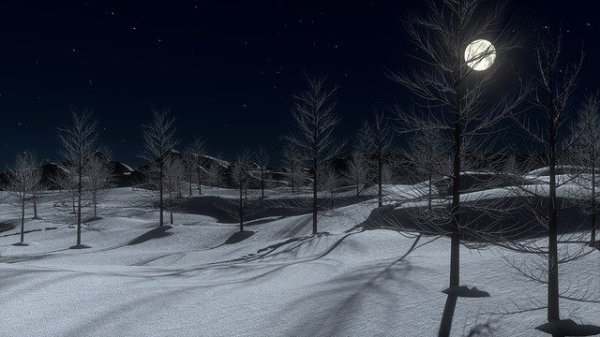
Snowy Window

Somehow the window
Disappears
Allowing the snow
To chill my ears
To ache my teeth 
And wet my head 
Even as I lay
In bed
Somehow the winter
Echoes the life
Of a person who was
Once a wife

©jj 2019

Weekend Wind-Down – The Zombie Holiday

Jane Jago’s prizewinning take on the zombie trope.

It was the hottest June day since records began, or so they said, and it was certainly the hottest anyone could remember. In the mundane world of humans, roads melted, and people fell into inexplicable rages. 
Whatever the rights and wrongs of people dealing with it, there was no arguing that it was hot, darned hot. And, if you think about that with any semblance of logic, it really wasn’t the best day for a zombie picnic. But the date was the date, and June twenty-three had always been the zombie holiday. 
The Creator, not having the heart to disappoint these, the most reviled of all the creatures that crawl on the earth, opened the portals at dawn. The zombies poured in from every reality and every timeline, some bled and oozed, some stumbled and mumbled, others looked much as they had when they were whatever they were before death and magic had their way with them. All wore faces of shining happiness. The island dwellers ran into the pure blueness of the sea, while others grabbed beer or musical instruments, or searched out old friends.
All the while The Creator walked among them, with big bare feet enjoying the silkiness of the pure white sand, and a face wreathed in the gentlest of smiles. Many stopped what they were doing to exchange fist bumps or handshakes or hugs, and the outpouring of love from every direction warmed as no amount of worship ever could do. It was humbling to see how these, of all beings, were so open-hearted and joyous in the face of their eternal bondage.
Once, more years ago than they cared to remember, they had asked one of the crumbling oozing ones how it could be so happy with its lot. The creature had screwed up its face and scratched at its foetid scalp with one long, yellow fingernail. When it finally spoke, the simplicity of its reasoning pierced the heart of the Creator like the sharpest of arrows.
“Tiz having this day every year Your Honour. There ain’t many of the things back there what gets even one day of perfect happiness in their whole lives. We gets one every year. Makes us the luckiest of all your creatures.”
This was a shaming thought, and one The Creator didn’t care to dwell on. Instead they walked among the smiling crowds pulling the warmth of happiness and love into the very fibres of their being to last them through the barren days of loneliness in the marble halls of their mountainous retreat.
The fires in the barbecue pits were at the perfect temperature and the zombies rolled potatoes, and plantains, and bananas, and whole pineapples into the embers to join the pigs that had seemingly been roasting all night. 
When they sat down to eat, The Creator broke all their self-imposed rules and sat with them – with a horn cup of mead in one hand and a sandwich of pulled pork and hot sauce in the other. The undead one at their left-hand side was assiduous in topping up the mead, and, later on, the usquebaugh. It’s just as well immortals can’t get drunk, because the booze was running like water. 
A zombie kitten the immortal one remembered from last year’s festivities came purring and rubbing around, and it seemed the most natural thing in the multiverse to smooth its silky fur and rub noses with it.
As the day wore on the music got wilder, and the most scaly and scabrous of the undead performed an ad hoc ballet in which they mimed their short human lives, the way they died, and their rebirth as zombies.
The Creator clapped until their hands ached.
Then an oozy old female with only one eye and half a nose began to play the standing harp and sing. She sang in no language any person living or dead could comprehend but the sheer heartbroken sorrow of her song had tears standing in every eye and a lump in every throat.
As they lounged in the shade, with a stone jug of usquebaugh at their side, and a warm furry kitten on their lap, it came into the mind of the Creator that this was indeed happiness in its purest and least selfish form. All around them creatures were storing up memories to last for the next three hundred and sixty-four days, and in their innermost soul they had to admit to doing the selfsame thing. As the sun dipped into the sea turning it to molten gold, the zombie who shared their whisky jug spoke in a voice so quiet the Creator had to strain to hear.
“It’s a lonely thing, being undead. My wife and our babies died so long ago that I can no longer remember their faces. And where I spend my days the fear and loathing are like whiplashes against my skin. And yet. When I come here, for this one day I feel whole. The comradeship of those around me right now, gives me enough warmth in my soul to carry on for another year.”
The Creator felt shame. “Do we do wrong then to let your kind exist?”
“No, Great One. We serve a purpose on the faces of the earth. Some of us are old and ugly with our faces falling like autumn leaves, but we serve. We take the newly dead across the river. We cleanse the land after plagues. And always we stand between the children and the stuff of nightmares.”
The Creator bowed their head. “It is so. Indeed it is so.”
Their companion laughed showering the ground about it with flakes of skin and gobbets of things it is best not to consider. “It is, Magnificence, but for all thy beauty and strength and power I feel in my soul that you are as lonely as we.”
“That may be, my friend. That may be.”
The darkness around them was velvet blue and filled with little white moths and fireflies. It was beauty at its simplest and was as hypnotic as it was warming.
The Creator suddenly became aware of the time and snapped back to the realities of life. They leapt to their feet.
“Oh no! I can’t believe I forgot my responsibilities so easily. It’s time my friends.”
They opened their arms and all around the enchanted place portals opened. The undead filed out, most turning for one last look but none complaining at the necessity to return to whatever hardships the humdrum of everyday held for them.
As the last portal closed, the Creator’s shoulders slumped and they stood quiet for a second, trying to breathe in the last vestiges of peace and society.
Of a sudden something landed on one bare foot. It was a stick. A stick dropped from the mouth of a white puppy with floppy ears and mismatched eyes. The Creator bent down and saw this to be one of the undead. A very new one if they did not miss their guess. The creature had a plaited collar around its tiny neck. There seemed to be something whitish wrapped around that collar and they unwrapped it with unsteady fingers. It was a piece of slightly grubby paper.
This is Shoddy. He understands being lonely too.
When the Creator returned to their marble halls they carried a small furry bundle beneath one perfect arm.

Jane Jago

Marketing For Christmas

Sort out your marketing for Christmas
Sell some books they said
Do something truly memorable
And get into people’s heads
So she thought it out very carefully
With a big grin in her face
And by midnight on Cyber Monday
All her plans fell into place
You’ve surely heard of blog hops
So that bit was not unique
But a woman approaching seventy
Doing a virtual streak
She left her boobs in Australia
Her fat bum in the States
And what she did with her other bits
Was surely a disgrace
She spent Christmas Day in Facebook jail
New Year in a prison cell
But she sold a lot of books
So I guess it went quite well

©jj

Protagonist in the Hotseat of Truth – Tallis Steelyard

Welcome to the Hotseat of Truth, a device in which a protagonist is trapped. The only way to escape is to answer five searching questions completely honestly or the Hotseat will consume them to ashes!

Today’s victim is Tallis Steelyard, the creation of Jim Webster. Tallis is the leading poet of his generation. Married to Shena, he lives on a barge tied to the Fellmonger’s Wharf. Shena is a mud-jobber, a dealer who buys finds from the shore-combers who scour the mud of the estuary and sells them on. Tallis is a jobbing poet, earning his living from his art.

Port Naain is the largest city on the west coast of ‘The Land of the Three Seas’. It is situated on the estuary of the River Paraeba. Described by some as a wretched hive of scum and villainy, like all cities, it meets you half way and reflects back to you your soul. So Port Naain has erudite literary salons, delightful tea rooms, bordellos, respectable young ladies supporting themselves honestly, thugs, mages, sages, chivalrous condottiere, slums, fine houses, bad beer and reasonable coffee. All human life is here.

Question 1:  What is the most important principle you adhere to in life?

When everything is said and done, I still have to be able to look myself in the face when I shave.

Question 2: As an observer of life in Port Naain, how much do you feel like a voyeur and how much a passenger?

An interesting question. A voyeur? Perhaps, but at times I sit at the table and play my cards in the great game. Other times I stand and watch the play over the shoulders of those who push coin backwards and forwards between them.
A passenger? Never. A passenger is cossetted and pampered, treated with respect and his or her welfare is a matter of supreme importance to the management. This, I assure you, has never been my experience of life in Port Naain.

Question 3: What decision do you most regret?

This is a tricky question. Indeed I suspect the answer changes over the years. But at the moment it has to be when I didn’t look in the package Sarl Onwater, the Sinecurist, gave me to look after. But in reality I don’t think I can start the story here. You see, at the time this all happened, Madam Galfin was an intermittent patron of mine. She was a beauty, no doubt about it, but on occasion she sported a mask. Now to be fair I know a number of ladies, and a larger number of gentlemen who would benefit from wearing a mask. But Madam Galfin was not one of them. I put it down to a personal eccentricity on her part and thought no more about it.
Until one evening when I was helping to tidy up after a soiree, I glanced in a wall mirror and noticed two identical, masked, Madam Galfins walking down the corridor. They had happened to pass the doorway when I was looking. This, I confess, intrigued me. Eventually I discovered that Madam had a younger, unmarried sister.
Now Madam had been sadly widowed young. To be honest there was not a lot of money, and Madam had to be careful. Still it was not unreasonable that she might want her sister to come and live with her, if only to provide company. But why hide her?
Still I continued to perform for Madam and by observing carefully I realised that sometimes it was Madam who was hostess and sometimes the sister. They never openly appeared together. Indeed the sister was never mentioned. I merely heard of her existence because I talk to the kitchen staff and the kitchen staff have to know. I was intrigued. Both ladies wore their hair in exactly the same manner. Both could wear the same clothes, but the younger Mistress Galfin was perhaps slightly lighter on her feet. Still, I could see no harm in it and I confess I remained fascinated by the whole thing.
It was about half way through the summer season, perhaps three months after I realised that there were two Madam Galfins, that Madam arranged for a party to go to the races. She took a private box, we had a tour of the various stables before the races, and personally I found it interesting. Madam Galfin was wearing a very long dress in a deep red colour. Tallis 1Personally I felt it was a bit long for the outdoors as it virtually swept the floor and even hid her feet. The younger Mistress Galfin didn’t accompany us, but in our party was a young stable lad who wore a bulky jacket and hid his hair under a large knitted cap. His purpose was never satisfactorily explained, but then why should it be? Nobody asked about him.
When we arrived at the box, the stable lad disappeared.
Now I had to slip out as well. I’d seen Sarl Onwater as Madam Galfin’s party had made its way round the grounds and he’d gestured that he wanted to see me. So as soon as I could slip away, I did and found him.
“Ah Tallis, when are you finished with Madam Galfin?”
“She asked me to stay with the party to the last race.”
“Then are you going home?”
“Well I’ll call in at the Misanthropes on the way home.”
“Excellent. Could you give this package to Decan, the manager?” With that he held out a small package that I could easily hold in a clenched fist.
“No trouble at all Sarl.”
He handed me it. “Tell Decan he owes you a drink.”
With that he smiled and turned back to talk to a jockey who had just joined us. I bowed politely and left. But on the way back to the boxes I noticed Madam Galfin’s stable lad slip inconspicuously into one of the long stables. My curiosity piqued I loitered inconspicuously. Ten minutes later I was surprised to see Madam Galfin leave the stable. I confess I stared. Pulling myself together I watched her summon a sedan chair. I was close enough to hear her instruct the bearers to take her back to her (Madam Galfin’s) residence. As they moved off she asked if they could find somebody to take a message to the Galfin box. One of them whistled for a lad who ran up, took the message and a coin and walked in my direction.
As soon as he was out of sight of the departing sedan chair I intercepted him.
“Ah young fellow, have you got the message for the Galfin Box?”
He looked at me, “Yeah.”
“Excellent, I’m heading back to my box now so I might as well take it myself.” I held my hand out. It had a twenty dreg piece on it. The lad took the coin, gave me the message, and fled back to whatever he had been doing.
I quietly examined the message, it merely said, “Back Blue Marl.”
I sniffed the message. Rather than a hint of a lady’s perfume, I could smell poppy syrup. I guessed the piece of paper had been handled by somebody who had the substance on their hands. I pondered, briefly, and instead of going directly to the box, I went into the stable. There was nobody about, certainly there was no sign of the stable boy who had entered. On impulse I picked up a feed bucket and sniffed it. Again I thought I could smell the sweet aroma of poppy syrup. It struck me that somebody had been mixing the essence into the mash in the bucket. Had somebody been doping horses? It would certainly make sense of the message. I looked around more carefully and there, hung inconspicuously on a nail, was the big jacket Madam Galfin’s ‘stable boy’ had been wearing. It too had a slight odour of poppy syrup, especially one of the pockets. It struck me that if the ‘stable boy’ was Mistress Galfin, she could have had a dress hidden under the jacket, and a bottle of poppy syrup in the jacket pocket. After giving the syrup to the horses she could abandon the jacket, pull the dress over her clothes and it would be long enough to disguise the fact she was wearing boots and britches.
On my way back to the box I passed a bookie and asked for the odds on Blue Marl.
“Two hundred to one.”
I put my hand in my pocket and pulled out a mixed handful of coin, all of it copper. It was probably every dreg I had in the world. “Put this on him to win.”
The bookie pushed the coins across to a clerk who painstakingly totted them up. Frankly it took an embarrassingly short time.
He gave me a slip and I made my way back to the box. Madam Galfin was present as I expected, so when nobody was watching I passed her the message, saying a boy had given it to me. She looked at it, thanked me and five minutes later she announced she was going to bet on a race. To the amusement of her guests she decided she would back Blue Marl because she thought the name lucky. There was a good deal of jollity as they tried to convince her to back a horse with some chance of winning. This banter continued as the party converged on the line of bookies who had their stalls set out along the track side.
Apparently a little irritated by her guests, Madam put ten alars on Blue Marl to win. But she did it at five different bookies. They took her money with the smug satisfaction of a sagacious man who has just parted a fool and their money. We then retired to watch the race.
Of course Blue Marl won. The other four horses trailed in two or three lengths behind it. With glee she led her party back to the row of bookies and proceeded to collect her winnings. I also collected mine, a mere five alars, but still, I’ve worked for a month for that amount of money and thought myself well paid. Madam pocketed, (metaphorically) ten thousand alars. A fortune. Not only that but she had a large party with her and the bookies couldn’t do a runner, nor even arrange for ‘their boys’ to snatch it back.
In great good humour Madam hired a coach and the party returned back to the city, Madam commenting loudly that she would deposit the money with her usurer before going home. It struck me that her financial worries were a thing of the past, even if she gave her sister half.
I merely walked to the Misanthropes and asked for Decan. He came out of his office and I passed him the package from Sarl. He welcomed me into his office and poured me a drink whilst he unwrapped it. To be honest he was as mystified as I was. Eventually he undid the package and found a purse. He opened it and emptied it onto the desk. Four, ten alar coins rolled out. They lay there, glinting in the way only gold can. I sat, staring open-mouthed at them.
Decan asked me what was wrong. I obviously never heard him because he had to ask me three times before I answered. Quietly I explained the events of the afternoon. Had I known I had forty alars on me, I could have gone home eight thousand alars richer.
He smiled at me and handed me the almost full bottle. “Knowing your luck Tallis, the damned horse would have tripped and broken a leg and you’d have ended up forty alars in debt.”
Still, it’s not all loss, if Decan sees me in the bar, he’ll often send a drink across to my table and when I look round to see where it has come from, he’ll catch my eye and wink at me. So I raise the glass and wish him good health.

Question 4: If you could change one thing about Port Naain, what would it be?

Strangely enough this is a discussion we often have in the bar at the Misanthropes, and all sorts of suggestions have been made. Moving the whole place three hundred miles south to get the advantage of warmer weather is often popular. I have suggested that we orientate the city differently. If the river flowed north-south into the sea, then the westerly gales wouldn’t blow straight up into the heart of the city.
Others have suggested that we have better beer, or fewer people, or perhaps more people who appreciate poets.
Then you get people who tell you that we want to get rid of the slums, or for people to be wealthier, or healthier, or just nicer. Personally I’d be happy if we got rid of the poverty of aspiration that hangs like an anvil around the necks of so many people. If people are sure we can be better, we will be.

Question 5:  You are a professional poet and also write prose, which art do you feel has the greatest impact and why?

Lancet Foredeck once commented that for all the effect I’ve had on the city, I might as well abandon literature and take up the four holed Ocarina. Still, within the city I am not without influence, my verses have, on occasion sold, and have even been set to music. But frankly and just between ourselves, I suspect that it is my prose, my habit of anecdote, which is the most effective.

Verses curt
Rhyming bitterly
Mean nothing
She’ll flirt
Prettily
Blushing

Tallis 2

Tallis Steelyard

EM-Drabbles – Nine

The sun rose over the meadow, painting the horizon in crimson and gold.

Leaning on the fence, Reuben watched, as he had every day for fifty years. He should have been overseeing his small flock, sold last year when there was no money left to keep them. He’d had to sell his handful of acres too.

With a roar heavy plant began tearing up his old meadow. A luxury development the sign said.

Sighing, Reuben headed home.

Thank goodness he’d sold with planning permission. Maybe, after he got back from the cruise, he’d put a jacuzzi in his refurbished cottage…

E.M. Swift-Hook

Coffee Break Read – A Tale of the Night Librarian…

The Story Eaters

It was midnight in the stacks, and the air was filled with tiny rhythmic noises of a sort that the fanciful might have thought of as books snoring. The young woman busily shelving books was obviously not fanciful though, as she worked efficiently, serene and undisturbed by the night and its secrets.
She positioned each volume carefully – tutting occasionally as she unbent dogeared corners and removed unsuitable objects being used as ‘bookmarks’.
It was right at the end of her task when she was briskly dealing with the ugly temperament of a couple of grimoires that something outside the usual caught her attention. Being of a methodical turn of mind she completed her task before investigating the source of an undefinable disquiet.
It felt as if the source of the problem, whatever it might be, was the children’s literature section, so once she had replaced her trolley in the storeroom she walked that way on quiet feet. The closer she came to the area dedicated to myth and legend for young readers the more she understood there was definitely something needing her attention.
As yet she had no notion what was afoot, but whatever it was, it was sufficient to disturb the serenity of the sleeping books, to the extent that they were huddling together in clumps. Once she set foot in the aisle between the worst affected volumes, she could hear a susurrating sound as if a breeze moved through the pages. The books were actually shivering with fear.
“Calmly now,” she said infusing her voice with both confidence and command. “Calm yourselves. I am here.”
It was as if a sigh of relief ran through the shelved books.
A small black bird flew from the pages of a venerable volume on the topmost shelf. It was pursued by a set of snapping teeth which were rapidly gaining as it flapped its tiny wings in near desperation. The Night Librarian held out a small freckled hand and the bird clung to her. The snapping teeth stopped in their tracks before a voice laced with menace spoke.
“I am hunger.”
It was joined by another voice, and another and another…
“I am cold.”
“I am fear.”
“I am pain.”
More and more voices joined in until a cacophonous litany of pain and anger filled the night air.
The night librarian waited a beat then spoke a single word of power.
There was silence.
“Better. Now who speaks for the displaced ones?”
The voice that answered her was colder than a north wind and angrier than a volcano.
“I speak for all. And if you let us drink your blood and eat your story we will leave the dry books to their desiccated little lives.”
The librarian put her free hand in the sagging pocket of her cardigan.
“Show yourselves then.” She spoke with quiet dignity.
The angry one laughed. “I do enjoy a courageous meal.” Then it began to laugh. An insane, humourless sound that beat against the venerable timbers of the library. When it regained its breath it spoke sneeringly. 
“Do you have any idea what you are asking.”
“Several. Now show yourself if you don’t fear me.”
The very air seemed to hold its breath.
“Me. Fear you?”
Came a bang and a flash and a dark figure stood in the aisle facing the librarian and the terrified bird. It made to snatch the feathered one, but failed as the young woman simply twitched her hand out of reach.
“There is nothing for you here. Go home.” She spoke without inflection, but even so the darkling shuddered right down to its misshapen shoes.
When it answered her it sounded fretful.
“I shall go nowhere. You cannot banish me.”
“Can I not?”
All around there was a sound as of rushing wind, or rustling leaves and the whispers started up again.
“You can not banish us…”
The librarian took a knobbly stick from her pocket.
“Can I not?” she repeated softly.
The winds about her grew fiercer and whipped her skirts and sandy hair into disarray.
“Not even with your little wand.”
“Shall I banish you by name?”
It was as if a hurricane blew the pages of the shrinking books and tried to snatch the knobbly little stick from its owner’s grasp.
“Nooooooo…..”
The librarian sighed and concentrated.
“Rumplestiltskin. Begone.”
The darkling went leaving behind only a sour smell and the memory of fear. The librarian soothed the books before going back to her unending round of the tasks the day librarians thought themselves too beautiful to be worried by.

© Jane Jago 2019

Belly Full

With a belly full of turkey
And a slightly tarnished hat
She laid down in the sitting room
Feeling somewhat fat
I shall eat no more this day
And neither shall I booze
I’ll pull my hat over my eyes
And have a gentle snooze
But somebody made cocktails 
And they broke out the mince pies
And then they opened chocolates 
Before her very eyes
By the time the carol singers
Stood outside the door
She was almost certain 
She could eat and drink no more
But then they played some party games 
While granny snored and farted
Charades were loud and noisy
Just to get the party started
Then mum made turkey sandwiches
And rather lethal punch
She thought they may be hungry 
As it was three hours since lunch
With a belly full of turkey
And some tinsel round her head
She mused, bemused, that Christmas 
Made her wish that she was dead

©️jj 2019

Another Christmas…

Grandmother’s Household Hints for a Successful Christmas – 3

Christmas Dinner

Menu:

Prawn cocktail

Roast turkey, sausagemeat and apricot stuffing, chestnut stuffing, sage and onion stuffing balls, pigs in blankets, roast potatoes, mashed potatoes, roast parsnips, mashed swede, Vichy carrots, braised red cabbage, ratatouille, leeks au gratin, cauliflower cheese, Brussels sprouts with bacon and walnuts, peas, gravy, bread sauce, cranberry sauce, apple and orange sauce.

Christmas pudding with brandy butter, custard and clotted cream

I would be willing to wager a good portion of my pension that this approximates what at least some of you young things think you need to provide.

Well I’m here to tell you it’s unnecessary.

Simplify.

One: You. Do. Not. Need. A. Starter. Half of your guests will be too pissed to handle anything delicate, and none of them need their appetites blunting. We don’t want to be eating turkey until Valentine’s Day.

Two: Only serve what people will eat. Thus. Small helpings of turkey (breast meat only), a good handful of roast potatoes, twelve peas, as many pigs in blankets as will fit on the rest of the plate. Some gravy. The only exception to this being if you have guests from the colonies who will eat mashed potatoes.

Three: Nobody. Eats. Christmas. Pudding. Give them vanilla ice cream with a generous dollop of dried fruit you have soaked overnight in rum.
This will push even those who are not quite pissed yet over the edge and with only average luck they will fall asleep at the table, leaving the prosecco and mint chocs for you.

Result!

Happy Christmas!

Start a Blog at WordPress.com.

Up ↑