You are old…

You are old you should find sex a bore
Or an underpaid marital chore
You shouldn’t enjoy
A naughty young boy
On a rug on a campervan floor

© jane jago 2017

Weekend Wind Down – The Longest Night

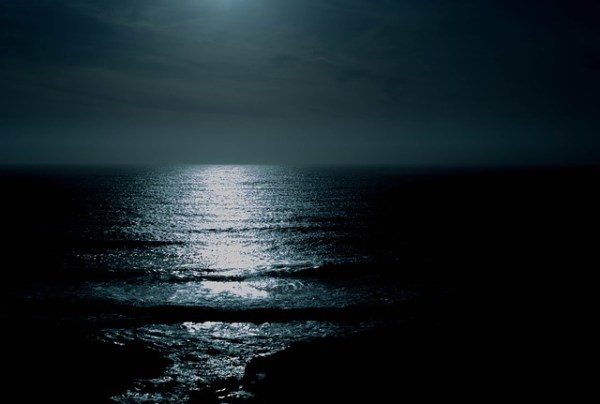
It was the longest night, and the cold was such that standing still would be a death sentence. There was no snow, but the frost was so deep that the world shone coldly white in the moonlight.

A procession of dark-clad figures marched through the forest, moving in and out of patches of moonlight so they seemed to appear and disappear like demons or frikii. Nothing could be seen of the figures except their silhouettes, as each was clad from head to foot in dark coloured fur, and had a deeply cowled hood obscuring his or her face, and they kept their hands tucked inside the wide sleeves of their robes. Their pace was a measured one, taking into consideration, one has to assume, the smallness of some of the party and the consequent shortness of their legs.

Nobody spoke, and it wasn’t until a dog fox coughed somewhere in the undergrowth that the solemn processional progress of the group was interrupted. A small figure in the centre of the line jumped, and gave voice to an undignified squeak. The figure behind her, reached out a hand and briefly touched her shoulder, for this was surely a young girl by the voice,.

“‘Twas naught but a fox,” the voice was deeply masculine and amused, though not unkindly so.

They fell silent again, and the only sound was the crunching of booted feet on frozen loam. As they came out of the shadow of the trees, the air behind them was rent by a scream. It was the sort of a sound one might associate with an animal in a trap so desolate and fearful was the sound. Only this was not an animal in torment, this voice was human. Each figure in the procession bowed his or her head a little lower, and the leader made a sound of disgust deep in his chest.

“If only we had time…”

“But we do not.” The voice was female and authoritative. “We must keep moving. The lady is almost at her time and she must be somewhere warm.”

The leader shrugged his heavy shoulders and the column moved on.


Far ahead of them, a light appeared on the edge of the next patch of forest. It blinked twice, then was extinguished. The leader of the column looked and his shoulders dropped.

“We have to leave the path. There are soldiers in the forest.”

“The lady will never make it over rough ground.”

“I will make whatever I have to. Lead and I will follow.” The voice was low, and cultured and beautiful.

There being no proper response to such courage except to carry on, the column left the relative smoothness of the forest path and struck out uphill.

It was bad going, and steep, and even the strongest had all they could do not to founder. However, the smallest figure of all remained ramrod straight and even though all her companions felt the effort each step cost her, she gave no sign of her travail. The bulky-shouldered leader, who had been reluctant to set out on such a mission on such a night began to admit in the darkest recesses of his soul that this woman might just be worth the effort.

There was movement in the undergrowth and for a second he thought them betrayed, then the face resolved itself in the brutal moonlight. It was a wide, plain face with strangely green eyes and a bedraggled beard, and it belonged to the hermit whose forest chapel they were aiming for.

“This way,” the man hissed, “the chapel is surrounded”.

The column turned wearily and the hermit led them down a scree-littered slope and along the margins of a frozen river to where a goat track wound its way up the valley. The leader’s heart sunk to his boots at the thought of leading his weary folk up that black thread of track, but their guide made no attempt to climb, turning instead up a steeply cut valley that led, if memory served, to what was a crashing waterfall in most weathers.

Now, of course, the forest was silent save for the laboured breathing of the column of weary walkers.

Just as the leader of the column was beginning to fear at least one of their number would soon founder and have to be left to perish in the cold, the hermit stopped and indicated a narrow crack in the rock wall. Too cold to do anything but trust the big man bent his head and wriggled through. As he popped out of the short narrow passage he felt hands guiding him, passing him from one person to another in the darkness. He seemed to be heading for a patch of less blackness, but not by any direct route. It was not quite so cold in the vowels of the earth, and the air was fresh and sweet. The feeling of guiding hands was reassuring so he just went where they directed. He might have been moving through the dark for ten minutes when a voice spoke quietly.

“Head down seigneur.”

He ducked obligingly and when he could stand again found himself on a dimly lit sandy walkway with rocks on his left and a wall of solid ice on his right. It came to him with a sense of wonder that he was behind the great waterfall and that perhaps his party was even safe.

He came out of the ice passage onto a ledge where a skin-clad figure awaited the figure lifted a perfect curtain of mossy frondy vegetation, and pointed to an arched opening in the hill through which he could dimly discern  the glow of firelight.

He went inside, but instead of following the siren call of the warmth he waited for his people to file in. Next to last came the lady, almost being carried by the young man who had insisted on accompanying her from the castle. Her hood had been thrown back and the bones in her face were standing out against the skin as she struggled for breath.

“How long have you been in labour, my lady?”

“Since just before we branched off the forest path.”

As that had been more than two hours by his estimation the leader bent and picked her up in his great arms.

“Come then, let us take you where there is warmth and light.”

In the end there was more than warmth and light, there was food and safety as well.

But as the lady’s pains came swifter, the forest dwellers withdrew leaving only his column around the silently suffering woman. The one other adult female wrung her hands together.

“I know naught of birthing, save that women die of it daily,” she sounded on the very edge of panic.

The young girl who had jumped and squeaked at the bark of a fox stepped forward.

“Don’t be silly. The reason we are here is to make sure nobody dies.”

The older woman was about to round on her when the lady spoke.

“The pains are coming thick and fast now.”

After that the young girl took charge with a calm competence that inspired both admiration and trust, and there, beside a charcoal brazier and on a bed of straw the king’s leman gave birth to the child his lady wife had sworn would never be born. It was a lusty boy, and both mother and child bore the birth well.

Once they were comfortable with the babe asleep in his mother’s arms, the young midwife stepped back.

“How do you come to know so much about childbirth?” the column leader’s question was idle but still demanded an answer.

“I don’t really sir. But the way I saw it it couldn’t be much different from lambing. And nobody else was going to take responsibility.”

The stunned silence was broken by the sound of laughter from the makeshift pallet where the lady lay.

“Perhaps,” she said carefully, “we should call him lamb”.


Forty years later, when the babe born on the longest night ascended to his father’s throne and the priest called out his names to those who would swear fealty the assembled lords and ladies learned that their royal master was to be known as King Rollo Antonius Lamb the First.

Jane Jago

The Thinking Quill

Buenos Dias!

It is indeed I, Moonbeam Farquhar Metheringham IV, writer, agony aunt and astrologer to the famously credulous.  The renowned author of the speculative fiction classic ‘Fatswhistle and Buchtooth’.

One had been racking one’s cranium for a topic for this week’s tutorial (yes, even I sometimes find inspiration needs to pursued vigorously), when a question from Claire prompted one to consider the vital importance of symbols and symbolism to those who would create literature.

Even that bastion of unthinking vulgarity, that outpost of alien mindset, that epitome of hard-handed hard-headedness, that creature one calls Mater has in the recesses of her underused and underdeveloped brain a vestigial understanding of the importance of symbols. Only last week, she was watching some interminably boring panel programme sur le téléviseur, upon which the current Archbishop of somewhere was being castigated about yet another cover-up of ecclesiastical child abuse. Mater looked across the room at me and smiled a twisted smile.

“Moons,” she said a thought sadly. “Moons. If that churchman was to have worn his episcopal regalia, instead of sitting there like a mouse in a poorly fitting lounge suit, I reckon most of them oiks would’ve been a lot more respectful. It’s the symbols of office doncha know.” Then she refilled her gin and Guinness and no more was said.

But that brief moment of lucidity is proof, if proof were needed that the power of symbols reaches deep into the psyche – even of those as sunk into alcoholism and depravity as one’s unlovely parent.

However. En avant.

Lesson 30: The Write Symbols

When one seeks to create literary magic one needs many tools at one’s disposal. Not the least of which is the noble quest. A device by which your hero may be dispatched wherever your imagination chooses in search of some artefact or some creature without which the story can progress no further. But what does that have to do with symbols, do I hear you cry? Yes, of course, I do as your tiny crania cannot hope to make the leaps of understanding that come to one’s mind as easily and gently as a bluebottle lands on a plate of rotting meat.

Of course, the noble quest is to do with symbolism. It is one of the most symbolic of all the storylines.

First. The quest itself is a metaphor (or symbol) for the struggles that beset all humans from cradle to grave.

Second. Your hero’s solid helpmeet – uplifted from the lower orders to become his right hand – is symbolic of the common clay’s need for a god to worship and of the need gods have for worshippers.

Third. Whatever or whoever is searched for, the vicissitudes of the search are the symbolic harbingers of events in human life which must be overcome with stoicism and bravery. Tempting though hysteria and Tia Maria may be.

And finally. That which is sought is the most powerful symbol of all. It symbolises human love and human endeavour. It shows us the beauty that may be found in the depths of the human soul as we try ever harder and climb ever higher in our quest for perfect beauty.

Some common symbols explained
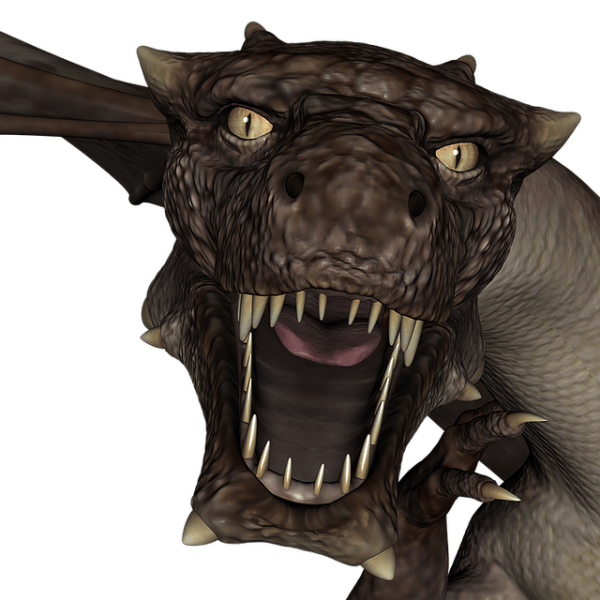
The dragon. Strength, coldness, avarice, and sex.
The virgin. Unattainability, truth, and the desire for sex.  
Water to cross. The struggle to be loved, and the desire for sex.
A cup or grail. The thirst for knowledge, and the desire for sex.
A dove. Hope and sex.
A raven. Despair and sex.
A knife. Cutting the thread that binds a child to its mother, or sex.

One could continue almost infinitely, but I am sure you are following by now.

So, my bambinos, choose your symbols with care and write them with delicacy.

Until next. Do not have nightmares and ecrit bon.

Moonbeam Farquhar Metheringham IV

Adoring Fans can join my Facebook Group

Author Feature from ‘A Space Girl from Earth’ but Christina McMullen

When she finally reached the cavern floor, Ellie again stood frozen in awe. The figures were neither men nor statues. They were robots. Androids, she believed was the correct terminology for the humanoids that stood nearly seven feet tall and appeared to have been molded to have the same structural appearance as the Eidyn people. This had to be the army Julian had mentioned. The very thought created a cold lump in Ellie’s stomach. Was that why she was here? Did the Kyroibi make her some sort of military commander?
“Princess Robot Commander reporting for duty, sir,” she said with a wry giggle and haphazard salute to the row nearest her.
The idea was at once laughable and yet so very frightening. The Kyroibi gave her nothing. No indication as to what it was she needed to do or how the mechanical men fit into the plans. A growing sense of dread ate at her. She was certain now that Julian should have been there. He would have known the purpose of coming to the cold, dark world.
An anomaly caught her eye and Ellie paused. The perfect formation was broken by a single empty space, as if one of the androids had stepped out of line for a momentary break. The thought sent a creeping chill down her spine and Ellie spun, as if expecting to see one of the automatons bearing down on her like some sort of horror film jump scare, but much to her relief, she was still very much alone. Still, the empty space was unnerving.
“I wonder…”
With her heart still hammering, Ellie slipped herself into the lineup and stood as still as possible, hoping that perhaps she was the missing piece of the puzzle. When absolutely nothing happened, she felt foolish for attempting video game puzzle logic and blushed, despite being on the opposite side of the galaxy from anyone who might have laughed at her attempt. She stepped back out of line and continued her inspection of the ranks, keeping one eye out for rogue robots.
When at last she reached the other side of the cavern, Ellie found herself at the base of yet another giant staircase, a mirror image of those she had descended, and let out a deep sigh of frustration. The Kyroibi urged her upward and she had to wonder what the Eidyn had against elevators.
Halfway up, a lone figure came into focus and Ellie realized she’d found her missing android, but as she climbed, she noticed something different about this one. He too was just as immobile as those below, but he sat upon the stairs, elbow on knee and chin cupped in contemplation, reminding Ellie of Rodin’s Thinker.
The closer she got, the more she felt drawn to the figure. In some impossible way, he was familiar, despite knowing she’d never seen him or anyone like him before in her life. When she finally reached his resting place, Ellie nearly lost her footing in surprise. This was no machine, and yet, he had to be. Any other explanation was impossible. Surely anyone left on the planet would have been long dead.
Unless he too had only recently traveled to the planet…
Suddenly, she understood. Whether it was her own deduction or the Kyroibi, Ellie knew exactly who he was, though how it was possible remained a mystery. She reached out, without hesitation, and took his stiff, cold hand into hers. At once, the diodes connected and the statue-like man came to life.
Turning, his eyes shone with an inner light and a smile warmed the features of his face.
“El’iadrylline. At last we meet.”

Christina McMullen is the author of ' Space Girl from Earth. ‘The Needs of the Many’ book three of The Kyroibi Trilogy is due out May 1 and will be up for preorder sometime this month.


A Bite of… Christina McMullen

Question one: Have you ever thought life might be better lived in one of the worlds you have created? Which one and as which character?

With the exception of my latest series, all of my books take place in our world, however, there is a fantastic element that is known only to a few select folks. My first series, The Eyes of The Sun, takes place in New Orleans (and parts in Paris), but in the shadows, where vampires exist, even though they are not what is commonly thought of as vampires. Since New Orleans and Paris are two of my favourite ‘real’ places, I choose the secret headquarters of the Eclipse Project in the Central Business District of New Orleans. As to who I would be, well, I must confess that Dara’s particular vampiric issues were based on my own health anomalies.

Question two: Vampires or aliens? You have to put one in Room 101. Which can you best do without?

This is an entirely unfair question. So many wildcards to consider. Are the aliens the benevolent sort who are here to fix what we’ve screwed up? And if so, does the elimination of all humans count as fixing? On the other hand, are the vampires the classically rich, powerful, and sexy bloodsuckers who live forever? And if so, how will immortality help them if Stephen Hawking is correct and we’ve only got about 100 years left on this rock? I guess I have to take my chances that I can charm the aliens enough to take me with them to their home world, which is entirely made up of beach front property. Sorry, vampire loves.

Question three: You have one shot at making this world a better place by passing one law that nobody will be able to break. What’s that law going to be?

Ban all manufactured weapons. Not just the guns. You want to fight a war? You’ve got sticks, rocks, and your bare hands. Nothing more.

Christina McMullen is a science fiction and fantasy author who dreams of flying cars and electric sheep. She currently resides in Texas with her wonderfully supportive husband and their dogs. When she isn't writing, Christina enjoys travel, vegan cooking, modern and classical art, and of course, reading. 

You can follow her on her Website, Indie author site, Twitter and Facebook.


Coffee Break Read – Formula

“There has to be a formula.” Dianora glared at her brother. ‘There has to be an algorithm for writing a bestseller.’
“Ain’t” he grunted stubbornly. “It’s one of them wossnames.”
“Which wossnames precisely?” she placed her words as carefully as blades, but to no avail.
“The wossname that means there ain’t no rhyme nor reason, stupid.”
Dianora seriously considered physically attacking Adamo, but was deterred by the knowledge that he wasn’t a gentleman, was around twice her size, and perfectly capable of attacking her back.
“So what do we do?”
“You just carry on writing the stuff that pays, and I keep on going to work five days a week. That’s what real life is all about.”
She got up and stomped around the room waving her arms in the air.
“And stop doing that or you’ll hit the wall and bruise your fist.”
Dianora laughed reluctantly.
“Okay. I give in. Let’s eat.”

However, the idea of an algorithm had taken root in her head and whenever she had a spare few moments she input as much information as possible slowly, slowly building a picture of what would constitute the ‘perfect’ novel. She added character names, descriptions, traits, and sexuality. She carefully dissected storylines. She even read as much erotica as she could lay her hands on sourcing both terminology and description. Then she just looked at her work for a very long time, unsure if she dare press the combination of keys that would set her brainchild in motion.

It was a wet, cold Friday evening. Adamo was tired and frustrated after a particularly scratchy week, and he came in from work to find his sister clutching a bulky printout. It looked a bit on the thick side for one of the young adult novels that paid the rent, but he took it from her hands and dropped it on his desk.
“Any hurry for this one?”
“No, in your own time.”
He thought Dianora’s voice sounded a bit peculiar, but he was too tired to try and puzzle out the behaviour of someone who was, in his opinion, erratic at the best of times, and downright impossible when in a mood.

It wasn’t, therefore, until Sunday morning that he picked up the typescript and started to read.

Three hours later he stomped into the kitchen and threw the pages down on the table with a bang.
“That,” he enunciated with careful clarity, “is absolute dross”.
Dianora turned from the pot she had been stirring on the stove and grinned widely.
“It is. But you couldn’t put it down, could you?”
“No. However did you manage to write something so horribly tacky and so completely compelling at the same time?”
“Oh,” she said airily, “I didn’t write it.”
“Well who did?”
Adamo was getting snappy, which seemed to amuse Dianora greatly. She turned up the cover page and pointed.
‘Darkness of the Soul’ a dystopian love story from the pen of Arabella Churchwarden.
“Yeah, but that’s just your pet name for your computer…”
Then the penny dropped and he stared at her with is mouth agape.
“Yes,” she said proudly. “I wrote the bestseller algorithm.”

©️ Jane Jago 2018

Moonbeam Farquhar Metheringham IV’s review of 1984 by George Orwell

I come across books to review in a variety of ways. Some cross my path, I find them in the hallway where Mumsie has dropped them after imbibing one too many. Some impact me deeply, like those that she has hurled at me in one of her moods. Some I trip over, usually on my way to bed where it has been left prominently placed by my parent in the hope I might read it. A few,  however are recommended to me by Adoring Fans.

1984 was one such. I shall not name and shame the one who suggested it was suitable reading material, but it is enough to say I have stuck their name from my list of those who I shall be sending signed copies of my next book.

So to the review.

A rather boring office worker has a love affair disapproved of by the authorities. The lovers think they are keeping it secret but it turns out they are not. They are punished for having the love affair by being put in prison and having to endure endless boring lectures. Then they are released. The end.

This book seemed determined to play on the popularity of a couple of television series I have had the misfortune to watch ‘Big Brother’ and ‘Room 101’. I am surprised the author could get away with such blatant plagiarism. The title puzzled me too. Why 1984? Why not 2013? That would have sounded much more sinister.

I failed to find much in this book to merit further comment.

One star for effort.

Moonbeam Farquhar Metheringham IV

Adoring Fans can join my Facebook Group

Gin…

I am old, and that is my excuse
For subjecting my liver to abuse
I’ve an appetite for gin
A digestion of tin
And a belly that likes to hang loose

© jane jago 2017

Start a Blog at WordPress.com.

Up ↑