My muse today is on the lash
And talking proper tripe
He’s on the rum without a splash
And seriously ripe
He filled my chapter nine with c**p
And vomited some verse
He’s really riding for a slap
Or something rather worse
My muse is one who rides his luck
As bad as he can be
Why is my muse a useless *BLEEP*?
Maybe because he’s me…
Weekend Wind Down – Secrets
Dai watched the familiar countryside roll by and tried to forget, rather than obsess about, the fact that he was lying to his bride of less than a month – and on two issues. Well, lying by omission. He had promised himself he was not going to keep anything from her about his working life. She had lived it herself and her security clearance had been higher than his until his sudden promotion.
Even his friend, and newly appointed Senior Investigator, Bryn Cartivel had warned him. Slapping him on the back the day before Dai’s wedding as they were taking a final drink in the Londinium taberna that had seen so much of their custom over the previous eight years.
“Two bits of advice from a long-married man to one about to take the plunge. One is never forget she is always right, even when you think you are and two – never – and I mean never – keep secrets from her.” Bryn burped loudly and adopted a fatherly look. “You see, if you get to the day you think you’re always right and she’s wrong or start finding there are things you can’t tell her – well, that’s the day your marriage hits the rocks.”
“You can’t tell your wife everything,” Dai protested. “I mean half the stuff from work is -”
“Everything she wants to know,” Bryn cut over his protest, then dropped a heavy wink. “But then my Gwen she’d know if I was keeping things from her. She’s descended from a long line of Druids on her mother’s side.”
The trouble was Bryn was right and these were things Julia would want to know – things Dai wanted to tell her. But it was not in his hands. These were secrets he had been ordered to keep from her.
***
The first had arisen in a conversation with the Tribune in charge of the Praetorians in Britannia – Decimus Lucius Didero, foster-brother to Julia. He had summoned Dai on the pretext of a meeting about some legality around the marriage and had not been at all repentant about his duplicity.
“This is serious, Llewellyn and is a big part of how I swung this post your way. Our intelligence people are saying that a lot of dangerous contraband is getting in through the coast there and Viriconium is the hub of it. We need someone who is accepted by the British community and who we can trust. You fit the bill.”
“And here I was thinking I got the job on my merits as an Investigator alone.” Dai made no attempt to keep the cynicism from his tone. He had been wondering why this had come his way and was not too surprised to find it had been for reasons other than those put out for public consumption.
Decimus grinned at him.
“Well my sister falling for your baby-blue eyes helped as well,” he admitted, then he switched back to the clipped tones of before. “As if the smuggling isn’t enough we are talking a major anti-Roman group somewhere in the area and they have their fingers deep in our pies. We need to know who they are and how they are being financed and supplied before they start out on a major terrorist campaign. I’m sending you out with twenty of my lads under their own decanus, a good man Brutus Gaius Gallus. You may need them. We have no idea how high or deep this thing goes – even the Magistratus is not in the clear. So trust no one there and I mean no one.”
Dai took a moment to digest the implications. He had known it was going to be hard enough taking on a post he had been over-promoted to fill. But he had been looking forward to learning his way in and doing so with Julia’s sharp insight and wisdom to help. But Decimus had just taken that fond daydream of a bucolic honeymoon easing into things and blown it away. He realised now why, when he had asked for permission to relocate with some of his old team he had not met with more resistance.
“Julia will need…”
“Julia will not be told anything about it, Llewellyn.” Decimus sounded almost ferocious. Then he drew a breath and sighed. “She has been through too much, I am not having her dragged into this. She needs a chance to have some simple happiness with no more to worry about than what colour she wants to paint the guest bedroom.”
Which, Dai reflected rather grimly, probably showed more of wishful thinking on Decimus’ part than any true understanding of what Julia would want or need.
“I think she might notice Brutus Gaius Gallus and his men hanging around,” Dai said pointedly. “My wife is many things, but she is neither unintelligent nor unobservant.” And you of all people should know that, he added in the privacy of his own mind.
“Relax, Llewellyn. They have an official reason for being there and wandering around wherever. Amongst his other talents, Gallus once served as a bandmaster and all the men with him can play instruments. They are going to be there to learn some traditional British music as part of a ‘Hearts and Minds’ Arts initiative – a real one, believe it or not, from those effete, money-wasting idiots in Rome. But it gives them the cover we need for this, so some good comes out of it.”
It was sounding more and more complex and Dai’s heart plummeted.
“So you are pitching me in against smugglers, terrorists, corrupt Roman administrators, and whoever is behind them?”
Decimus pulled a face.
“You about have the size of it. But you are not exactly going in alone. You’ll have my praetorians and your own people and as soon as you have anything solid we can act on I’ll bring half a legion in to clean up if need be. But we can’t pounce until we have a target.”
“Don’t you have undercover people doing that kind of stuff? I don’t see how I’m going to succeed where they have failed.”
“This is deep Britannia, Llewellyn,” the Tribune reminded him. “The arse end of the Empire, hanging over the edge half the time. Hell man, you should know you grew up there. These are people who only trust someone they have known from birth and who has a British pedigree you could unroll from there to Londinium. We don’t have that many such people just lying around – in fact we have one. You.”
There was no answer to that and Dai had finished the meeting being briefed about what little was known of the situation in Viriconium and along the coast. It left him in a foul mood.
From Dying for a Poppy by E.M. Swift-Hook and Jane Jago.
Jane Jago’s Daily Drabble – One Hundred and Fifty-Four
He brought the world to fever pitch awaiting the seminal novel of the century. He studied the picturesque in his dress and posed for the press with beautiful women and erudite men. He dribbled words and paragraphs out across social media, and he argued his concept with cover artists and editors across the globe.
If anybody suggested the man was less genius and more inspired self-publicist they were shot down in flames.
Eventually his book appeared. It was beautifully designed, exquisitely illustrated and wholly incomprehensible.
The beauty of it, of course, was that nobody dared say they couldn’t understand…
A Reflection on Memory
Today I tripped over a memory
A longed-for voice and smile
That moment meant the world to me
And it made me stop for a while
It was as if he spoke my name
From beyond the veil
His voice it sounded just the same
Assuring me I’d not fail
I felt as if I held his hand
And walked with him a while
I knew he’d always understand
As through my tears I smiled
Today I tripped over a memory
Of the first man in my life
And being his daughter taught to me
All I need to be a wife
©️jane jago
Haruspex – The Complete Trilogy
Out today Haruspex: The Entire Fortune's Fools Second Trilogy in one ebook. A Fortune's Fools release from E.M. Swift-Hook.
“You have no idea what you are letting yourself in for. How can you?”
Commodore Vane shook his head as he spoke, it was beyond understatement and beyond belief. The soldier’s green eyes were fixed on a point some distance behind the Commodore’s left shoulder. Their colour, so brilliant, Vane suspected genetic enhancement and their focus had been unwavering since he entered the room.
“I think I do, sir.”
He stood in a formal parade-ground stance, as ordered by the scowling Legionary Sergeant who had escorted him in and now lurked by the door. Vane had made a conscious choice not to relax him from the rigid posture. He never did with the conscripts. He glanced back at the remote screen he had called up, its contents invisible to anyone else.
“Amnesia,” he read the word aloud and looked back at the soldier. “Total amnesia?”
“Total retrograde amnesia, sir,”
The Sergeant, a big, broad-shouldered man called Hynas, stood almost a head taller than his charge who was not much more than average height, and the ever-present scowl changed to a sneer at the words. Vane ignored him.
“And do you know why?”
“Due to an unknown trauma immediately prior to my arrest, sir.”
“Prior to, not during?”
The way most of his men were brought in to begin their military career in his Legion it would not have surprised him in the slightest to find the injury had been inflicted at that point.
“Yes, sir.”
“I see.” Vane wondered if he truly did, the implications here were so disturbing. “You have no knowledge or memory of anything before your arrest?”
“None, sir”
“And that means you have no direct knowledge or experience of what life is like outside the Legion?”
“No, sir. I do not.”
“Then how can you know you want to leave us, soldier?”
He noticed a slight hesitation then.
“I have no direct personal knowledge, sir, but I have researched a great deal about it.”
Which, he supposed, explained the hesitation. But the idea of researching the complexities of everyday life with zero experience of it, stretched his credulity. Vane tried to keep that disbelief from his voice.
“Researched it?”
“Yes, sir. I have talked to other people in my unit and accessed information through the Lattice.”
Everyday life as filtered through the minds of violent criminals and a military tactical data provider. The Commodore shook his head but let the naivety pass. His job was to confirm that this man met the criteria required and was fit to be released. In fact, it had been made very clear to Vane he should do whatever was needed to speed the process and allow as little questioning as possible.
But this man was no ordinary ex-criminal.
Once – and for many years – his name topped ‘most wanted’ lists throughout the Central worlds and the broader Coalition: the Protectorates and Independent worlds. In Vane’s circle, this man’s name used to be a household word for mindless destruction – the bogeyman of ultimate evil.
Avilon Revid.
Vane found it a curious experience to meet the man behind the myth, but it also made the responsibility heavier, weighing up all the factors to consider if he should be discharged. Vane prided himself on his thorough professionalism and had no intention of giving in to any pressure over a decision of such significance.
That thought made him glance across to where a holofacade wall concealed a watcher from the other two men in the room. The reclined chair, slouched body and movement of the head suggested listening to music, or watching a show on a VR screen, rather than focusing on the interview. But perhaps not, for fingers lifted in a brief acknowledgement. The Commodore ignored the wave and looked back to study his own screens, checking the notes he had been given on Revid.
“Well you passed your orientation course without any problem and have been declared no danger to civilians.”
No danger. A bureaucratic joke even a military man such as the Commodore could appreciate. All the Special Legion were more than just dangerous. All serving a sentence for extremes of violent crime. A sentence that included enforced invasive surgery, implants, and drugs to enhance their capabilities. The brutal training regimens and suicidal military missions were sweetened by the promise of freedom after five years spotless service – a promise almost never fulfilled. In the eight years he had spent co-opted as commander of the Special Legion, perhaps a dozen other men had stood before Vane for discharge approval. Of those, less than half walked out as free citizens. He was not willing to risk any of the monsters he commanded back onto the streets without a very high threshold of evidence to demonstrate they were indeed ‘no danger to civilians’.
Vane nursed no illusions about the fate of those conscripted to serve under him. For the vast majority, joining the Specials meant nothing more than a deferred death sentence. His troops served with an average life expectancy of just under two years. Most died very quickly, either on active service or were killed in the gruelling training. Others fell afoul of their own violent recreational activities or failed to sustain the psychological strength needed and committed suicide. Some died in brawls or were murdered by their comrades. Yet it remained a truism whenever a dirty job needed doing anywhere in the Coalition’s sphere of influence, the Specials were first on the ground, often ahead of the AI mechs. Vane took pride from that. He heard the troops did too.
Ironically, it meant, to be standing here, this soldier could only be the toughest kind: a man who could survive and even thrive in such an environment.To date, those few up before him for release, fell into one of two categories: those who were ruthless and brutal in pursuit of their self-preservation, and those who were high functioning socially, surviving as much through their ability to engage with others as by their own prowess. He thought of them as the ‘Lone Wolves’ and the ‘Socialites’. The ones he passed fit to leave were of the latter type. Yet so far this man seemed to defy both categories and until he could fit him into one or the other it would be difficult to make a call.
He looked back from the screens to the man himself.
“How do you feel about becoming a civilian?”
The green eyes showed no expression.
“I have been informed it can be very rewarding, sir. I see it as an opportunity to serve the community of the Coalition and the chance for my own self-development and personal fulfilment – sir.”
Lines from a manual. The last individual he cleared for release, which must be over a year ago, said much the same: words any ex-criminal would have engraved into their psyche before being passed fit to rejoin society.
“You were arrested for perpetrating numerous acts of terrorism against the Coalition. How do you feel about that now?”
From beyond the holofacade, Vane noticed the lounging figure stir and pull the chair upright, leaning forward with sudden interest, staring a little to the side where, no doubt, screens were showing selected close-up angles and readings taken from the Lattice. But from Vane’s own perspective, there was little reaction to see. The soldier’s face remained impassive as he spoke:
“Although I acknowledge my guilt in many terrible crimes against humanity, due to my amnesia I have no memory of committing them. The Coalition is a just and compassionate association of free, democratic people. I cannot understand why I would ever have wished to commit such heinous acts.”
It sounded rehearsed, not at all the language of a ranker in the Legion and Vane noticed a frown forming on the face of the observer as their fingers moved, recording notes. The Commodore, feeling himself as much observed in this as Revid, pressed the point.
“Do you understand the nature of the crimes you committed?”
“I do, sir.”
The burly Sergeant Hynas standing behind Revid, had been glaring in silent protest for some time. Now he cleared his throat. Vane suppressed a momentary irritation and nodded his permission for the man to speak.
“With respect, sir, this man has been wired to the Lattice for the last five years, he has no real idea of what anything means except obeying orders and killing. He’s just a killer,” the Sergeant said, spitting the word, “and all he did before his arrest were killing, so it’s natural he would see nothing wrong with it now. I don’t care what the neurocologists say about it, I know this man and that’s the simple truth. That’s why it’s taken them so long to even consider clearing him for discharge, sir.”
For the first time since the interview began, Vane saw a spark of animation in Revid’s eyes. The fixed gaze shifted to meet his own, it’s intensity disconcerting.
“Permission to speak, sir.”
“He’s a – ”
Vane silenced the protesting Sergeant with a curt gesture.
“Permission granted, soldier.”
“Sergeant Hynas is under the impression I am unable to judge the moral difference between unjust murder and just warfare, between mindless terrorism and the well-considered use of force. I would like it to be on my record I am very much aware of the difference between the two. I made a public statement renouncing my previous criminal activities, some years ago, activities for which I have the deepest disgust.” It was his longest speech so far and for once his tone held a bite of emotion. Vane felt very sure Sergeant Hynas had been tormenting this man for a long time. “I have been given numerous additional tests to ascertain this and despite my application being rejected and returned for review four times, each time I have been cleared for release. I would like to vindicate the wisdom of the Coalition’s system of justice, offer service to the community as a civilian and take this chance to recommence my life. Sir.”
Vane sat still for a moment, shocked into silence. He had never heard any of his Legionaries speak like that. Coming from the mouth of the scarred, adapted creature before him, with an ugly direct brain-linked data port visible behind one ear, the incongruity of it left him feeling profoundly unsettled. The language sounded far from anything heard in the ranks and this did not seem like a well-rehearsed speech, which made it increasingly difficult to line up such fluent expression with the idea of total amnesia.
Keep reading and enjoy the rest of Haruspex by E.M. Swift-Hook cover by Bristow Design.
Jane Jago’s Daily Drabble – One Hundred and Fifty-Three
Count Ichu Yanippelov rode into the village on his tall white horse. The villagers brought out their daughters and he tutted disappointedly until his eye fell on the white throat of the miller’s only child. He beckoned and she came to his stirrup.
“She will do.”
Somebody lifted her onto the rump of the count’s steed and he set spur to the animal’s sides. They set off at a frenzied gallop with the girl clinging on behind.
When the autumn winds began to blow, Lady Donya Chumanippelov rode into the village of her birth on a tall, black horse.
Coffee Break Read – Ten Times Ten Years
It was ten times ten years since the day when the oasis ran red with blood, and an exquisite woman sat in a red silk tent out on the white shining sands. She was a realist, for all her transcendent beauty, and she knew, as surely as she knew her own name, that this was the last sunset she would ever see.
Fayruzi, named for her remarkable turquoise eyes, stared unseeingly out at the cruel whiteness of the sands and carefully considered her options. She was surrounded by the various means by which she could take her life, and all that remained for her was to choose the one she found least repugnant. There was poison, there were sharp blades, there was even a tiny decorative pistol taken from some long-forgotten ajnabi who had fallen foul of the desert, and there were the sands themselves. The killing sands. The unforgiving mistress of every creature that ran, crawled, swam or flew on her breast.
But wait. Do I hear you ask why such loveliness would choose to die? Of course she did not so choose, it was simply her ill luck to be the jewel of the zenana in a year when sacrifice was called for to propitiate the god and in remembrance of those whose blood stained the waters of the oasis all those years ago. It had been an easy choice for her husband, having no love for women, to give that which another man might have prized beyond his own life as his gift to the pitiless sands.
Fayruzi studied her own white hands and thought about the last possible choice: to simply do nothing. To sit and watch the moon on the face of the desert and await the coming of the dawn and the death priests in their blood-red robes. To await those who would slit her nose before dragging her by the hair to the oasis where they would stone her to death.
She sighed. Just once. And determined to await moonrise before making any decision.
As the moon lifted over the dunes, turning white to silver, Fayruzi lifted the pistol in one pale hand. It would, she reasoned, be the least painful and degrading way to meet her end.
She thought herself fantasising when the sound of hoofbeats came to her ear, and hallucinating when she saw a tall, black horse coming across the sand towards her. Unthinking she stood, and walked out onto the sand to meet her fate. The rider of the horse reached down a hand and she grasped it in both of hers, making a graceful leap onto the saddle in front of the burnous clad figure.
He smiled down at her and she saw his eyes were as black and lightless as the night sky.
As the bedou wheeled his horse and galloped back from whence he had come, it would have been apparent, had there been anyone left behind to see, that the horse left no footprints in the soft shifting sand.
It was ten times ten, and one more, years since the day when the oasis ran red. It was dawn, and the red tent once more stood on the white sand where the desert wind ruffled its silken walls. This year there was no sacrifice but the priests still came as tradition demanded.
The chief among them bent his head and entered the empty tent, except it wasn’t empty. An exquisite woman sat on a pile of cushions in the centre of the floor. She had a babe at her breast.
The old priest felt his heart leap into his throat as he recognised Fayruzi.
“Lady,” he said respectfully.
She turned her face to him, and he saw her eyes – as black and lightless as a desert night.
Jane Jago’s Daily Drabble – One Hundred and Fifty-Two
Wan Blat O was the God of Unconsidered Trifles. It was a feeble gig, but at least it kept him immortal. His more powerful peers dwelt in marble halls and were waited upon hand and foot by beautiful nymphets and smooth-skinned demons. Wan inhabited an unconsidered temple right at the edge of the Kingdom of the Dead, where he was vaguely looked after by an elderly woman called Ethel, who had no teeth and painful bunions.
Sometimes, though, fate has a peculiar sense of humour – and when the mountain exploded Wan Blat O was the only god to survive.
Coffee Break Read – The Mole and The Driver
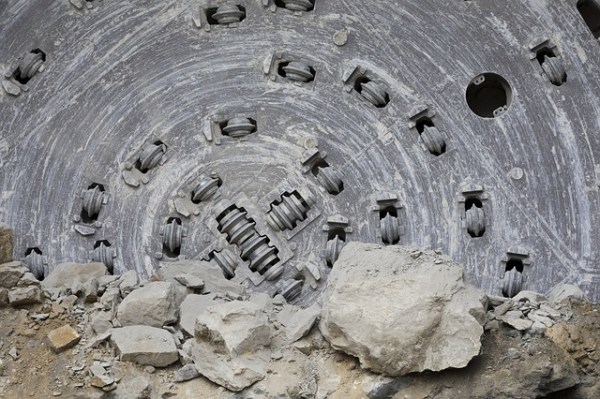
The Mole groaned and farted and belched noxious fumes as its diamond edged teeth ground their way slowly through the sandy subsoil. As it dug, a series of precisely placed nozzles sprayed a sticky mixture of polymers and ground rock onto the walls of the freshly-made tunnel stabilising it an inch at a time. As the monster inched its way forward, a rattling, clanging conveyer belt shot surplus material into a closely following fleet of lorries.
Up high, in what would have been the head if the Mole was a living animal, a strangely-conformed man plied the controls with the virtuosity of a maestro. He was thick necked and heavy chested, with almost unnaturally long, muscular arms. His legs, on the other hand, were thin and twisted and would certainly not support his weight should he need to walk anywhere. But he never walked. He never left the Mole. He was Driver, symbiotically linked to the great metal digging machine and as incapable of living outside the confines of the behemoth as it was incapable of functioning without him.
They were the most successful of the dozen experiments in symbiosis that had been carried out a decade previously, and were the only partnership left in existence. If that partnership caused ethical worries in some quarters, those voices were soon hushed by those who appreciated the profitability of the gigantic earth mover.
As the present digging conditions were easy, Driver and Mole were entertaining themselves by playing chess. This would very probably have been frowned on by their masters, but neither man nor machine ever saw fit to mention it. Nor did they mention their musical evenings, or the books they read together. Some things, they reasoned, were just nobody’s business but their own.
For most of the morning, progress continued to be excellent and the giant machine chewed its way through the earth at a comfortable five miles an hour whilst beating its operator at chess for the nth time in their partnership. Right about lunchtime, things changed. Driver was shovelling a doorstep of bread and cheese between his busy teeth when the note from the engines changed and the Mole slowed.
The driver picked up his communicator.
“Rock,” he grunted “speed cut by four fifths.”
He cut off the protesting squawk from five miles above his head and carried on with his sandwich. When he had finished his lunch, he toggled his communicator.
“It’s rock. Hard rock. Ain’t a thing anybody can do. Just send the water bowsers we need to cool the cutters.”
“There’s no rock down there.”
The driver sighed and switched on the powerful lights that formed the Mole’s ‘eyes’.
“Video on,” he said grumpily.
The watchers in the office on the surface were treated to a view of the Mole’s teeth biting into a solid rock face.
“Okay. Water bowsers ordered.”
“Good.”
Some five hours later, as Driver was considering his options for supper, the engine note changed again. He toggled his communicator.
“We’re through. Speed increase to two miles per hour. Putting Mole on auto. Signing out for night.”
He didn’t wait for a reply, shutting communications down and swinging to the floor. As his stomach started to rumble, he heard a knock on the Mole’s metallic outer skin far below him. He opened the door and stuck his head out. Down at ground level he could see a foreshortened figure standing on the bottom step of the ladder that led to his cabin. He whistled. The figure looked up, and he recognised the homely features of his own brother.
“Chu want bro?”
“Nuffink. I got a pot of Mam’s rabbit stew for ya. Chuck down the rope.”
Driver grinned toothily and dropped a thick rope with a hook on the end. His brother ducked and then attached a large bucket to the hook before stepping back. Driver flicked a switch and a small motor purred into life, gently hauling in the rope and its savoury burden up the fifty feet to the cab door. When the bucket reached his feet he lifted it in gently. Ma’s rabbit stew wasn’t to be treated with contempt. His brother gave him a thumbs-up and stepped away from the rumbling, grumbling monster.
Driver went arm-over-arm into his cramped living quarters and tenderly removed the lid from the big enamel pail. It contained several carefully packed items. First there was a brown crock of butter and a loaf of soft, fresh bread. Then he lifted out a heroically sized hunk of fruit cake and a pot of clotted cream. The bottom of the bucket yielded a lidded dish of thick, savoury stew and a letter in his mother’s careful printing.
He inhaled a lungful of savoury steam and reached for a spoon. After about half the bowl, he leaned back in his chair and gave a replete sigh.
“Ma,” he said reverently “I love you”.
A deeply feminine, and richly amused, contralto voice, which seemed to emanate from the very air around him, chuckled appreciatively before speaking.
“What’s it worth not to tell Ma you only love her when your belly is full?”
“She knows already, Mole. You can’t never pull the wool over Ma’s eyes.”
The laughter in the ether went on for quite some time, and it cheered Driver as he went about clearing up after himself and storing the bounty from the bucket.
“And now,” he said contentedly “we got a letter from Ma to read. Will I read aloud or will you read over my shoulder?”
Driver could all but hear Mole thinking.
“Read aloud please.”
And that was how they spent the evening, a misshapen man and an artificial intelligence enjoying each other’s company as they read the homely tidings from the woman they both called Ma.
For the rest of this story, and more tales of hope and despair, you can pick up a copy of Pulling the Rug II.
Jane Jago’s Daily Drabble – One Hundred and Fifty-One
It was a slow afternoon in the health food store. Bluebell on till three was keeping up a relentlessly cheerful monologue as she rung up the purchases of a woman with a long, dark braid, and a very rude t-shirt.
When a darkly handsome man ambled in from the street looking vaguely uncomfortable, he immediately became the cynosure of all eyes.
Cinnamon rushed to his side.
“Can I help you,” she chimed in a voice like silver bells.
He smiled down at the wispy figure and she shivered so her bangles jangled.
“I’ve just come to collect my wife.”