Hidden Valley

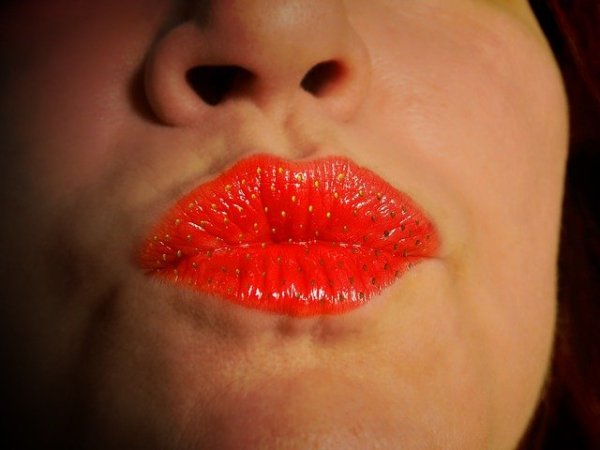
Down in the valley where the greensward hides us
Not even your smartphone can find us
Between the the green and bosomy hills
We hid away. For good or ill
Down among the whispering trees
We found an hour for you and me
Down in the valley with a solemn sky above
We remembered how it feels to be lost in love

©️jane jago

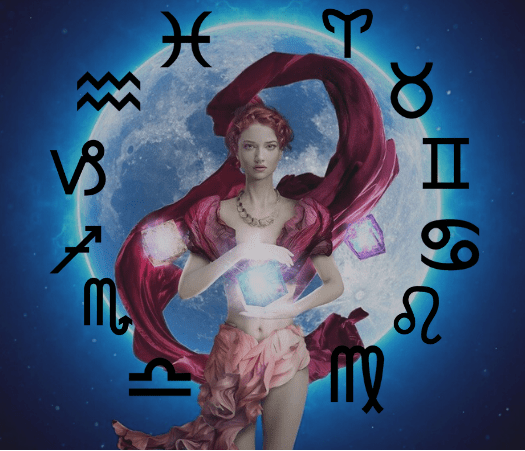
Madam Pendulica’s Perceptive Profiles of the Properties and Propensities of Persons Propagated in each of the Twelve Zodiacal Houses – Preferred Pets

The Working Title crew bring you the exclusive opportunity to enjoy again the mysteriously enigmatic Madam Pendulica…

Aries 

This sign is a sucker for furry and cuddly, but not too keen on walkies. Aries has an affinity with long-haired cats and King Charles Spaniels.

Note: Do not ever take an Aries to an animal shelter. They will adopt the lot

Taurus

Perhaps surprisingly, given the lumbering nature of the sign, the ideal animal companion is something small and intensely portable. Give a bull a gerbil and they will be ecstatic.

Note: Do not expect a Taurus to put itself out for a pet that requires a lot of care and/or exercise.

Gemini

This sign swings both ways petwise. A Gemini will be happy with either a tarantula or a kitten. Nothing in between.

Note: The two-faced twins will deeply confuse dogs and are inimical to horses.

Cancer

The crab enjoys canine company of the large and drooling sort. Or goldfish.

Note: Good at dressage, especially all the going sideways bits.

Leo

What could the king of the jungle require as a pet? A Siamese cat? An elegant elkhound? An Arab steed? No. None of these. Leo gravitates towards beekeeping.

Note: Should your Leo require an indoor pet, stick insects are usefully easy to care for.

Virgo

Buy a Virgo a bunny rabbit and they will be happy forever. Or if they want a walking companion, the stars suggest a yellow Labrador – for preference one with attitude.

Note: Do not expect Virgo to deal with animal sexuality. They don’t.

Libra

The balanced nature of the Libran is made complete by pets that can be kept as pairs. Lovebirds are an obvious choice.

Note: Do not buy your Libra lover a tortoise. They will forget them during hibernation.

Scorpio

The snarkily poisonous nature of this sign is uniquely suited to the keeping of snakes, or parrots with a vocabulary of obscenities.

Note: Don’t buy a Scorpio a puppy, they will encourage it to bite people.

Sagittarius

The half-horse Sagittarius really bonds with horses, ponies, or hamsters.

Note: If a dog is needed, the Irish Wolfhound is nearly as big as a small pony.

Capricorn

Surprisingly, Capricorn does not get on with goats. They are best suited to being owned by scruffy terriers that fart a lot.

Note: Capricorn and cats is a combustible combination. There has not been a Capricorn born that won’t irritate cats enough to get their face ripped off.

Aquarius

Aquarians like fish. Both to eat and to look at. Feed them battered cod and buy then an indoor aquarium wherein they can watch brightly coloured swimmers.

Note: Aquarius will not tolerate any pet that wants to sleep with them. 

Pisces

Pisceans do not get on with fish. They are, on the other hand, deeply enamoured of guineapigs and whippets.

Note: Do not buy a Piscean a bunny rabbit. They will eat it.

Madame Pendulica predicts she will return…

EM-Drabbles – Eighty-Nine

It was an alchemist’s dream come true. But this was no philosopher’s stone, transmuting base to pure, nor trade of precious lead for more precious gold, this was the simple distillation of matter into any form that was needed or desired.
All at the touch of a button.
It was a shame the discovery was made by a mind that had more focus on greed than on humanity, but eventually, even she discovered that you can have too much of a good thing and the richer in gold she became, the more common it was, the less she was worth.

E.M. Swift-Hook

Coffee Break Read – The Acolytes

Their mountain guide landed at head of the column. He was a green dragon of elegance and purpose and his rider was young woman dressed in skintight leather. She carried a sword whose scabbard rode across her back. The dragon-head hilt that showed over her left shoulder gleamed with gold and precious gems – although Adam was willing to bet that the blade would be razor sharp steel with a blood channel running from hilt to tip. It came to his mind that the stark plainness of his own short sword with its gleaming blade and leather-wrapped hilt threw the difference in their status into sharp relief  – even if his armament, along with his utilitarian leather breastplate, greaves and vambraces, should have told anyone with eyes to see that he was a fighting sort of soldier. 
The dragon rider stepped lightly to the ground and Adam saluted. The woman grinned tautly.
“How many?”
“Twenty-five, madonna.”
“You got them all here in one piece then. Well done sergeant. Do they know what happens now?”
“No ma’am. Which is one of the reasons I got them all this far.”
The dragon rider’s grin grew positively vicious. “This could be where we get our first dropouts then.” She turned a pair of eyes as green as her dragon on the preening acolytes. “Right then. This is where we stop pussyfooting around. Here’s the deal. Brightstar and I are here to guide you through the mountains. But…” She managed the dramatic pause so well that Adam thought it practised. “But. There will be tests along the way. Starting right now. Dismount.” The last word had quite the cutting edge of a sword and all but one of the acolytes scrambled to obey. The dragon rider curled her lip.
“Is there something wrong with your hearing?”
“Give me one reason why I should obey a mere woman.”
She sighed, and her dragon stretched his neck so that his blunt, saurian head was close to the face of the arrogant priestling.
“Dissssmount,” he hissed, “my rider sssspeaksss for me.”
The acolyte fainted. One of his peers poked him with a toe.
“He’s down now.” 
But nobody laughed.
The dragon rider carried on as if there had been no interruption. “From here on you walk. Anything you need, you carry.” She took something from the back of the dragon and walked among the staring young men dropping a backpack at the feet of each. “You have five minutes to pack. Starting now.”
After a second of stunned immobility there was an undignified scramble.

From’Dragon Riders’ by Jane Jago just one of over twenty Game Lit stories by as many authors in Rise and Rescue – Volume One.  All profits from the Rise and Rescue anthologies go to support wildlife devastated by the Australian wildfires. 

Nursery Rhymes for the Third Age – 6

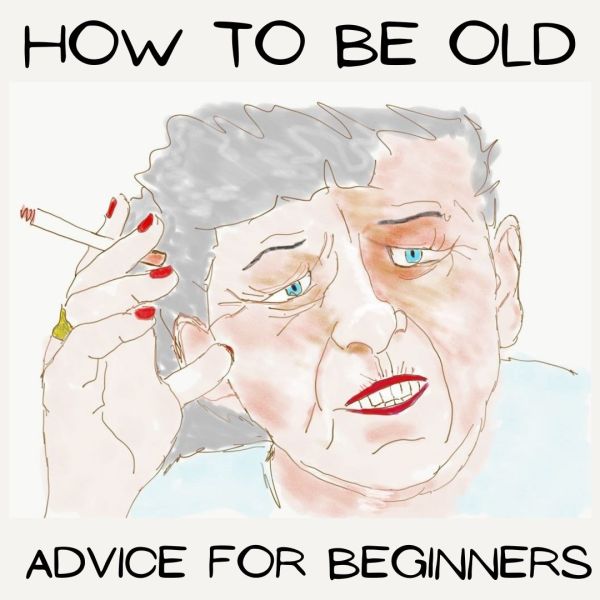
A selection of rhymes by Jane Jago, made age appropriate for those for whom their second childhood is just around the corner…

Monday’s Child

Monday’s child is rubbish at math
Tuesday’s child has a wobbly ass
Wednesday’s child wants to be artistic
Thursday’s kid’s a tad sadistic
Friday’s child is full of crap
And Saturday’s child just needs a slap
But the child that was born on a Sunday morn
Is the offspring of Satan right down to the horns.

You can find this, and other whimsical takes of life in On The Throne? a little book of contemplation from Jane Jago.

Coffee Break Read – The Old Amusement Park

Half an hour later she was driving away, to somewhere. Anywhere. Just away. She stopped to eat the sandwich when it was starting to get dark and hunger bit, pulling off the road and into the carpark of what looked like a run-down, sea-side amusement park. Which was when she found it in the glove box. The gift from Roald. Part of her wanted to hurl it, unopened, away from the car. But instead she took it out of the colourful paper bag and lifted the lid. A necklace of silver beads, carved to resemble ammonite shells.
Throwing it out of the window, Jess swore violently and turned the key. Nothing happened. The car sat there. She tried several times, giving up only when she realised it was not going to happen. She picked up her phone to call roadside recovery, and was somehow not surprised to find there was no signal. With an odd sense of inevitability, she picked up her magnalight from the map pocket beside her. Its weight, as much as its light, gave her a sense of security, it could be a weapon at need. She pulled her walking coat on over her fleece jacket and left the car to see if there anyone around in the amusement park.
There was stiff sea breeze coming in from across the bleak scrub that lay between this place and the sea. A moon, nearly full, gave enough light that she did not need to turn on the torch, and slid it into the inside pocket of her coat. There were no other cars parked up outside what must once have been a bustling attraction. But who wanted a seaside holiday when you could go to Costa del Sunburn for not much more? There was a high wall which ran across the end of the car park and as Jess walked towards it, she could see it stretched away on either side. 
The entrance was through a turnstile gate, or should have been. Someone had broken the spokes of the turning part, so anyone could walk through, past the shattered and blinded glass eye of the pay booth, boarded-up on the inside. Jess did so and something moved beside the booth. She turned fast, her hand gripping the magnalight as a slapping sound send a sudden pulse of unwanted adrenaline into her system. She pulled the torch free and shone its powerful beam at the source of the sound.
A sign hung down, still half attached to the top of the pay-booth, its broken back clapping against the heavy door set in the side of the small brick cabin. The words were barely visible:

…COME TO ….HELL…

Somewhere an owl shrieked and, despite herself, Jess drew a sharp breath. She took a step towards the broken, flapping sign and played the torch beam over it from end to end:

WELCOME TO SHELLEY’S FUNPARK

The owl screeched again and Jess smiled. You had to love it when the atmospherics played up to the occasion. It would only take a sea mist rolling in to turn this place into something out of an old-school Hammer Horror production. The really chilling thing was not any kind of supernatural danger here, it was the realisation that this was indeed an abandoned and empty place, with no one around who might have a phone she could use to call the roadside recovery and this place was a very long walk from anywhere. Only a year ago that would have meant very little. She might even have enjoyed the bracing breeze and the countryside at night. But not now. Now she would not make it more than a mile before she was crippled with pain.
The laughter carried on the night air, coming from behind the low roofed building immediately in front of her. At a guess it had once been some kind of cafe, but now it was heavily boarded up, metal shutters pulled over the windows, like a creature retreated into its shell.
Shelley’s Funpark? Why did that sound so familiar? Jess would have given it some more thought but the laughter came again, masculine, plural and loud. It was not from someone with any thought of trying to avoid attention. Still gripping the magnalight, its beam dimmed, Jessica made her way past the cafe-building and into the open area beyond.
The shadowy figures moving vaguely on the far side, close by the enclosing wall, sprang suddenly into stark relief and were revealed, as as an orange glow flared behind them. Jess froze, hearing drunken cheers as the fire took hold and watched as, like the ritual of some strange coven of witches, the group of youths all started throwing things into the flames.

From ‘Maybe’ by E.M. Swift-Hook and Jane Jago

EM-Drabbles – Eighty-Eight

I remember the days before time travel when you’d catch the news that someone famous had died and feel a bit sad.
Then when we had our chrononauts setting off into the unknown and everyone cheered. The odd thing was they were back almost as soon as they had gone. So, for us watching, it was almost as if they had never travelled at all.
That made it hard to believe their stories of the future, but eventually, we learned to do so.
Then one day the news started reporting the births of famous people as well as their deaths…

E.M. Swift-Hook

Coffee Break Read – Honour and Happiness

Nothing was said as they were riding back until a short way from his house, Zarengor reined in sharply, bringing his pony in front of Ralik’s and forcing him to stop.
“Gods, I am sorry Ralik. You should not have had to do that.”
Ralik said nothing. It was true. He should not. Zarengor cursed and turned his pony back to the street. They rode on in silence for a while before the other man spoke again.
“I do not know what I am supposed to have done. These people seem to want to find me a monster.”
“You think it is nothing of your own making?” Ralik was unable to keep silent at that.
He found it unbelievable that Zarengor should think he owned no responsibility for the reactions he provoked in others.
“I know what I have done elsewhere. Well, what I am believed to have done elsewhere, but I have done nothing to harm so much as the fingernail of any Harkeran. I am here to fight their war with them and I will do so and win it for them too if we have even the most leisurely break of good fortune. You would think they might have some sense of that.”
Ralik moved to ride alongside him. It was strange to him to see this side of the man whose strength and self-confidence had once been more than an inspiration for him. It made him question again what he had been doing in Harkera.
“Why should they be grateful to you? They do not know you except by reputation. Perhaps when you have won their war they will be grateful.”
Zarengor looked into the gathering darkness and shook his head.
“Maybe. And maybe they will suddenly find me inconvenient, an embarrassment, something best put away as quickly and quietly as possible. Or am I getting too cynical?” He sighed slightly. “Tell me, Ralik, have you ever known happiness?”
Ralik’s thoughts instantly filled with a beautiful face whose storm-grey eyes held a depth of emotion he had never inspired in any one before.
“I think so. But what man can ever call himself truly happy? The gods may take all we have in a moment,” he spoke quietly, but with conviction.
“Then perhaps happiness is not the goal, just a fleeting side-effect of other events in life. Perhaps the goal is something altogether more straightforward.” Zarengor fell silent a moment and the sounds of the evening streets closed in: a shout of laughter, a woman shrieking, a child crying, two dogs fighting. “What really matters to you Ralik? What do you steer your life by? What principle or creed governs your direction?”
The questions took Ralik by surprise. They were not the kind of questions one fighting man asked of another and they were questions he suspected that the Vavasor in a sober state would never have asked of him. He was tempted to say nothing, to let the moment pass. But, for some reason, the questions had touched upon the disturbing thoughts and events in his own life in recent days and he found himself considering them almost without meaning to do so.
“Honour,” he said stoically. It was the answer he would have given in all honesty until a few moons ago. But now? Well, now he knew there was something he held higher than honour, although he was not sure he could admit it to anyone else and he would still never forsake honour lightly.
“Oh yes, honour,” Zarengor said and sounded weary of the word. “We were brought up with it as our wet-nurse’s milk, you and I. Honour for ourselves, our families, our lord, our clan, our city – a desolate field is honour. Can it put food in the mouths of the hungry? Can it heal the wounds of the injured? Can it make Castellans strong and merchants wealthy? We make whores of ourselves for honour.”
Ralik was shocked.
“Without honour, what is a man?” It was the creed he had been born to and Ralik could recite its catechism as well as any other nobleman from the north. Zarengor looked at him directly for the first time in the conversation.
“I am not sure, Ralik, but I am beginning to think that without honour a man becomes something more. That without honour, he is free to choose the best way to live.”
“Then perhaps that would be a new way of honour,” Ralik suggested.
“Or perhaps it would be a new way of living.”
Nothing more was said until they dismounted at Zarengor’s house, a small but well-appointed courtyard residence in the wealthiest quarter of the city, close beside the residence of Ralik’s own Castellan. He had taken this house after the attempt on his life for greater security. The Vavasor threw the reins to the hands of a stable lad and strode towards the house.
“I am not to be disturbed,” he informed the guard at the door, then paused and turned to say briefly: “Good-night Ralik, I will not keep you up on my account any longer tonight – and thank you.”

From Times of Change the second volume of Transgressor Trilogy, a Fortune’s Fools book by E.M. Swift-Hook. You can listen to this on YouTube.

Nursery Rhymes for the Third Age – 5

A selection of rhymes by Jane Jago, made age appropriate for those for whom their second childhood is just around the corner…

Twinkle, Twinkle on the Telly

Twinkle, twinkle on the telly
Someone who lost all their belly
A girl whose life’s no longer sweet
Even if she can now see her feet
Twinkle, twinkle drown your sorrow
You’ll be fat again tomorrow.

You can find this, and other whimsical takes of life in On The Throne? a little book of contemplation from Jane Jago.

The Sam Kates Interview – Part 1: Earth Haven

The Cleansing by Sam Kates is the first part of his series Earth Haven.

Seven billion people inhabit this planet in blissful ignorance of imminent annihilation. Destruction comes, not from meteors or nuclear holocaust, but from a source no one even knows exists.
A handful of survivors—traumatised, bewildered—must come to terms with the new reality. And quickly. For the Cleansing is only the beginning . . .

The message washed over her like a cold wave. She gasped and sank back into the armchair, which groaned beneath her bulk. She closed her eyes and saw the images, still so familiar to her after all this time: ebony spires and minarets and monoliths, great glass domes peering from the constantly shifting dunes, pyramids and ziggurats, obelisks and amphitheatres, and endless deserts of dark sands gleaming faintly in the baleful light of a dying sun.
She gasped again when she saw the craft: vaster than a mountain range, blacker than night, sleeker than an otter’s hide. It was emerging from the desert floor, the sands boiling and parting; she could almost hear the slithering sound the sand made as it cascaded off the smooth sides of the craft.
Her jaw set into a determined line and she opened her eyes. At last, they were coming.
It was time for her to send a message of her own.
The armchair creaked and complained, then sighed as she pulled herself upright. From habit—there was nobody before whom she had to make herself presentable—she smoothed down her housecoat and walked in a rolling gait across the apartment to the work station upon which stood her computer.
She eased herself into the chair that she’d had custom made; it supported her weight without so much as a creak. The work station stood before a picture window that looked out over Central Park. While she waited for the computer to boot up, she stared down at the people braving the December cold. Couples strolled beneath the weak morning sun, muffled and gloved and hooded against the biting winter breeze. Long-coated businessmen strode purposefully, clutching briefcases or portfolios, intent on reaching the cosy sanctuaries of their plush offices on Fifth or Madison. The occasional fitness enthusiast in jogging bottoms and sweat shirt bounded by. A chattering kindergarten class snaked along the paths, the children in woolly hats and gloves, the cold failing to douse their excitement at the field trip.
She watched this snapshot of humanity and for a moment, only a moment, felt a pang of sorrow. Her broad brow wrinkled into a frown and she shook her head to clear it. This was no time for regrets.
Returning her attention to the computer, she opened her e-mail application. The message had already been written. It had sat in her drafts folder for years, since she had first decided that e-mail would be a far simpler, relatively effortless way to spread the word. Of course, not every intended recipient of the message would have e-mail access. Even with today’s blanket coverage, some remote corners of the globe were out of reach or were blocked from communication with the outside world by isolationist governments. She had another method of reaching them; a method that would cost her a great deal of mental energy, but she was prepared. She had been prepared for many years.
She opened the message from the drafts folder. It was simple, only four short sentences: They are coming. Begin immediately. Mercy is not an option. Acknowledge.
The e-mail was set up to be sent to almost five thousand addresses, addresses that she had painstakingly kept up to date.
Her right hand clutched the mouse, moving the cursor over the send button. Her index finger hovered over the left-click button of the mouse while she hesitated.
She allowed herself one more glance out of the window, at the people moving through the Park, and was powerless to prevent a profound look of sadness from moving across her face like a dark shadow.
Again she shook herself and her features hardened. Looking back at the computer screen, she pressed the send button.
Mankind’s fate was thus sealed by the click of a mouse.

A First Bite of… Sam Kates

Q.1 Do you see writing as an escape from the sorrows of existence, an exercise in futility, or an excuse to tell lies and get paid for it? Or is there another option…?
All the above, and more: it’s an effective release valve, a great way to silence the voices. No, I don’t hear voices in the get-me-into-a-straitjacket-and-quickly sort of way. It’s more the clamour of characters in as-yet untold tales. The best way to stop hearing them is to write their stories.

Q.2 Hero or villain – which is the more interesting to write?
Either. Both. I find a person’s motivations for acting heroically as interesting as someone else’s for acting in a dastardly fashion, the bounder.

Q.3 How much of you is in your characters?
I believe it virtually impossible for any writer of fiction not to occasionally imbue a character with one or more of their own characteristics. It might be as simple as liking the same chocolate bar, or be more complex, like sharing the same political persuasions. Undoubtedly I have done this on occasion. Sometimes I have given a character a trait that I don’t possess in abundance, but wish I did. Courage, for instance. Some of my characters act far more bravely than I think I could if I found myself in the same situation.

Q.4 Having created a fictional world for your novels, is there any moment in the process where you find your brain inhabiting that place?
Pretty much every moment. Isn’t that true for every fiction writer? It’s how I write: I mentally go to wherever the action is taking place and describe what I see and feel, and report on what the characters are doing.

Q.5 Is it important to include all shades of belief and sexual orientation in a book?
Life is made up of a variety of beliefs and sexual orientations. If a writer is writing about life—and, when you boil it right down, who amongst us isn’t?—then they ought to be as inclusive as the story allows if they want to reflect real life. I say ‘as the story allows’ because I strongly believe that story is everything. I’m not one to include a character who, say, holds particular religious beliefs when the story doesn’t demand such a character and the only reason for including them is out of tokenism.

Q.6 What inspires your writing? Money is an acceptable answer.
Money doesn’t motivate me to write, nor even to publish, but it’s what drives my marketing efforts. What does motivate me to write? The need to transfer the tale and the characters from inside my head and onto paper, or its modern equivalent the hard drive.

Q.7 If you knew nobody would ever read a word you wrote, would you continue writing?
Yes—it’s the best way I know to declutter my mind. However, it would be a far less satisfying enterprise if I knew nobody would ever read it. This might sound fanciful, but for me a story isn’t complete until it has been read by somebody I don’t know. That episode of Friends where Phoebe rescues the dead Christmas trees so they can fulfil their destiny resonates with me. I feel the same way about my stories: they haven’t fulfilled their destiny until they’ve been read.

Q.8 Have you ever written somebody you know into a book – a lover, a friend, an enemy?
Not in their entirety; not that they’d be recognisable. This is a bit like the question about giving characters some of our own characteristics—it’s virtually impossible not to do the same with people we know.

Q.9 Do you think your political beliefs inform your writing in any way?
I don’t think so. I hold political beliefs, fairly moderate, but I keep them mostly to myself. I’ll avoid discussing politics with all but my closest friends—and not often with them—because I’ve seen too many people fall out over issues that no amount of arguing is going to change anyone’s mind about. Since I naturally shy away from discussing politics in real life, it’s not a stretch to keep it out of my writing

Q.10 If you had to recommend one of your books to a new reader, which would it be, and why?
I’d recommend The Cleansing. It’s the first novel in an apocalyptic science fiction trilogy—the Earth Haven trilogy—so readers who enjoy it will have two more novels in which to continue the story to its conclusion. It’s also my most popular book.

Retired international jewel thief Sam Cates lives on a melting iceberg with his flatulent pet dragon Jeff (thus the melting ice), a grumpy penguin who refuses to answer to any name except ‘Oi’, and a shoal of silverfish.
When he is not telling dark tales, his hobbies include cultivating dandelions, keeping Oi away from the fish, and making sure he stays upwind of Jeff.
You can track him down on Twitter or drop by his website and blog.

Start a Blog at WordPress.com.

Up ↑