Friday Friends – Jeanette O’Hagan’s ‘Arkad’s Children’

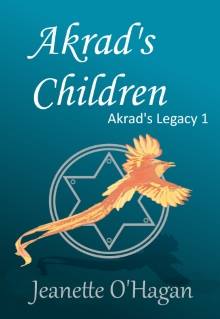
From Arkad’s Children – which is released today!

Lutan Jakan nodded to the Tamrin guard and pushed open the makeshift door of the stables. A musty smell of old hay, manure and sweaty fear pervaded the dim interior. Patches of light filtered down through the rotted thatch roof and warped walls onto a hardened mud floor. A rag tag bunch of girls and boys ranging from ten to sixteen sat around the on sacks, piles and boxes or sprawled out on sleeping mats.

‘Listen up, youngsters. This is Dinnis, another lost waif. Hasuk lad, show him the facilities and a place to doss down for the night.’

Even in the filtered light, it was obvious all present had the bronzed colouring of the Tamrin. No blue-skinned Nolmec here. The palest was the colour of pig ivory, others like dark wood. His sister was not among them.

Dinnis caught the Lutan’s hand. ‘Ista?’

‘Don’t worry, lad. She’s safe.’ He turned and left, the door rocking shut behind him.

‘Karis …’ No, not Nolmec. Dinnis searched his memory for the Tamrin greeting appropriate for this situation. ‘Ah, greetings friends.’

A few glanced his ways, their faces unsmiling. No one moved or spoke. Most of the group looked tough; barefooted with work roughened hands and blunt speech. They gathered in clumps around the fire, dipping their maizebread into bowls of hot bean stew, gulping it down with few words.

‘Here, eat this.’ The boy Jakan had named Hasuk thrust a clay bowl at him before turning and joining his two friends at the far end of the stalls.

Dinnis ate his meal a little distance from the fire and alone, before finding a spot to sleep.

Next day, as the sun rose in a dirt-smudged sky, Jakan arrived with another officer, a lutan by the shape of his oval chest plate and headdress.

‘Okay boys … and girls. I’m leaving with the main army and will arrange for your care once I get to Tarka. You will be travelling with the baggage train. Lutan Zaven will look after you. There will be no free rides—you need to help.

Lutan Zaven directed the orphans to help dismantle the tents and pack up the heavy equipment and supplies. By mid-morning, the vast bulk of the army had packed up and was streaming through the outer gate heading towards Tarka far to the south, leaving behind the units under Markan Haka command.

By the time the baggage train made its ponderous way through the gates and along the southern road, the pale washed out disc of the second moon Argenti chased the burnished orb of the sun in the western sky.

‘We just got here yesterday and have to pack up again,’ one of the children muttered.

While the youngest of the orphans perched on the back of some of the heavily laden yarmas, the older children walked. By the evening, Dinnis was relieved that they had left so late in the day. His feet stung with painful blisters and his legs felt like heavy boulders had been strapped to them.

Lutan Zaven strode towards them. ‘You older boys, dig latrine trenches for the night—over there.’

‘You’d think we were peasants,’ a burly boy about eight grumbled.

Dinnis picked up the digging tools and followed.

And then, after another solitary meal, he scrubbed the pots with some of the others. When he rolled himself up in the blanket provided and he fell to sleep instantly, despite his aching limbs.

As the days marched by, his feet toughened and his leg muscles hardened. Despite the ostracism and the teasing from his companions, the long daily trek with the added morning and evening tasks became easier. The luminous smile of the young woman with the silver skin haunted his dreams and Dinnis’ doubts began to melt away. Jakan had said that Ista was safe and the Kapok had instructed Jakan to bring him to Tarka. There would be a good reason why Papa couldn’t speak to him at North Pass.

The high mountain vistas and village scenes unfolded before him and Dinnis forgot the pain of blisters, his aching legs and overwhelming tiredness in wide-eyed wonder. In stolen moments at the stronghold, he’d read in Akrad’s books of such faraway places and dreamed of visiting them. It wasn’t quite as he’d imagined it, but soon he would be in the fabled city of Tarka with Papa.

This is from Arkad’s Children the first book in the Akrad’s Legacy series – and ties in with previous short stories and novellas in the world of Nardva by Jeanette O’Hagan — The Herbalist’s Daughter, Lakwi’s Lament, Heart of the Mountain, Blood Crystal.
A Bite of – Dinnis from Arkad’s Children

Gain insight into Dinnis, a major character in Arkad’s Children which is released today!
Q1: What do you most like about where you live and why?

Dinnis:  I live in the Golden Palace of Tamra as an age-mate to the heir to the Throne, Prince Mannok. Sounds like a dream come true, right? But it’s not. Not where I want to be, but it’s better than being treated as a captive or sent to work in the mines or killed, I guess. I do love the Royal Library – it’s huge, full of old codexes and maps and other wonders. Oh, and I like the kitchens. Always good to know where your next meal is coming from.

Q2: How would your friends describe you?

Friends? I’m not sure I have any. Well, Garvin I suppose, but he would make friends with a doorpost if he thought it was lonely. And Tilli and her family. They’d say I’m morose, difficult and snarky. Not a great warrior, but someone who knows things and gets the job done when needed.

Q3: What is your greatest ambition and why?

To make my own life, not to have my future determined for me. And to be a healer rather than a warrior, someone who brings life rather than death. It’s difficult though as I’m expected to fit in at the Palace, but I think I can do it with a bit of ingenuity.


Jeanette O’Hagan first started spinning tales in the world of Nardva at the age of eight or nine. She enjoys writing secondary world fiction, poetry, blogging and editing.

Her Nardvan stories span continents, time and cultures. They involve a mixture of courtly intrigue, adventure, romance and/or shapeshifters and magic users.

Recent publications include e-books Heart of the Mountain: a short novella, it sequel Blood Crystal: a novella, The Herbalist’s Daughter: a short story and Lakwi’s Lament: a short story. Her other short stories and poems are published in a number of anthologies including Glimpses of Light, Another Time Another Place and Futurevision. Jeanette is also writing her Akrad’s Legacy Series—a Young Adult secondary world fantasy fiction with adventure, courtly intrigue and romantic elements.

Jeanette has practised medicine, studied communication, history, theology and a Master of Arts (Writing). She loves reading, painting, travel, catching up for coffee with friends, pondering the meaning of life. She lives in Brisbane with her husband and children.

Find her at her Facebook Page or at Goodreads or on Amazon or on her websites  JennysThread.com or Jeanette O’Hagan Writes . if you want to stay up-to-date with latest publications and developments, sign up to Jeanette O’Hagan Writes e-mail newsletter.  

Con’s vigil


Con Trevithick stood on the cliff path with the pack containing all he had left in the world leaning against his left leg. He stared across the water to where Plymouth squatted like a carbuncle against the clean morning sky. It was an hour past dawn, and he had been waiting, standing stock still and silent, since just before the sun rose. To be honest, he was beginning to think himself on a fool’s errand but he couldn’t quite bring himself to turn his back and begin the long trudge home to Lamorna on his own.

He had never felt quite so alone in his life, especially when he cast his mind back to the heady days before the parliamentarians took over the city. He found it painful to remember a time when it didn’t matter who your father was so long as you kept your nose clean and worked hard. And even more painful to recall the feel of a certain small hand in his as they danced around the Maypole in Stonehouse. Of course, that was back in the days when her father smiled on their courtship. Con stood alone in the early sunlight and tears pricked his eyes as he thought about their betrothal – how he had saved to buy her a little silver ring, and how she had shed tears of joy over that small gift.

But those happy days were long gone. In March, when the city fathers declared for parliament, Cornishmen were driven from the city by bands of marauding dockers. Con had been lucky to escape with a whole skin, leaving before the marauders reached his lodgings with his girl’s father’s words ringing in his ears.
“Go and be damned to you. And you can forget my girl. She weds Peter Sailmaker on her next birthday.”

Con had found work on a farm in St Germans while he waited out the spring and summer. He was a hard worker, and skilled, and he was made aware that he could wed the farmer’s comely daughter and stay on the farm in comfort for the rest of his days, but he would not marry without love. He just waited out his allotted time and kept his head down. Yesterday he had packed his belongings and shaken the kindly farmer’s big hand.

He headed north-east as he had a thing to do before he turned his face to his father’s house and the boats bobbing on the tide in Lamorna Cove. And that was why he was standing on the clifftop watching the city over the border with a mixture of hope and fear in his heart.

It was September and he was here to keep a promise.

It was September, and there was a taste of frost in the morning air. It was September and tomorrow his love was to be the bride of another man. It was September, and Con was waiting to see if other folk kept their promises.

As he watched the water’s edge and the tiny pathway that climbed to where he stood, he began to realise how futile were his hopes. It was past time. His dream was dead.

He picked up his pack and tried to ignore the tears clogging his throat.

He had just set his foot on the path when he caught the sound of something running through the bracken. He turned his head in time to see a small black and tan dog break cover and hurtle towards him. He dropped his pack and bent in time to receive a frantically wagging body in his arms. Finding himself unable to speak he clutched the terrier to his chest and stared in the direction from which it had come.

He didn’t have long to wait. First his keen ears caught the sound of footsteps, and then she was there, coming out of the dark shade with her skirts kilted up to her knees and a bundle under one arm. She smiled and he felt tears of joy run down his cheeks.
“Con,” she said joyfully, “you came, I thought you may not”.
He put the little dog down and took the half dozen steps he needed to gather her to his heart.
“I came, and I was beginning to fear you had not.”
“I missed the landing and had to beach the boat on the undershore. It took me a while.”
He smiled down into her eyes and looked at the bundle she had dropped on the grass at his feet.
“Does that mean you have left your father’s house?”
“It does. Although he won’t know until supper time. By then we shall be long gone.”

Con kissed her just once and she responded by touching a hand to his face.
“Shall we go home then love?” his voice reverberated with joy.
She put her hand in his and nodded. Turning her back on Plymouth she raised her face to the Cornish sky.
“Aye. Home it is.”

And they set their feet on the path together, with their little dog dancing around them on the springy turf.


© jane jago 2017

You are young

You are young so you shouldn’t be that
All pasty, complaisant and fat
With your mouth-ends turned down
And a grumpy-arse frown
From under your middle-aged hat

© jane jago 2017

Wednesday Writer – from ‘The Engineer’

From ‘The Engineer’ by Darran Handshaw.

“Destroy them, Engineer. I give you my command.”

“Aye aye, and so we will. Remove the aperture.”

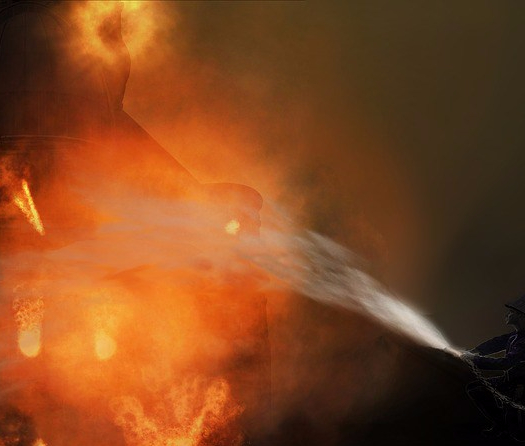
One of the attendants pulled free another blackened hide with a circular aperture in it that limited the amount of light that entered the array. There was a bright flash of light in the image of the encampment and Actaeon could see that the tent had ignited instantaneously.

“Excellent! It is alight! Rotate element one to right by one degree. Yes, now up by one half degree. That’s three of them! And one quarter degree to the right.”

As he called out the commands and lit more and more of the enemy tents ablaze, he watched the tribemen awaken in a panic as they moved to wake others and extinguish the flames. He could hear them blowing horns in the far distance to alert the whole camp. The Ruinic tribals emerged from their tents with weapons drawn and readied, but they soon realized that it was fire they were dealing with and they ran to help extinguish the field of blazing tents. The Engineer frowned as he watched several of the tribals spill from one tent, their flailing bodies engulfed in flames. He could see them screaming through the scope, though they were much too far away for their screams to be heard. They struggled in abject horror for but a moment before they lay still, the fire flaring up as their bodies continued to burn.

“Very good, Engineer. He will wait until they are the most preoccupied and disorganized,” said the Prince, his voice snapping Actaeon out of his horror.

He’d just burned those men to death – he hadn’t realized that the tents would catch fire so quickly. It was only supposed to serve as a distraction. Even though he knew many of the tribals far off in the distance were destined for death by sword and spear, it didn’t subtract from the savage fact that he had caused those deaths by fire.

As if on cue, in the bottom left corner of the image arrived the Shieldian troopers, led by Enrion, his sword held high. Adjutant Minovo was at his side, her two swords out and flashing in a blur as she reached the first Ruinic lookout, sending his head spiraling to the side. At their flank were Trench and Wave. The duo was unmistakable with their disparity in height. As they neared the panicked tribals, Wave let loose a bolt from his crossbow and slung it over his shoulder, his own rapier a blur that sent enemies reeling to either side of him as they fell as he dodged and weaved between their spear thrusts. Trench stood behind him with his heavy maul and took care of anyone that the swordsman couldn’t handle, shattering them each in a single blow.

Indros placed a hand on Actaeon’s shoulder and spoke in a low voice that only the Engineer could hear: “Do not fail me now, Engineer. War is Death. If not theirs, then ours. Continue your work. Our countrymen are down there fighting.”

Actaeon shuddered and scratched his right arm before he continued to call his commands to Endira, lighting more and more of the encampment on fire and even using the light to blind enemy troops that turned to face the attacking Shieldians. Many tribals could be seen fleeing toward the distant forest at the foot of the mountains. A group of the tribals had begun to organize at the right side of the camp, their shields held high to block the light that swept over them from the Suntower.


You can Follow The Engineer on Facebook it is  is due out in late 2017.

A Bite of… Darran Handshaw

Q1: Your main character Actaeon is something of an inventor as well as an engineer, how much of you is in him – or is there another who was your main inspiration when writing him?

Great question.  There’s definitely a bit of me in Actaeon.  Before he was a character in the novel, he was a character that I played in a game, so it is useful to stick to what you know for certain aspects.  I’m an engineer and inventor in real life, but I work in a very specific field.  Imagining what someone with an engineering mindset – a person that uses empirical evidence, can deduct clues about things around them, and create intuitive solutions to real problems – could do in a world where people only have a rudimentary understanding of things around them and in most cases no desire to learn more, was a very compelling thing to write about.  Some of Actaeon’s shortcomings too, his verbosity, nervous tics and social awkwardness are exaggerations on some of my own qualities.  It is fun to poke fun at some of those quirks through Actaeon as a character.

One big difference between myself and Actaeon is that he has the potential to use his skills for either good or evil at the start of the novel.  I think as the reader progresses into the story they’ll see that he threads his way along some very morally gray areas.  In the end, it is the other characters in the story that inspire him toward the direction he chooses with that.  It is one of the tension points of the story though and you can see how it would be easy for him to turn his back on any morals with the ways some of the people in Redemption threaten him.

Q2: Why did you decide to write The Engineer and what did you need to set in place before you could do so?

I’ve started writing probably a half dozen books before The Engineer, but I’d never finished a novel until this one.  The big difference for me with this story was that it is the true story of how I met my wife on Redemption MUSH, a text-based RPG that she had created with a friend. The fact that the story was so personal to me was certainly encouraging for me to write.

There were a few things that needed to be set in place before I could complete the novel.  One was to set aside a time to write every week to make sure I could slowly but surely finish the book.  Another key item that I wanted to do was to speak with some of my old in-game friends to see if I could include their characters in the story.  It wasn’t necessary to the story, but the inclusion of their characters certainly made the story feel more real and it was great to share the story with so many people. Everyone I spoke to gave me the go ahead and was very excited about reading the final story.  Who knows, maybe there’ll be a few spinoffs if people write their own characters’ stories.

Q3: How do you feel your experiences as a firefighter have come out in your writing?

That’s another fantastic question and one I really hadn’t considered.  They’ve certainly come out in many ways during the story, especially when injuries, explosions and fires occur.  The construction of Act’s workshop too, is designed to be virtually fireproof.

Trench and Wave are the biggest way that I can see my firefighting experiences come out though.  They are two veteran mercenaries that Actaeon hires early in the story to help protect him.  The brotherhood that those two share is quite similar to what we have in the fire service.  The two of them have been through a ton of difficult times together and they’ve learned to get through it with humor, competent teamwork and no small amount of ball-breaking.  There are a lot of traumatic events from their past that haunt them, and we hear shadows from their history as the story progresses, but they never let their experiences stop them from doing the right thing, or just their best in general.  They’ve got a rich backstory that is only hinted at and I hope to write their story one day.

Darran M. Handshaw is the author of The Engineer – his first novel, anticipated for late 2017. In addition to writing, Darran works as an R&D Engineer where he designs and invents new products and holds more than 15 patents. In his spare time, Darran is also a firefighter and EMT with his local fire department where he recently completed a two-year term as Captain. When Darran isn’t writing, inventing things, or responding to emergencies, he enjoys his time with his wife, Stefanie, and baby son, Corwin. You can follow Darran on Twitter.

Catch the Wind

We tried to catch the wind today
My fickle friend and me
But as the zephyr flew this way
My friend deserted me
We tried to catch a friend today
The winter wind and I
But as my friend came out to play
The breeze did wave goodbye
Oh you may have the wind he sighed
Should that be as you choose
Or you may have me at your side
You win one, one you lose
We tried to catch the wind today
A wind to sail us home
But fickle fate gangs aft agley
And now I cry alone

© jane jago 2017

Monday Meme – The Tooth Fairy


Sunday lunch, and Caroline carefully masticated her roast lamb and over-cooked vegetables whilst attempting to tune out the carefully genteel tones of her mother-in-law, Marjorie, as she treated them to her own version of the Sunday sermon. Today it was immigrants. And the EU, of course. But that was a blessed relief from child care ‘hints’ and open criticism of the way she and her sister-in-law dressed, spoke, and, one very memorable Sunday indeed, even how they smelled.

‘Yaddah, Yaddah’ she thought as she tried to push the two-hour journey home, with its inevitable sugar-induced tantrums and car sickness, to the back of her mind. She must have been doing quite well, because she was dragged back to the world of serviettes and Sunday best china by a derisive snort from her left-hand neighbour. She turned a polite face to her husband’s younger brother, who wagged his head at her. Tuning back into the Sunday homily she realised why even he was pissed off. Marjorie was busily assuring her grandchildren that of course the going rate for the tooth fairy had gone up in line with inflation. About five pounds per tooth would be fair, she thought.

Caroline sighed inwardly and decided she couldn’t face any more lunch. She put her knife and fork down and fished about in her head for something uncontroversial to say.

Before she had a chance to speak, and in an almost unheard of break from the rigidly enforced etiquette which normally prevailed, her husband leaned across from his seat on the other side of the table and whispered in her ear.
‘Never mind the bloody tooth fairy. I’d rather like there to be a Shut up Mother fairy.’
In a rare moment of whimsy Caroline grinned at him. ‘You never know, there might be. But you have to invite her in.’
He grinned back at her, though the lines of tension that bracketed his mouth from the moment they arrived at his mother’s house until the moment they left were still etched into his skin. ‘I do, don’t I? Very well.’ He closed his eyes and spoke softly. ‘Shut up Mother fairy, I most humbly invite you into this house.’
He sat back in his chair, and the air filled with mocking laughter. At the head of the table Marjorie’s mouth kept right on moving, but now she no longer made a sound…


Heavenly Host


I wondered, lonely and so proud
My thoughts so high, oe’r window sills
When all at once I was endowed
With views through neighbours curtain frills.

I glimpsed the barest hint of skin
As through my bedroom blinds I’d peek.
To speculate who was within
The electoral roll didst seek.

I glimpsed again and flesh did see
That lofted oe’r sleek curves and tan
But then Mama did answer me:
“Moons? That new neighbour? It’s a man.”

So yet I peer the blinds between
And linger on the vision there
The secret seer, sight unseen
So it’s a man? I could not care!

Moonbeam Farquhar Metheringham IV

Join Moonbeam Farquhar Metheringham IV’s Fan Club

Sunday Stars Jayden Hunter – Eyes in the Sky

A flash fiction written especially for us by Jayden Hunter.

Two giant eyes appeared in the sky last Tuesday.  The bright globes seemed alive, and their movements gave me the impression they were watching humanity.

Like a disembodied God.

Or a scientist observing the behavior of ants.

One eye was a dark chocolate brown.

The other green, which was unusual enough, considering it’s not normal for two giant eyes to appear in the sky.  The mismatched eyes only made the whole situation stranger—although why this was—I could never put my finger on.

“Why not three eyes?” an unnamed stranger asked the gathering crowd.

“Huh?”

“You know, like a trinity of eyes?”

“Father, Son, and Spirit?” a frog asked.

“Wait a minute, there’s talking frogs in this story?” a pretty woman wondered–out loud–but to nobody in particular.

“I was a Prince,” the frog said.  “Just last Thursday.”

I contemplated the frog, the giant eyes, and the woman. Sometimes, in life, you have to keep unusual things separated in your mind with reminders (to yourself) that not everything is at it seems.  I was reasonably confident I’d not ingested any mushrooms (or other drugs).  I knew I wasn’t hooked up to any virtual reality gear.  I wasn’t floating in nano-liquid.  The Body-Pod by EvialgorCorp hadn’t been invented yet, although, to be completely honest, I couldn’t swear I hadn’t been in the future yesterday.  I might have jumped into a time travel worm-hole and blacked out.

It happens.

I figured I’d take charge of the situation.  I screamed at the eyes, “What do you want?”

Due to the fact that no mouth appeared in the sky, there was no answer.

Or, possibly, whatever being was behind the eyes refused to speak.  Maybe it was a God, I thought, more than a few times.

Gods tend to be reticent.

Eyeballs.

That was it.

“I’m not sure there are any ears,” the frog observed.

“I noticed that,” I said while eyeing, slyly I thought, the woman.  She’d become, in my mind, more attractive during the period the crowd grew in size.  I’d later find out her name was Fiona.  Whenever we were alone, she seemed quite average, but get her in a crowd and all of a sudden she was a supermodel.  Don’t ask me to explain this, I can’t.  Sorry.

“You don’t appear to have any ears,” Fiona said to the frog.  “But you hear just fine.”

“That I don’t seem to have any ears is correct.  But I have frog ears.  It’s obvious.  I’m talking to you, for instance.”

“I’m not sure that proves anything,” she countered.  “In these situations, nothing is absolute.”

“Everything is subjective,” I stated.  I felt sort of stupid after I said this, but…wait!

Wait, a minute.  I’m remembering this slightly wrong.  Here is what I actually shouted boldly was this: “Nothing in life is certain!”

“True,” Fiona said.

“But, I am certain I like you,” I said.  Perhaps a bit shyly, but I didn’t want to scare her.

I hate it when a woman bolts when all I wanted to do was marry her or something equally foolish, like go for a mint chip ice cream.  Anyway, the day was strange enough without having to deal with tragic loss, so I took a deep breath and tried to calm myself.

The frog smiled (don’t ask me how I knew he was smiling–I just did).  “You’d feel a tragic loss if you scared off a woman you only just met?” the frog asked me.

“You’re a mind reader, too?” I asked him.  Or her.  It’s hard to tell with frogs.

“But, of course,” he replied after capturing a fly in his long, sticky tongue.  He ate it in one swallow.

“Well then,” I suggested, “tell us what the mind behind those eyes is thinking.”

“Hmm,” the green, tailless amphibian hummed.  His short, squat body, moist from a recent dip in fresh waters, lurched forward.  His long powerful legs twitched.  He seemed to think for a long time, but I think, in retrospect, it was only for a minute.  Or two.  “There’s nothing there.”

“So, it’s an illusion?” I asked.

“Indeed.”

“Would you care to join me for lunch?” I asked the pretty woman.

“Sure,” she said.

And that was how I met my wife.

More of Jayden’s writing can be found here.

Start a Blog at WordPress.com.

Up ↑