Jane Jago’s Daily Drabble – Two Hundred and Eighty-Three

Ruffryd married Marianna for political expediency, then rode off to war and more or less forgot her. He came home occasionally, between campaigns, to find his home well run – plus a couple of unexplainable children.

But he asked no awkward questions.

In the summer of his fortieth year he was captured by the veiled ones, who put out his eyes before sending him back to his royal master.

The king sent him home with a drunkard and an idiot to smooth his passage.

But they got there, and Marianna read to him every night of the rest of his life. 

©️jj 2019

Coffee Break Read -The Night Bus

The midnight bus across town. Nobody’s idea of fun. But beggars can’t be choosers and without her job Louise would have been a literal beggar as well as a metaphorical one. Accordingly, five nights a week found her crouched in a corner of the upper deck making herself as small and inconspicuous as possible.

Fridays were the worst. At the end of the week it was all an exhausted Louise could do to endure the scent of vomit and the sting of routine abuse from drunks and tired whores.

This particular Friday, the bus was full to groaning and she was squashed in next to a huge woman with pendulous breasts and galloping halitosis. Five youths in hoodies erupted up the stairs brandishing knives. Louise’s companion screamed before throwing herself to the ground and rolling around as if in a fit. The would-be steamers stared
“Woss wrong wiv ‘er?”
One stepped in for a closer look and the jerking woman set her teeth in his calf, gnawing on him as if he were a chicken drumstick. He screamed and dropped his knife, too shocked to even kick out at her. His mates stared round-eyed.
“I’d watch that if I was you,” Louise ventured. “She probably has rabies.”
They turned and ran, falling over each other in their haste to be elsewhere.

The fat woman sat up and winked at Louise.
“Well done, love. I usually has to bite at least two…”

© jane Jago 2017

Jane Jago’s Daily Drabble – Two Hundred and Eighty-Two

They bound her and threw her into one of their foul-smelling skin tents from where she heard the moment when the minstrel’s glorious voice broke under their torturer’s hands. She swore to have vengeance, as tears of rage and pity, streaked her dirty cheeks.

When they dragged her to her feet she thought herself about to die, but instead she was herded into another tent where a tattooed giant ordered them to unbind her.

He was arrogant, that would-be rapist, and she sunk her teeth into his jugular, dying her own death in a pool of his blood.

©️jj 2019

Jane Jago’s Daily Drabble – Two Hundred and Eighty-One

The gardener had been breeding roses for almost eighty years. He had always created the most beautiful of blooms. But now his hands were too twisted and his eyes too dim to do the delicate pollination. 

These days his students, who loved him, did the work.

It was June and the last rose he had made with his own hands was ready. He stood beside it smelling its perfume.

The queen’s majesty touched its petals gently.

“It’s beautiful, will you name it please?”

His old eyes filled with tears. “I shall call her Elsa May, for my dear departed wife.”

©️jj 2019

Coffee Break Read – In the Dark and Shrouded by Snow

As he left the players’ camp the night sky was overcast, heavy with pregnant clouds. Before he had gone more than a few paces further, the snow was falling again. The dwelling he sought was in the grim, poverty-wracked, suburbs, pressed against the walls of Tabruth and nestled in the corner of a row of four lean-to shacks which shared a common bond of odour and ordure. In the dark and shrouded by snow, one could not see the extreme of poverty that they represented and could mistake the crude buildings for some semblance of reasonable shelter.
Someone had welcomed their livestock into the family rooms below so that they could keep warm for the night. Ignoring the sharp bark of a dog, Avilon spoke a single word to a figure watching from the shadows and then slipped into the hovel and found it lit badly by a thin-wicked oil lamp and heated poorly by an inadequate fire, fuelled by dried dung. Thus lived most of the free-folk of Temsevar – and thus thousands of the youngest and oldest would die each year during the long and relentless winter moons, of too much cold and too little food.
The smoky room contained three ponies as well as two of the three men who remained to Avilon from the six he had brought with him to Tabruth. They were playing dice by the leering light of the fire, but at his entrance, both had reached for the pistols they carried; his voice stopped them.
“Yanis, what are you doing still here?” he demanded, his voice cutting with anger. “You should be half way to Cressida by now.”
One of the two men stood up, looking uneasy.
“I sent Farran instead. He has family to look for back home. His wife is with child. I have no one to worry for me and -” his voice trailed into silence beneath the intense stare of his commander.
“Really?” Avilon contained his anger, but his voice sounded colder than the blizzard winds. “I don’t suppose it occurred to you I might have had a reason for wanting you to go and Farran to stay?”
Even in the poor light, he could see that Yanis had lost colour. “Farran knows the mountains – ”
“As well as you do?” Avilon provided, cutting across the other man like a whiplash. “Let us hope then that you know Tabruth as well as he – unlikely as he was born and raised here and you have never more than visited.”
Yanis was pinned to the spot by Avilon’s glare.
“I’m sorry – I –” he began.
“No. I am the one who is sorry,” Avilon told him, but with no sense of any apology. “Sorry I trusted you and sorry I made the mistake of expecting my orders to be obeyed. Now let’s see if you can obey this one – get out in the cold and relieve Col.”
The other man left wordlessly and Avilon crossed to the small ladder that separated the sleeping loft from the living area of the hovel. He had not slept in the last two days and saw little prospect of getting much sleep tonight, but if he was going to keep operating effectively he needed to snatch at least some rest. The rough blankets did not do much to abet the fire below in terms of generating warmth, but blocked out a little more of the ice-banked wind which was blowing through the loft as if the roof and walls did not exist. Forcing his mind into neutral and pulling his awareness from the biting cold, he took himself into a sleep state.

From Transgressor: Dues of Blood, a Fortune’s Fools book by E.M. Swift-Hook

Author Feature – To See The Light Return: a Brexitopian novel by Sophie Galleymore Bird

Decades into the future, in a disUnited Kingdom, the breakaway county of Devon harbours dark secrets as its leader, Mayor Spight, trades with the rogue state of New Jersey to keep the engines of state running. Resistance agents are working against the clock to restore power to the people, but time is running out. Young Primrose, tithed by her parents to serve the county, tries to escape the horrors of the fate planned for her…

The surface of the drive was pitted, eroded by decades of heavy rain channelling itself down the hill, but the road beyond was worse and her progress slowed even more as she struggled to keep her balance on the ruts. Her slippers kept coming off and it was an effort to stoop and pull them out of clods of mud, then slip them back on her sore feet. She was sweating and breathing hard even though she was going downhill, and the dark and quiet were so unfamiliar, after all these years of being indoors, that she was terrified. 
It began to rain, pattering drops giving way to a steady downpour; soon her nightdress was plastered to her and she was shivering.
For half an hour, she had no company but the trees – whispering overhead as the breeze built up – and the occasional scuttling of something small fleeing from her, making her jump. But she kept going, gritting her teeth against the pain in her joints and chafing of her thighs, her wet nightdress clinging to her shins and making it even harder for her to walk. She lost her slippers in the dark and was too miserable to go back to look for them. 
She made it perhaps half a mile before she heard a car engine approaching behind her. The sides of the lane banked steeply; there was nowhere for her to hide before headlights swung around the bend and she was trapped in their glare, blind. The car slowed wheezily beside her and a window stuttered down.
‘And where do you think you’re going, Missy?’ Dorcas’s tone was light, but Primrose could hear the anger underneath, sliding like knives under silk, ready to tear her head off. ‘You get yourself in this car, Primrose, or I won’t be held responsible for what happens to you.’
Defeated, hanging her head, the girl stumbled around the bonnet to the passenger side and fell into the seat, the car’s suspension complaining loudly as it dipped.
As she executed a clumsy reverse back up the hill, to make a five-point turn at the entrance to the drive, Dorcas berated Primrose at length. The girl was too sick with shame and disappointment to do more than hang her head and cry into her lap, and so she missed the note of fear behind the anger.
‘What were you thinking? Making me waste all this fuel finding you, selfish cow … and after all I’ve done for you, keeping you all these years, useless lump … You’d best hope Mr Spight doesn’t hear about this or we’ll both be…’ 
Frowning, Dorcas clamped her mouth shut, remaining silent throughout the time it took to get them back to the fat farm and up the stairs to Primrose’s room, hauling the girl mercilessly behind her and ignoring her whimpers. None of the other inmates appeared to see what was going on but Primrose could sense them behind the closed doors lining the corridor and imagined them straining their ears, agog at her attempted escape. 

A Bite of... Sophie Galleymore Bird
Q1: How much of you is in your hero and villain? 

There’s a bit of me in all my characters. I’m much more comfortable writing the villains, funnily enough, and I usually empathise with some aspect of their character

Q2: Chips or pasta?

Chips every time. I’m addicted to potatoes.

Q3: Have you ever written somebody you love into a book?

I wrote my then-crush and best friend into my first book as my heroine. Sort of heroine – she is doppelgangered into a sex-crazed, man-eating monster by a boyfriend. The friend was quite happy with the characterisation.

Sophie Galleymore Bird (born 1967) had her first novel, Maneater, published in 1994. Due to a concatenation of circumstances, the version published was a lot ruder than originally intended and she was too ambivalent about it to publicise it or push its readership – it now languishes in obscurity. But it was once cited in a student dissertation as an example of feminist omnisexuality, which made her very proud.
Two subsequent novels were consigned to the bottom drawer and it was not until To See The Light Return was published in 2019 that she was back in print. TSTLR is her first self-published novel.
As well as writing, Sophie works with environmental organisations, with a special interest in food and renewable energy. She lives with her family in a wing of a mock-Gothic manse surrounded by an abundance of wildlife – including bats in a belfry – and is currently working on a trilogy of crime thrillers.

You can find Sophie on Facebook, Twitter and her blog.


Jane Jago’s Daily Drabble – Two Hundred and Eighty

When Duggie indicated he wanted a garden of his own, Mama gave him a tiny plot beside the sandpit. He grew a giant sunflower and some stinging nettles. Next spring, he was four years old and still stubbornly inarticulate. The doctors wanted to send him to a clinic in Switzerland for ‘therapy’. Mama shooed them away.

“Leave him. He is growing stronger by the day. He will speak when he is ready.”

They planted his garden together and he watered it daily.

When it was a blaze of colour he pulled on her hand.

“Look Mama,” he said, “pansies.” 

©️jj 2019

Best of The Thinking Quill – 4

Buenos Dias!

It is indeed I, Moonbeam Farquhar Metheringham IV, writer, agony aunt and astrologer to the famously credulous.  The renowned author of the speculative fiction classic ‘Fatswhistle and Buchtooth’.

One had been racking one’s cranium for a topic for this week’s tutorial (yes, even I sometimes find inspiration needs to pursued vigorously), when a question from Claire prompted one to consider the vital importance of symbols and symbolism to those who would create literature.

Even that bastion of unthinking vulgarity, that outpost of alien mindset, that epitome of hard-handed hard-headedness, that creature one calls Mater has in the recesses of her underused and underdeveloped brain a vestigial understanding of the importance of symbols. Only last week, she was watching some interminably boring panel programme sur le téléviseur, upon which the current Archbishop of somewhere was being castigated about yet another cover-up of ecclesiastical child abuse. Mater looked across the room at me and smiled a twisted smile.

“Moons,” she said a thought sadly. “Moons. If that churchman was to have worn his episcopal regalia, instead of sitting there like a mouse in a poorly fitting lounge suit, I reckon most of them oiks would’ve been a lot more respectful. It’s the symbols of office doncha know.” Then she refilled her gin and Guinness and no more was said.

But that brief moment of lucidity is proof, if proof were needed that the power of symbols reaches deep into the psyche – even of those as sunk into alcoholism and depravity as one’s unlovely parent.

However. En avant.

How To Start Writing A Book: The Write Symbols

When one seeks to create literary magic one needs many tools at one’s disposal. Not the least of which is the noble quest. A device by which your hero may be dispatched wherever your imagination chooses in search of some artefact or some creature without which the story can progress no further. But what does that have to do with symbols, do I hear you cry? Yes, of course, I do as your tiny crania cannot hope to make the leaps of understanding that come to one’s mind as easily and gently as a bluebottle lands on a plate of rotting meat.

Of course, the noble quest is to do with symbolism. It is one of the most symbolic of all the storylines.

First. The quest itself is a metaphor (or symbol) for the struggles that beset all humans from cradle to grave.

Second. Your hero’s solid helpmeet – uplifted from the lower orders to become his right hand – is symbolic of the common clay’s need for a god to worship and of the need gods have for worshippers.

Third. Whatever or whoever is searched for, the vicissitudes of the search are the symbolic harbingers of events in human life which must be overcome with stoicism and bravery. Tempting though hysteria and Tia Maria may be.

And finally. That which is sought is the most powerful symbol of all. It symbolises human love and human endeavour. It shows us the beauty that may be found in the depths of the human soul as we try ever harder and climb ever higher in our quest for perfect beauty.

Some common symbols explained
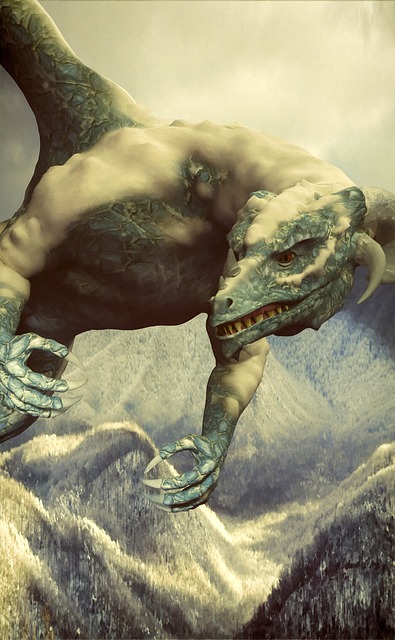
The dragon. Strength, coldness, avarice, and sex.
The virgin. Unattainability, truth, and the desire for sex.  
Water to cross. The struggle to be loved, and the desire for sex.
A cup or grail. The thirst for knowledge, and the desire for sex.
A dove. Hope and sex.
A raven. Despair and sex.
A knife. Cutting the thread that binds a child to its mother, or sex.

One could continue almost infinitely, but I am sure you are following by now.

So, my bambinos, choose your symbols with care and write them with delicacy.

Until next. Do not have nightmares and ecrit bon.

Moonbeam Farquhar Metheringham IV

You can find more of IVy’s profound thoughts in How To Start Writing A Book courtesy of E.M. Swift-Hook and Jane Jago.

Jane Jago’s Daily Drabble – Two Hundred and Seventy-Nine

Castle Dhu perched on a high promontory, and from a distance it looked as if it floated in the treetops. Travellers might take the winding road to the base of its towers, but those who lived nearby wouldn’t dare. 

It was midsummer when the strolling players rolled into town. After a successful few days, the prettiest of the dancers lost a drunken bet and set her feet on the path to the castle.

She was never seen in the world again, but those who dared look noticed the castle now sported curtains, and flowers, and bright bunting on the walls.

©️jj 2019

The Normandy Beaches

Old men, who were young men once
Can scarcely bear the memory
And yet they come to witness stand
For those who died for liberty
Old and frail they cry hard tears
As sound and smell scrape down the years
Old men, who were young men then
And to these beaches came
Where snipers and artillery
Killed friend and foe the same
Old and frail, in life’s December
Whose courage asks that we remember
Those whose tale was never told
And on these beaches grew not old

©jj 2019

Start a Blog at WordPress.com.

Up ↑