Much Dithering in Little Botheringham – 1

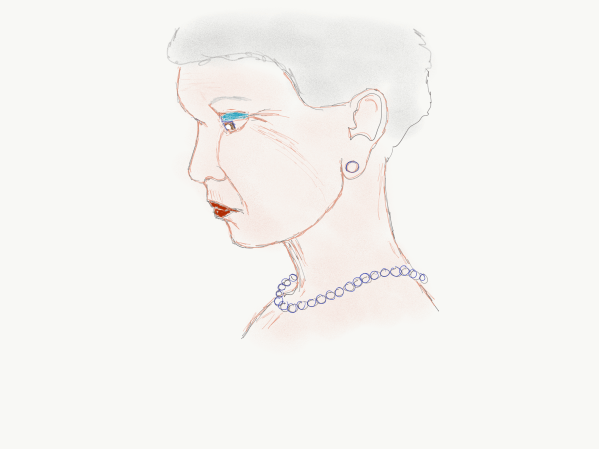
The new Sunday Serial, ‘Much Dithering in Little Botheringham’ is an everyday tale of village life and vampires, from Jane Jago and E.M. Swift-Hook.

Ginny sat back and read over the list one more time.

The Menopause

Disadvantages 
hot flushes
depression
weight gain
dry skin
dry hair
hair loss in the places that should have hair
hair gain in the places that shouldn’t
vaginal dryness
men don’t notice you in the same way anymore
you can’t have children

Advantages
no more periods (!!)
no more PMS (!!!)
warm in winter
hair less greasy
skin less greasy
fuller figure
female bonding
men don’t notice you in the same way anymore
you can’t have children
becoming a vampire

She smiled and deleted the last line. Yes, it was an advantage, if not the advantage but she couldn’t put that in this piece. 
The title was buoyantly cheerful:

Virginia Creeper is Back! 

It felt good to see that.
Her maiden name was Cropper but from almost as soon as her pithy articles on good living had become popular in the mid-1990s, ‘Virginia Creeper’ was how she had been known. 
Her phone broke the peace of the morning with a tinny rendition of ‘The Ride of the Valkyries’ and she picked it up with reluctance from the white desk and sat back in her chair with a sigh as she answered it. Beyond the rectangle of her laptop’s screen, she could see through the window of her small cottage into the garden where two brownish birds were perched on the bird table, pecking at the wild bird seed she’d put out for them.
“Hello Lucinda, how are you?”
“Wonderful, wonderful. More to the point how are you? Burying yourself away in darkest rural England. It can’t be good for you.”
Ginny watched as a larger, black coloured, bird descended on the bird table and the other two flew off. She wondered idly what sort of birds they all were. Sparrows? Starlings? What colour were sparrows supposed to be anyway?
“I think it’s the best thing I’ve done in the last five years,” she answered honestly. 
“Are you sure it’s not just another phase of your menopausal depression? I worry about you all alone in the middle of nowhere with all that mud and muck and only yokels and bumpkins for company. You could still come back to London, you know. Keep that place as a holiday let or whatever.”
Ginny groaned.
“I’m not coming back, Lucinda. I love it here.”
“Just think what you’re missing, though.”
Ginny thought.
She had worked her way up the greasy pole from local reporter to tabloid features writer. Then when the internet became truly a ‘thing’ she had been one of the first to migrate online and her blog became essential reading for those looking for lifestyle advice – if the lifestyle was one that was both fashionable and organic.
Then it had all fallen apart.
Small things.
Complaining about the heat when others were cuddling up in warm coats.
Losing her temper once too often. Getting over-merry at a social event where there were too many who mattered. Her boyfriend and partner of the last fifteen years walking out after a pointless row.
Then her appearance started to change.
Her hair started thinning, leaving a noticeable bald patch. Her skin became dry and flakey, so each time she undressed a small snowstorm ensued. She found herself staring at her face in the mirror and thinking a stranger was staring back. It had taken waking each morning with a nameless feeling of dread to make her run to her GP, terrified she was in the grip of some awful illness. 
Her GP had been patronising and sanctimonious. It was all perfectly natural, he explained, nothing for her to worry about. She was, the GP revealed, going through the menopause. The GP talked about HRT and Ginny shook her head. There were too many scare stories, she’d even written some of them herself, and in the vulnerable place she was in, taking it seemed too big a step to take.
So she had suffered in silence.
Quite literally.
Everything in her life had ground to a standstill.
Even her cat had moved out and taken up with the man next door.
It had been worse than going through puberty backwards.
She had fled London to avoid everyone she knew. Using almost all her savings to purchase this little cottage and living on the little that remained. One of the reasons she was once more setting finger to keyboard was that steady evaporation of her funds.
“You still there, Ginny? Not done one of you silent withdrawal things again?”
“No. Not even slightly. I was just thinking what I was missing, as you suggested. The endless round of artificial smiles, the false promises, the free samples delivered with cloying fake goodwill and the backstabs and even death threats when I didn’t endorse them. And that’s not to mention the noise, the polluted air, the crushes on the tube and the dreadful traffic. Oh yes, I miss it all so much.”
“Don’t be overdramatic. You know it’s not all like that. There’s the culture, theatre, concerts, first-nights, hobnobbing with all those celebrities – you can’t tell me you don’t miss that?”
“I don’t miss it, Lucinda, not at all. But, FYI, I have decided to revive Virginia Creeper and I have a lot of interest from the broadsheets about me doing a regular feature.”
“Oh?” 
Was that a spike of acid, Ginny heard in the single syllable? If anyone had benefited from Ginny’s premature departure it had been Lucinda. Her lacklustre lifestyle pieces had become more popular in the void left when Ginny herself vanished from the scene.
“I thought you’d be pleased,” Ginny said, able to do false sincerity with the best of them.
“What is your returning piece going to focus on?”
“Oh this and that. I thought I might tell the story of how I got involved with the local Ladies’ Association.”
“Really? That would be so utterly charming.”
The relief in Lucinda’s tone was almost tangible. Ginny had to smile. That was another thing she didn’t miss about her old life, these cold false friendships required by what they all called ‘networking’.
“Oh yes, I think it will be and maybe a piece on the menopause and how it affected me.”
“I’m sure that will go down well with the Millenials,” Lucinda’s voice had taken on a slightly bored lull. Ginny knew what that meant and started counting down from twenty silently in her head.
“I am so pleased to hear you’re getting back into writing though, it will be good to see your name again in the bylines.”
Fifteen…fourteen…
“And of course if ever you do decide to return to civilization you must come and stay with me and Malcolm…”
Eight…seven…
“And of course keep in touch. I dread to think it, but  if I didn’t make these efforts to call you you’d have gone native in that place.”
“Little Botheringham,” Ginny provided helpfully.
Three…two…
“Oh yes. That was it.”
One…
“Well it’s been nice chatting but I have to go. Some of us have busy lives still. Bye for now.”
The line went dead before Ginny could add her own farewell and she put the phone down on her desk. It wasn’t a bad idea actually, telling the story of how she had come to join the Little Botheringham Ladies’ Association…

Part 2 of Much Dithering in Little Botheringham by Jane Jago and E.M. Swift-Hook, will be here next week.

Long-Forgotten

When history has unfolded the patchwork quilt of fate
When we can see, by looking back, what was the crucial date
Then, only then, can we be sure what it was that we did
To shape the way the world became, that in the present’s hid.

And every generation carves upon the rock of time
The why and wherefore they see, giving reason to their rhyme
But when we read the pages of the history they made
Things they counted highly might to nugatory fade.

We pick the flowers of the past and call it history
But most of what has been and gone remains a mystery.
The long-forgotten monuments to long-forgotten ways
Have their reason for a season that is lost in later days.

E.M. Swift-Hook

Weekend Wind Down – Haruspex

“You have no idea what you are letting yourself in for. How can you?”
Commodore Vane shook his head as he spoke, it was beyond understatement and beyond belief. The soldier’s green eyes were fixed on a point some distance behind the Commodore’s left shoulder. Their colour, so brilliant, Vane suspected genetic enhancement and their focus had been unwavering since he entered the room.
“I think I do, sir.”
He stood in a formal parade-ground stance, as ordered by the scowling Legionary Sergeant who had escorted him in and now lurked by the door. Vane had made a conscious choice not to relax him from the rigid posture. He never did with the conscripts. Vane glanced back at the remote screen he had called up, its contents invisible to anyone else. “Amnesia,” he read the word aloud and looked back at the soldier. “Total amnesia?”
“Total retrograde amnesia, sir,”
The Sergeant, a big, broad-shouldered man called Hynas, stood almost a head taller than his charge who was not much more than average height, and the ever-present scowl changed to a sneer at the words. Vane ignored him.
“And do you know why?”
“Due to an unknown trauma immediately prior to my arrest, sir.”
“Prior to, not during?” The way most of his men were brought in to begin their military career in his Legion it would not have surprised him in the slightest to find the injury had been inflicted at that point.
“Yes, sir.”
“I see.” Vane wondered if he truly did, the implications here were so disturbing. “You have no knowledge or memory of anything before your arrest?”
“None, sir.”
“And that means you have no direct knowledge or experience of what life is like outside the Legion?”
“No, sir. I do not.”
“Then how can you know you want to leave us, soldier?”
He noticed a slight hesitation then.
“I have no direct personal knowledge, sir, but I have researched a great deal about it.”
Which, he supposed, explained the hesitation. But the idea of researching the complexities of everyday life with zero experience of it, stretched his credulity. Vane tried to keep that disbelief from his voice. “Researched it?”
“Yes, sir. I have talked to other people in my unit and accessed information through the Lattice.”
Everyday life as filtered through the minds of violent criminals and a military tactical data provider. The Commodore shook his head but let the naivety pass. His job was to confirm that this man met the criteria required and was fit to be released. In fact, it had been made very clear to Vane he should do whatever was needed to speed the process and allow as little questioning as possible.
But this man was no ordinary ex-criminal. Once – and for many years – his name topped ‘most wanted’ lists throughout the Central worlds and the broader Coalition: the Protectorates and Independent worlds. In Vane’s circle, this man’s name used to be a household word for mindless destruction – the bogeyman of ultimate evil.
Avilon Revid.
Vane found it a curious experience to meet the man behind the myth, but it made the responsibility he now held a heavy one, weighing up all the factors to consider if Revid should be discharged. Revid might have a legal right to be considered for release, but that was not the same as having the right to be released. That decision ultimately lay with Vane and it was one he was not finding at all straight forward.
“Well, you passed your orientation course without any problem and have been declared no danger to civilians.”
No danger.
A bureaucratic joke even a military man such as the Commodore could appreciate. All the Special Legion were more than just dangerous. All serving a sentence for extremes of violent crime. A sentence that included enforced invasive surgery, implants, and drugs to enhance their capabilities.
The brutal training regimens and suicidal military missions were sweetened by the promise of freedom after five years spotless service – a promise almost never fulfilled. In the eight years he had spent co-opted as commander of the Special Legion, perhaps a dozen other men had stood before Vane for discharge approval. Of those, less than half walked out as free citizens. He was not willing to risk any of the monsters he commanded back onto the streets without a very high threshold of evidence to demonstrate they were indeed ‘no danger to civilians’.
Vane nursed no illusions about the fate of those conscripted to serve under him. For the vast majority, joining the Specials meant nothing more than a deferred death sentence. His troops served with an average life expectancy of just under two years. Most died very quickly, either on active service or were killed in the gruelling training. Others fell afoul of their own violent recreational activities or failed to sustain the psychological strength needed and committed suicide. Some died in brawls or were murdered by their comrades. Yet it remained a truism whenever a dirty job needed doing anywhere in the Coalition’s sphere of influence, the Specials were first on the ground, often ahead of the AI mechs. Vane took pride from that. He heard the troops did too.
Ironically, it meant, to be standing here, this soldier could only be the toughest kind: a man who could survive and even thrive in such an environment.

If you want to keep reading, Trust A Few by E.M. Swift-Hook is FREE to download until 10 May and you can pick up the other two books in the Haruspex Trilogy, Edge of Doom and A Walking Shadow for 0.99 each!

Lockdown Blues

I got a feelin’ called the lockdown blues
Goes from my head to my blue suede shoes
Stops my fingers snapping
Stops my toes from tapping 
Stops my thighs from slapping 
Stops my voice from rapping
I got the stay at home alone misery
I never realised how boring I can be
I have no conversation 
I feel only frustration 
Have lost all sensation
Even bored by ************
I got the lockdown lockjaw blues
Made even worse by the bloody news
We’re in this together?
Like birds of a feather?
Never mind the weather?
This might last forever?
I got the blues, the lockdown blues 
But thank the lord for cake. And booze…

©️janejago 2020

Moonbeam Farquhar Metheringham IV’s Writer’s Corner – Publishers

Namaste, my disciples.

It seems that there are still some people out there who appreciate the value of good, old-fashioned, solid advice. I recently heard from Stephen who had just been appraised of my overly generous offer to provide helpful solutions to less worldly-wise and experienced authors, struggling with the minutiae of the literary life.

It’s hard to believe that authors weren’t queuing around the corner for this kind of positive reinforcement. You just can’t please some people. If I may lay a humble question at the feet of the omnipotent IVy:

What should an up and thrusting new author do when they become tired of being ignored by their publisher; when even the hammer blow of e-rhetoric fails to smash its way into their ivory tower? Should they:

  1. a) continue with fortitude
  2. b) continue with attitude
  3. c) find another publisher
  4. d) bomb their building?

I brace myself for the wisdom in true author style (with fingers rammed firmly in ears and accompanying la la las), just in case said wisdom is in danger of hitting the mark.

Stephen

This is a question many of us face in the early days of our authorial journey. Myself, I foresaw the possibility in advance and took careful steps to circumnavigate the entire issue by simply not having a publisher.

Admittedly, I considered the idea. But the incredible lack of appreciation those who I did approach showed for my – now universally acclaimed – literary masterpiece, rapidly convinced me that they were not worthy of receiving a slice of the riches it would be earning. I shook their dust from my feet and took the high road into the perilous mountains of self-publication.

Perilous but liberating.

The freedom to say what I wish to say in the way I wish to say it. To share of my artistic genius in the most intimate of relationships with my readership, not filtered or separated by layers of PR. Heart to heart. Mano a mano. That is the only way to be.

For me.

But it is not a way for the weak or the ignorant.

So, for you, dear Stephen, I offer you solution (e). E for the essential epitome which proves the perennial panacea for your problem. Nix that publisher and instead of touting your books desperately for approval to another, find one you can pay handsomely to provide the service you require. Then, as their customer, you will be king and they will be bound to answer your emails, phone calls, texts and all other communications. But be aware this extra level of service may also carry an extra charge…

Moonbeam Farquhar Metheringham IV

If you have a literary problem you may avail yourself of one’s wisdom by posting to my Facebook presence.

You can find more of IVy’s profound thoughts in How To Start Writing A Book courtesy of E.M. Swift-Hook and Jane Jago.

Jane Jago’s Drabbles – Four Hundred and Thirty-One

The first Valentines Day they were together he bought her lilies. A huge bunch of wickedly expensive lilies. She hated lilies, but she was too polite and too much in love to say so.

She lived to bitterly regret her maidenly politeness, as he bought her lilies on every special occasion. Even insisted she carried the horrors in her wedding bouquet.

For better than forty years, the cloying scent of stargazer lilies dogged her footsteps. 

The day she awoke to find him cold and still in their bed etched itself on her brain with just three words. 

‘No more lilies.’

©️jj 2020

Coffee Break Read – Social Distance

Alice dressed with neatness and propriety before carefully coiling  and pinning her hair. She was aware that her neighbours thought her an oddity to bother with her appearance when she would see nobody from one day’s end to the next. Her immediate neighbour, she knew, spent all day in a dressing gown and could be heard singing maudlin ditties as the gin took effect.
Alice thought of it as ‘lock-down fever’, and although she could halfway understand the desperation of the lonely people who surrounded her, she had no intention of succumbing to temptation. She reckoned routine was the antidote to madness so she showered, dressed, and groomed her hair before breakfasting at the table dressed with an embroidered linen cloth and her pretty china.
This particular morning she looked critically at her reflection, wondering when she had become so old before walking carefully into her tiny kitchen and putting the kettle on. 
As she ate her toast she remembered that today was Wednesday. Which meant an uncomfortable Skype conversation with her daughter. It had, she privately thought, been better before lock-down when her daughter’s elastic conscience could be placated by a monthly coffee in Waitrose’s cafe. But now, of course, it would look bad if they didn’t speak at least once a week. 
Wednesday at eleven o’clock had been fixed on as a time that would be convenient to both. Or, to be more accurate, convenient to Chloe, who still managed to be frantically busy when nobody was allowed to go anywhere.
But before then there was a table to be cleared and dishes to be washed. 
With her few simple chores done, Alice powered up the laptop it had taken her the best part of a year to master. She had an hour to play Scrabble against the world and relax her mind before the frustration of the weekly duty call.
The big surprise when she tried to find her game was that it wouldn’t come up. Instead the familiar face of her errant husband smiled at her from the screen.
“Hello Alice.”
“Jim?”
“Yes it’s me. How are you, love?”
“Not so bad. You?”
“As you see me. Just the same as ever. But. Alice. I want to say sorry.”
Alice shook her head, but she found herself smiling. Jim could always make her smile. 
“What are you sorry for?”
He looked uncomfortable. “You know, love.”
“Maybe I do.”
“I was being an idiot.”
“Not for the first time.”
“But I never meant to leave you.”
“It doesn’t matter whether you meant it or not. The result was the same.”
“It was, love. And I’m so sorry.”
Alice smiled at him, thinking how handsome he looked, and how much like a schoolboy caught out in a prank.
“What do you want me to say, Jim?”
“I don’t know. Maybe that you still love me. Even though..”
“Of course I still love you, Jim. You can’t stop loving a person just because they behaved stupidly.”
“Are you lonely, Alice?”
She suddenly felt cross. 
“Of course I’m lonely. Bloody lonely.”
“Sorry. That was crass of me. But there was a serious point to my question. If you could be with me again, even knowing what an old fool I can be, would you do it?”
Alice dashed the foolish tears from her eyes.
“Of course I would. You may be an old fool, but you are my old fool.” 
He smiled at her and it seemed as if the years fell away leaving him the brash young man who she first fell for all those years ago.
“Right then girl, you get to choose. Self-isolation or throw in your luck with me.”
“I’ll come with you please, Jim. Wherever you are. Just tell me what to do.”
“You put your hand in mine like you did on our wedding day.”
Alice was wondering how she could put anything in anything when a big brown hand appeared to come out of the screen. It was a leap of faith, but Alice found the courage to put her own hand on his palm. For a moment she felt foolish as she was touching nothing, but then the flesh beneath her fingers solidified and she felt herself being pulled gently out of her aged flesh. As her head fell forward onto the table her heart soared in gratitude.
“I’m coming Jim,” she cried. “I’m coming.”
They found her with her perfectly coiffed head resting on her folded arms and a smile on her lips….

©️Jane Jago 2020

Random Rumination – ten

The collected ‘wisdom’ of seven decades on this planet condensed into limerick form. Certainly not philosophy to live your life by…

A poet was feeling so screwed
That he tore all his papers in two
The dread seventeen 
Was turning him green
Coz he just couldn’t write a haiku

©️jj

The Magnificent World of Tallis Steelyard

Welcome to the craziest and most inconsequential of lives…

Bearing all before them

Obviously I have my own opinions on fashion. I am a believer in the old
saying that, ‘A gentleman wears his clothes, they do not wear him.’ This has the advantage of explaining why my jacket and trousers need not necessarily match and occasionally hang more loosely than the current style dictates.
When it comes to hair, I get it cut occasionally and try to ensure that it
neither gets so long that people assume I am a musician, nor so short I am mistaken for one of the criminal classes. 
For the ladies it is obvious that those who reach a certain level of affluence must needs keep a far closer eye on fashion than ever I do.
Indeed, necessity ensures that I am more up-to-date on women’s fashion than I am with regard to men’s. After all I have to be prepared to reassure a hostess or boost the morale of one of her guests. Indeed with some of my patrons I might even, in some small way, play a minor part in setting the fashion for the coming season. After all a short verse can remain in memory long after some sartorially inspired rant has faded from mind.

Chiffon and lace
Can grace
Any lady.
Advance apace
Embrace
This mantua in navy.

But I confess that when it comes to how a lady should dress her hair I remain obdurately silent. I am willing to praise the end result. I am fluent enough to talk about how the hair ‘frames’ the face, but otherwise I can feel entirely out of my depth.
Yet I have noticed over the years that styles will slowly get more and more complicated until the crescendo eventually reaches a climax and suddenly all is simplicity again.
This has happened comparatively recently. Over a period of years hair was not merely worn ‘up’ but was plaited to within an inch of its life. Then there seemed to be a burst of spontaneous madness. Whereas hair might be kept up with pins, other ladies obviously had different ideas. I saw one lady who had her maid weave her hair around a small basket containing a rather elegant flower arrangement. Well that opened the floodgates. I saw ladies whose coiffure included mirrors, stuffed animals, a ship in full sail, and in one case a birdcage containing a singing bird.
The problems these hair-styles imposed upon the lady displaying them were many. Obviously a skilled maid, with assistance, could create it. The lady merely had to walk with a straight back, move with stately grace, and sit down and stand up with care. It must be confessed that those ladies who could ‘carry off’ these styles were ladies of magnificent deportment and elegance. But even with these natural advantages, actually getting to the ball to which you had been invited was a major exercise. The timing and execution had to be with a precision senior condottieri captains could have studied to their advantage. Let us take as our example, Madam Twell. Four hours before the time she needs to leave she is dressed and her maids make their assault on her hair. Three highly skilled young women labour mightily and Madam Twell sits motionless, save to obey their instruction to, “Tilt  a little to the left,” or, “Now raise your chin.” At times Madam is invisible, hidden behind a forest of stepladders. 
Then she is ready. The sedan chair awaits. But obviously no ordinary sedan chair can carry Madam. The one summoned has no roof. But what if it rains?
Fear not, the procession sets off. There is the chair with the two bearers.
Madam is protected from the elements by what might be regarded as a canvas marquee. It is supported by a pole at each corner, and a maid carries each pole. Around this centrepiece are deployed half a dozen burly footmen, their purpose is to stop anything impeding the advance of their convoy. A path is cleared through the traffic, small boys who might throw horse dung are kept outside easy throwing distance, and rival coiffurists are prevented from gaining too close a look at the edifice before it is revealed in all its glory at the ball. Making up the number is the butler and under-butler.
Then comes the arrival at the ball itself. On the invitation itself the hostess will normally pen a number in the top left corner. This is the height of the ceiling in the principle room. Thus if the number is, for example, fifteen, the lady knows she can safely wear her hair up so it is twice the height of a man. But beware, what if the grand entrance is only ten? Or the corridor one processes along a mere nine? In this case Madam is forewarned. Her maid reconnoitred the venue and Madam Twell, the shrewd campaigner that she is, is prepared. At the main entrance the under-butler steps forward and places a wheeled tray on the ground under the sedan chair.
Gratefully the bearers lower the chair onto the tray and together they wheel the chair down the corridor into the ballroom. 

Like a woodman hauling his cart down the grundle
Sturdy chairmen sweat and swear
Cursing a misjudged stair
As madam to the ballroom they trundle

Once there, Madam Twell is handed from her chair by her husband. (This latter gentleman left half an hour after her to ensure that he was in time to provide this invaluable service.) He escorts her to greet her hostess. (Again under these circumstances I would always recommend that, should the hostess have a husband, he too is present. I have found that the presence of one husband might temper any mordant comments, but the presence of both seems to guarantee good behaviour.)
Honour satisfied, the husband will drift off, unobserved, to sit with his cronies and comment unfavourably on modern fashion, the failings of the young, and other topics which guarantee mutual agreement. 
Supernumerary gentlemen thus disposed of, the dancing may now commence.
Less than a week after the events I have described, the youngest Mistress Hamdwill appeared with close cropped hair which accentuated her gaminbeauty. A week later, throughout society, bewildered husbands discovered they had longer hair than their wives. 

And now a brief note from Jim Webster.

It’s really just to inform you that I’ve just published two more collections of stories.
The first, available on kindle, is

13BBE81B-B106-4894-ABAF-D9662D47E5CB


More of the wit, wisdom and jumbled musings of Tallis Steelyard. Meet a vengeful Lady Bountiful, an artist who smokes only the finest hallucinogenic lichens, and wonder at the audacity of the rogue who attempts to drown a poet! Indeed after reading this book you may never look at young boys and their dogs, onions, lumberjacks or usurers in quite the same way again.

A book that plumbs the depths of degradation, from murder to folk dancing, from the theft of pastry cooks to the playing of a bladder pipe in public.

The second, available on Kindle or as a paperback, is

oneafter

Once more Tallis Steelyard chronicles the life of Maljie, a lady of his acquaintance. Discover the wonders of the Hermeneutic Catherine Wheel, marvel at the use of eye-watering quantities of hot spices. We have bellringers, pop-up book shops, exploding sedan chairs, jobbing builders, literary criticism, horse theft and a revolutionary mob. We also discover what happens when a maiden, riding a white palfrey led by a dwarf, appears on the scene.

Jane Jago’s Drabbles – Four Hundred and Thirty

Emily poured Theo his Earl Grey tea in a delicate cup. It always struck her as funny, how someone so large and so intensely male could so enjoy the ritual of afternoon tea. But he had always loved everything about it, and because she loved him she had learned to love it too.

As he ate she watched him, storing memories for yet another lonely year.

The clock struck four and their precious hour was gone. But he didn’t waver and disappear. 

“You can come with me if you will.”

Emily stepped out of her body and took his hand. 

©️jj 2020

Start a Blog at WordPress.com.

Up ↑