The Chronicles of Nanny Bee – Water Shortage

They called her Nanny Bee, although as far as anyone knew she had never been a wife or a mother, let alone a grandmother. But she was popularly believed to be a witch – so Nanny it was. She lived in a pink-walled thatched cottage that crouched between the village green and the vicarage. The Reverend Alphonso Scoggins (a person of peculiarly mixed heritage and a fondness for large dinners) joked that between him and Nanny they could see the villagers from birth to burial.
Nanny’s garden was the most verdant and productive little patch you could ever imagine, and she could be found pottering in its walled prettiness from dawn to dusk almost every day. People came to visit and were given advice, or medicine, or other potions in tiny bottles or scraps of paper – but they always had the sneaking suspicion they were getting in the way of the gardening.
But there again, digging is second nature to gnomes.

The village well was running dry. Never in living memory – and some of the villagers enjoyed lengthy lifetimes – had the well ever been anything but brimful of sweet cold water.
What had happened?
A problem at the spring?
A band of hefty young men armed with shovels went to see. They returned puce-faced and angry. The precious water was being diverted to fill a lake her ladyship thought would look pretty in front of the Big House.
The vicar had a word, but returned empty-clawed and apoplectic.
He talked to Nanny. “Stupid woman doesn’t see how a village with no water is any of her problem. And himself is away at parliament until the middle of next month at least.”
“Oh well. What can be diverted can be undiverted.”
“Except she has men with guns guarding the valley.”
Nanny laughed and tapped her finger to the side of her nose.
Once she was alone she removed her boots snd socks and went to stand with her bare feet in the soil. She communed…
An hour later water started flowing into the well again.
“Thanks moles. The village owes you.”
She was answered by a deep laugh from somewhere underground.

©janejago

Jane Jago’s Summer Stories – Con’s Vigil

Con Trevithick stood on the cliff path with the pack containing all he had left in the world leaning against his left leg. He stared across the water to where Plymouth squatted like a carbuncle against the clean morning sky. It was an hour past dawn, and he had been waiting, standing stock still and silent, since just before the sun rose. To be honest, he was beginning to think himself on a fool’s errand but he couldn’t quite bring himself to turn his back and begin the long trudge home to Lamorna on his own.

He had never felt quite so alone in his life, especially when he cast his mind back to the heady days before the parliamentarians took over the city. He found it painful to remember a time when it didn’t matter who your father was so long as you kept your nose clean and worked hard. And even more painful to recall the feel of a certain small hand in his as they danced around the Maypole in Stonehouse. Of course, that was back in the days when her father smiled on their courtship. Con stood alone in the early sunlight and tears pricked his eyes as he thought about their betrothal – how he had saved to buy her a little silver ring, and how she had shed tears of joy over that small gift.

But those happy days were long gone. In March, when the city fathers declared for parliament, Cornishmen were driven from the city by bands of marauding dockers. Con had been lucky to escape with a whole skin, leaving before the marauders reached his lodgings with his girl’s father’s words ringing in his ears.
“Go and be damned to you. And you can forget my girl. She weds Peter Sailmaker on her next birthday.”

Con had found work on a farm in St Germans while he waited out the spring and summer. He was a hard worker, and skilled, and he was made aware that he could wed the farmer’s comely daughter and stay on the farm in comfort for the rest of his days, but he would not marry without love. He just waited out his allotted time and kept his head down. Yesterday he had packed his belongings and shaken the kindly farmer’s big hand.

He headed north-east as he had a thing to do before he turned his face to his father’s house and the boats bobbing on the tide in Lamorna Cove. And that was why he was standing on the clifftop watching the city over the border with a mixture of hope and fear in his heart.

It was September and he was here to keep a promise.

It was September, and there was a taste of frost in the morning air. It was September and tomorrow his love was to be the bride of another man. It was September, and Con was waiting to see if other folk kept their promises.

As he watched the water’s edge and the tiny pathway that climbed to where he stood, he began to realise how futile were his hopes. It was past time. His dream was dead.

He picked up his pack and tried to ignore the tears clogging his throat.

He had just set his foot on the path when he caught the sound of something running through the bracken. He turned his head in time to see a small black and tan dog break cover and hurtle towards him. He dropped his pack and bent in time to receive a frantically wagging body in his arms. Finding himself unable to speak he clutched the terrier to his chest and stared in the direction from which it had come.

He didn’t have long to wait. First his keen ears caught the sound of footsteps, and then she was there, coming out of the dark shade with her skirts kilted up to her knees and a bundle under one arm. She smiled and he felt tears of joy run down his cheeks.
“Con,” she said joyfully, “you came, I thought you may not”.
He put the little dog down and took the half dozen steps he needed to gather her to his heart.
“I came, and I was beginning to fear you had not.”
“I missed the landing and had to beach the boat on the undershore. It took me a while.”
He smiled down into her eyes and looked at the bundle she had dropped on the grass at his feet.
“Does that mean you have left your father’s house?”
“It does. Although he won’t know until supper time. By then we shall be long gone.”

Con kissed her just once and she responded by touching a hand to his face.
“Shall we go home then love?” his voice reverberated with joy.
She put her hand in his and nodded. Turning her back on Plymouth she raised her face to the Cornish sky.
“Aye. Home it is.”

And they set their feet on the path together, with their little dog dancing around them on the springy turf.

Jane Jago

Dog Days – Surprise

The Dog Days are the high days of summer and a perfect time to celebrate our canine companions in verse and prose.

We wanted a puppy. But Maw said no. Said we wasn’t responsible enough. Said we neglected the animals we had got, so no puppy. 

We sulked a bit, but then Elmer said Maw had a point. So we knuckled down and helped her about the place, learning to care for the cow and the sheep, and the yard dogs, and the horses. 

We was so busy we near to forgot about the puppy. But Maw never forgets nothing.

We come in from the yard one time and there’s a box by the fire. Maw smiles as the puppy jumps out…

Jane Jago

Dai and Julia – Sheep

In a modern-day Britain where the Roman Empire never left, Dai and Julia solve murder mysteries, whilst still having to manage family, friendship and domestic crises…

“Sheep.”
Dai pointed to the tussock pocked hillside that veered up sharply from the bottom of the valley. These sheep were a hardy local breed with grey-white fleeces and small curling horns. They moved with agility over the rocky slope, their flock spread out into groups, pairs and singletons.
It was early morning and the report of a new theft had them driving through the wild country that formed the hinterland between Viriconium and the coast.
“The first question I have,” Bryn said, his own gaze firmly on the narrow road ahead as it wound along beside a stream at the bottom of the valley, “is how do you take sheep from a hillside like that? I mean it’s not like they are in a field and you can just wave your arms at them and back up a trailer to the gate. You couldn’t bring something big enough to carry all those along a road like this anyway.”
They were heading out to the small crofting farm which had been the victim of the last sheep rustling incident, in the hope of gaining some insight into who might have known where the flock was when it was stolen.
“Dogs,” Dai said, wondering if he was right. “Or maybe people on quads?”
“At night?” Bryn sounded doubtful. “And over this terrain?” He gestured with one hand to the high-lifting hills on either side.
“Drones, then maybe? Though no one seems to have seen any around that shouldn’t be there, I did the checks. It does make you wonder.”
They reached the main farm buildings after a bumpy journey over a potholed mud and gravel track that led up from the road. Two skinny herding dogs with lolling tongues and high lifted tails followed the woman who owned the croft out of the door of the small cottage, built from local stone. She stayed by the house as Dai and Bryn parked up and got out, the dogs now sitting beside her. For a moment Dai was reminded of Canis and Lupo sitting beside Julia. These dogs had an owner not much taller than Julia was, but maybe a decade older. She stood, back held stiffly straight and chin lifted with an almost defensive pride, brown eyes fierce, her dark blonde hair half hidden under a woolly hat.
Bryn gave her a friendly nod as she looked between them. “You’ll be Hyla Edris, I’m SI Bryn Cartivel. We’re here…”
“About last night?” The woman’s voice sounded taut.
“That’s right. I was hoping you could help me understand a few things about what happened and then we might be able to get your sheep back more easily.”
Hyla Edris shook her head, and Dai was sure he could see an extra brightness of moisture in her eyes.
“No. You won’t be bringing my girls home. They’ll all be dead by now. But the fools that took them have no idea what they did.”
“What they..?”
“My girls weren’t bred for eating They were all bred for their wool. Five different rare breeds I had in my flock, from three different provinces. They were worth a lot, lot more than just meat on the hoof.”
“You’ll have insurance for them?”
“Oh, for sure, there is a man due out tomorrow to talk to me about it. Seems there was some problem with my paperwork. But that won’t bring my girls back, will it? And even though the money will help, my business is ruined.”
“You can get more sheep,” Dai said. “Surely even rare ones?”
The woman shook her head as if he was missing the point. Then she gestured towards a recently re-roofed outbuilding. “My business is spinning and weaving. I keep the sheep because I can’t buy in the wool I need. It’s not so simple as you think. But then you lot from Viriconium, you know next to nothing of what life is like for us here in the hill farms. We’re not all inbred yokels chasing round a few sheep, there’s some of us with a bit more going on.”
Dai spread his hands in a gesture of apology. “I promise we will do our best to bring those who took your sheep to justice.”
Which was when she saw the silver band of Citizenship on his finger and her face changed. A quickly hidden mix of fear and anger.
“Roman justice. Killing people for entertainment. That’s not going to help me… dominus.” She made the honorific sound more like an insult.
Bryn cleared his throat.
“I need to ask you a few questions about what happened. Where were the sheep last night?”
The woman drew a tight breath as if to get herself back under control.
“I had them in the low field because I was supposed to have them microchipped today.”
“So it would have been relatively straightforward for someone to steal them? No need to go all over the hills for them?”
“Very.”
“Who would have known they were in that particular field?” Dai asked and almost winced at the ferocity of the look the question earned him.
“Most everyone in the area.”
“Local gossip is that good?”
This time there was more of contempt than anger in her face. She put a hand into the pocket of the long coat she was wearing and pulled out a much-folded sheet of paper which she thrust into Dai’s hand. He opened it out noting the Demetae and Cornovii administrative area official logo at the top. It was a notice of compulsory microchipping of all sheep in the district. It included a list of names and dates for all the farms in the locality.
Dai passed the letter to Bryn who read it quickly.
“At least one other farm on this list has had their flock stolen,” he said.
“Now isn’t that just the coincidence.” Hyla Edris sounded bitter.

From ‘Dying to be Fleeced’ one of the bonus short stories in The Second Dai and Julia Omnibus  by E.M. Swift-Hook and Jane Jago

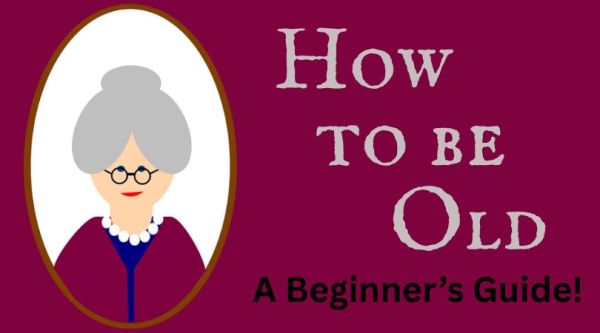
How To Be Old – A Beginner’s Guide! (3)

Advice on growing old disgracefully from an elderly delinquent with many years of expertise in the art – plus free optional snark…

You are old. Let me give you a tip
Your body’s too saggy to strip
It shouldn’t be you
Showing off your tattoo
At the head of a mass skinny dip

© jane jago

Summer is ‘icumen in’

Summer is ‘icumen in’
So quickly go do you
Down the pub to down the beer
And drink a pint or two
Love that brew!

You now chase the beer with rum
And after hours too
Get it as they call last orders
Got to love that brew!

More beer, more beer,
Get in a pint or two,
Ne’er cease to drink that brew!

Eleanor Swift-Hook

Roguing Thieves: Part Two

A sci-fi story of love, betrayal and Space Pirates!

Home hadn’t changed even after five years away.
The twins were so much taller than she expected, for all they had kept in touch through links. They had been eight when she left, real children, and now they were teens. Back then it had sometimes been hard to spot the difference, despite their being different genders. But now they looked nothing like each other. Halkoms’s voice had broken and he had shot skywards in height whereas Magenta was beginning to get a very feminine shape. Pan’s other sister, Kiona, two years older than the twins, was having mid-teen angst and mood-swings. It was like coming home to well-loved strangers who she would have to get to know all over again.
Of course, Jennay was still the same. A strong, capable, woman, only a few years older than Pan herself, who had taken in and adopted her stepsister’s orphans without a word of protest, setting her own life on hold to make theirs flourish. Although Jennay was a fully trained paramedic, it was not the sort of work that easily fitted in around childcare, so money had always been tight.
“I told you that you would fly if you took up that scholarship,” she said, hugging Pan once the first rush of excited greetings from all three siblings had been navigated. She picked up one of Pan’s travel bags. “Come on, let’s get you settled in. I’m afraid you’ll have to share a room with me. Mabs moved in with Ki and Grim is in the cabin room the twins used to share. We left the top bunk and built a desk under it for him.”
“Grim?”
Jennay laughed. “I know, right? Everyone calls Halkom that nowadays, it’s that stonefaced look of his. Now, here we are. You can have the bed by the window. There’s storage under it as well.” Then she was left alone to unpack and settle.
It was good to be home.
Sitting on the bed and looking out of the window, Pan wondered if she should uproot them all. Trade this house with a garden where they could grow fresh food, clean air and the views of the magnificent countryside, for an apartment in a city, thirty floors up with synth-meals and virtual scenery through ambianced windows.
She didn’t have to.
She could settle here on Mulligan’s Reach, get a job in the spaceport doing whatever they would pay her for. She wouldn’t have to uproot the family and the best bit was that there were a fair few freetraders based here. She was sure Tolin could find a bay in the spaceport. She wanted to ask him, but he wasn’t available on link. Not surprising as he would be spending a lot of time in FTL space, planet and systems hopping, where link technology had yet to find a way to connect.
The decision was taken from her the next day anyway.
She was up early to help hustle the others out to school and was just finishing up clearing away from breakfast when Jennay made her sit down at the old kitchen table. Her face looked as stony as Grim’s.
“Look, I didn’t want to spoil your homecoming yesterday, and I’ve been keeping it from the kids, but you need to see this.”
‘This’ was a mail from the landholding wing of the city administration. Their landlord. It gave them notice that the land was being sold for redevelopment and they would need to move out within the next three cycles.
Pan met Jennay’s troubled gaze, saw the haunting fear and felt the weight of responsibility settle more heavily on her own shoulders. It struck her that Jennay must have been about her own age when taking on four children. Well, now it was her turn to step up and put family ahead of her personal life. Pushing away her dreams of setting up home with Tolin, she mustered a smile and reached over the table to squeeze Jennay’s hand.
“Well, the good news is it doesn’t matter. I’ve got a position with Rota doing mech tech repair and upgrading work on their merchant fleet. We’re moving to Central.”

So with a brave smile held in place on her face like a mask and a heavy heart, Pan signed over her life to Rota for the foreseeable future. She didn’t even have the compensation of an interesting job. The work she was being paid at Central rates to do was well below her level of qualification. It was also made clear to her that the chances of progression were limited. Rota just liked to have an overqualified staff to impress their clients. With so many people such as herself, desperate to gain access to Central, they could pick and choose from the brightest and best in the rest of the Coalition. Worse still, as a new citizen of Central, she was expected to work through her first year without taking any vacation unless on compassionate grounds. Unfortunately, that didn’t include maintaining a long-distance romance.
The link chats with Tolin trailed off as the year went on. He kept saying he’d try to come and visit, but they both knew that was never going to happen. Getting a visa for Central was beyond the means of a struggling freetrader just starting up. Then one day he just didn’t reply to her link and that was that.
If her own happiness had been stymied by the move, at least she had the compensation of seeing the others bloom. Kiona and the twins took to life in Central as if born to it and were thriving. They were storming their grades in education and making new friends. Even Jennay was blossoming after her time-out raising them all. She had gone back to work as a paramedic and begun dating a colleague. There was even serious talk of marriage.
It made it hard for Pan to share her own unhappiness with anyone. She lost her brave smile somewhere along the way and began to settle into the idea of life as it was. After all, she could hardly complain. She had a well-paid job and a home in Central. Most of the galaxy would look at her with unadulterated envy.

Roguing Thieves is a Fortune’s Fools story by E.M. Swift-Hook. There will be more Roguing Thieves next week…

The Chronicles of Nanny Bee – Summer Bloomers

They called her Nanny Bee, although as far as anyone knew she had never been a wife or a mother, let alone a grandmother. But she was popularly believed to be a witch – so Nanny it was. She lived in a pink-walled thatched cottage that crouched between the village green and the vicarage. The Reverend Alphonso Scoggins (a person of peculiarly mixed heritage and a fondness for large dinners) joked that between him and Nanny they could see the villagers from birth to burial.
Nanny’s garden was the most verdant and productive little patch you could ever imagine, and she could be found pottering in its walled prettiness from dawn to dusk almost every day. People came to visit and were given advice, or medicine, or other potions in tiny bottles or scraps of paper – but they always had the sneaking suspicion they were getting in the way of the gardening.
But there again, digging is second nature to gnomes.

Items of feminine apparel were going missing from washing lines. The summer sun and breeze was encouraging the washing of bed linens, winter clothing – and underwear.
But the underwear couldn’t always be found when the washing was picked in to be ironed.
Somebody somewhere was in possession of many pairs of linen bloomers, but nobody knew who.
The village constable investigated to no avail so he did what everyone did when something was above their pay grade – he went to see Nanny. The two of them sat in her fragrant garden, she was puffing on her pipe and he had a leather tankard of ale in one large pink hand.
“Us’v laid in wait, but when us does the he never comes. Un seems to know…”
“Then I suspect they does know.”
The constable scratched his head. “I don’t get it, missis.”
She patted his meaty arm. “Never mind. You just leave it with me.”
He finished his beer, belched quietly and left.
At sundown Nanny had a conversation with a friendly magpie before making her way into the forest.
She sat on a fallen tree.
“I’m waiting.”
Nothing happened for a while, but then a procession of strange little people came into sight.
Fauns wearing linen coifs and with white linen bloomers covering their hairily goatish lower limbs.
Nanny sighed. It was going to be a long night.

Jane Jago

Jane Jago’s Summer Stories – Crossing

Crossing had never been more than a one-horse town, but when the railway shut down and the boys got drafted into the army it stopped even being that. 
We women done our best, but with kids to raise and mouths to feed the soil become more important than the saloon bar, and the horse pretty well took over from the truck. Them few of us brave enough to drive a car pretty soon found that there warn’t any fuel to be had anyway. It was all going to the war effort – whatever in tarnation that meant.
And that’s pretty much how it looked right up until the boys come home, one dirt street with rusty trucks leaning drunkenly on their useless tyres and hosses picketed under the shade trees outside the deserted saloon. 

The winter of forty-five was hard and the men what drifted home warn’t nothin’ like the boys that went off to fight the old men’s war. They come home thinner, and harder, and somehow soured by what they seen and done. And that ain’t counting the ones that never come home.
I wasn’t expecting nobody to come home for me and mine. My durn fool of a husband got hisself killed bein’ a hero in some battle a whole ocean away. I think I musta shed a tear when they sent me a wire sayin’ he was gone, and I kinda had to look properly sad when a big fat man in a general’s uniform brung along his medals and pinned them on nine-year-old Jethro Junior’s chest. But, jest between you and me, all I was really thinkin’ was what a pigheaded eejit I had married. Jest couldn’t keep his head down and his nose clean and come home to me and the little ‘uns.

During the spring and summer of forty-six I looked about me and seen what war had done to our menfolks. I was almost glad that my Jethro never come home – him having been a hard sort of a customer even before the scars of war. Seemed to me that what the war broke there wasn’t no amount of lovin’ nor understandin’ gonna be able to put back together. Seein’ as how I was a nurse and worked in the hospital in Big Town (until Pa decided I had to come home and marry Jethro) I seen with my own eyes what the men hereabouts come home capable of. I tended broken bones, bruises in every colour you can imagine, and the ragged cuts caused by bullwhips bein’ wielded in drunken hands. All in all I reckoned I was better of alone.

The winter of forty-seven seen Pa called to his maker, but before the influenza took him he signed a lawyer’s paper leaving’ the property to me. That surprised me some, him settin’ so much store by the male line, but he smiles at me and says I’m more of a son than any man could ever be. Brung a lump to my throat that did, and as I nursed him through the cruel cold I kep’ myself warm with the knowin’ that me and the kids was safe.

Summer rolled around and I was milkin’ the most awkward of our three cows when I heard a engine. Something was toilin’ up the dirt track to the farmhouse. Now we never knew nobody with no truck, so I let the cow go and sneaked around back to where I could pick up Pa’s Colt and make sure she was loaded fer bear.

By the time a rusty rattler of a Holden scraped to a stop I was settin’ on the stoop watchin’ the yard from under the brim of my greasy old Stetson. The man what stepped out might a bin Jethro’s twin. Same handsome face. Same swagger. Same hard, cold little eyes. I pushed back my hat with two fingers.

“Howdy,” I said. “Help ya?” 
“I sincerely hope so. I’m looking for Dorothy, widow to my Cousin Jethro Tomkins.” He smiled at me, but his smile never reached his eyes. “Might that be you.”
“Might be.” I offered him a grin. “Set a spell and tell me what brings you to these hyar parts.”
“I come to look over my property.”
“Your property?”
“Yes. Mine. Cousin Jethro done left it to me in his will.” 
“That’d be a trick, seeing as how he never owned it in the first place.”
I settled my hat back down over my eyes and leaned back in my chair.
He was just stupid enough not to go for his gun. Instead he made a grab for me.
“Smart-mouth woman needs slapping down hard.”
He fisted his hand in the front of my shirt and I shot his fool head off.
Me and the kids buried him back aways in the scrubland before the mesquite starts.
We keeps chickens in the Holden in his memory…

Jane Jago

Dog Days – Pawprints

The Dog Days are the high days of summer and a perfect time to celebrate our canine companions in verse and prose.

Pawprints in the kitchen
Pawprints on the floor
Pawprints on the furniture
Pawprints on the door
Pawprints on the patio
Pawprints from the shed
Pawprints running up the stairs
Pawprints on the bed
Pawprints on the landing
Pawprints in the hall
Pawprints by the front door
Pawprints on the wall
Pawprints running everywhere
I don’t know where to start
I’d curse the mangy mutt but he’s
Run pawprints through my heart.

Eleanor Swift-Hook

Start a Blog at WordPress.com.

Up ↑