The Chronicles of Nanny Bee – Love Philtre

They called her Nanny Bee, although as far as anyone knew she had never been a wife or a mother, let alone a grandmother. But she was popularly believed to be a witch – so Nanny it was. She lived in a pink-walled thatched cottage that crouched between the village green and the vicarage. The Reverend Alphonso Scoggins (a person of peculiarly mixed heritage and a fondness for large dinners) joked that between him and Nanny they could see the villagers from birth to burial.
Nanny’s garden was the most verdant and productive little patch you could ever imagine, and she could be found pottering in its walled prettiness from dawn to dusk almost every day. People came to visit and were given advice, or medicine, or other potions in tiny bottles or scraps of paper – but they always had the sneaking suspicion they were getting in the way of the gardening.
But there again, digging is second nature to gnomes.

When the sensible wife of a well-to-do sheep farmer appeared at the back door with a request for a love philtre Nanny was surprised.
But she invited the woman in and sat her by the kitchen fire with a mug of camomile tea.
“It’s Amos. He don’t want me no more. Set his eyes on a chit of seventeen summers. With a big belly she swears is his.”
“Wouldn’t be Widow Wossname’s girl would it?”
“It would.”
Nanny sighed.
“You go on home and leave this to me.”
Once the woman was safely away, Nanny swore a bit and went out to talk to the bees.
An hour later a certain widow was banging frantically on the front door with a swarm of bees buzzing about her head.
“Help me, please.”
Nanny looked at her sternly.
“You and your daughter have got to stop trying to foist her brat on every farmer in the valley.”
“Well somebody has to take responsibility.”
“The actual father?”
“She don’t know who it is.”
“There has to be one that isn’t married…”
The widow spread her hands in a gesture of defeat.
“I’ll have her wed by Thursday.”
The bees flew away.

©janejago

Share this:

Darkling Drabble 1

A darkling drabble offers a shiver of horror in a hundred words…

“A hundred lashes”, the old man with the dead eyes intoned. The accused woman swayed in the dock. 

Her court-appointed lawyer studied his knotted hands in silence. He had just heard an effective death sentence, but he accounted his skin of more worth than hers.

Shocked silence hung like a shredded sail, broken only by the sound of the heavy footfalls of the execution squad. 

Ten masked men, armed to the teeth, into whose care her captors gave her.

Their leader looked down into her eyes.

“You are with child?”

She nodded. 

He shot the judge between his eyes.

Jane Jago

Word of the Day – Encore

In an effort to educate the nominally literate and inform those with sufficient humility to understand their own lack of comprehension, Esme offers the correct definition of misunderstood words…

Encore

  1. (noun – pronunciation note: in core) Dwelling of any one of various apple-eating insect larvae. Example: When she cut open the rosy red apple the encore was positively writhing with virulent green caterpillars. 
  2. (noun – pronunciation note: E N C ore) The raw material from which certain electronic components are constructed.  Example: The price of digital transponders skyrocketed when civil war interrupted the arrival of the encore.

If you have any words whose meaning escapes you, Esme Crockford is always happy to share her lexicographical knowledge and penetrating insight into the English language.

Dai and Julia – Healing Sanctuary

In a modern-day Britain where the Roman Empire never left, Dai and Julia solve murder mysteries, whilst still having to manage family, friendship and domestic crises…

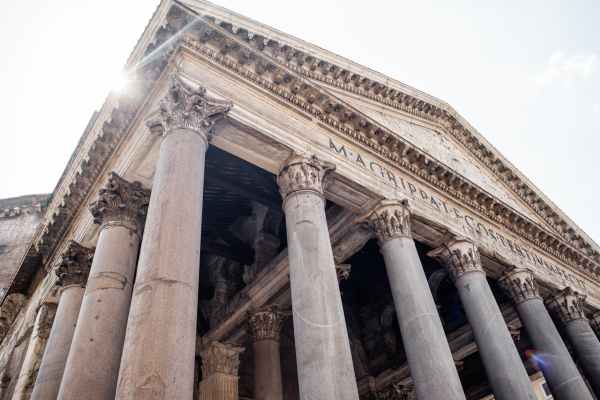
In the space before the small temple – so small it had been considered a mere shrine just a few years before – the crowds had gathered as usual for the chance to be chosen. They sat in their wheelchairs, or stood, faces drawn with pain and fatigue. All had given up just about everything,  to make the journey here on the off chance that they might be deemed worthy to be healed by the grace of the Divine Diocletian.
It was not easy to get through the new barriers that surrounded the site. Security guards patrolled the perimeter and manned the gates. Dai Llewellyn and Bryn Cartivel had left their vehicle in the small car park behind one of the new cuponae that had sprung up to provide accommodation for those waiting their chance to visit the temple and approached the gates on foot, beside the queue that wound back to the road. Dai felt it would give them a chance to get a better idea of the atmosphere of the place. Which was also why he had not bothered to tell anyone at the temple that he was coming to visit.
“You do have to wonder why this place is so popular,” Bryn observed, scratching at his greying hair as they walked past the queue. “Over on Ynys Mon there is a state of the art medical research facility in the Asclepieion there, always seems to be offering people the chance to sign up for clinical trials. Can’t see as how this is going to be better than that. And there they pay you to take part and you get full on comfort and care – here you have to pay just for the chance to be summoned and get to stay in a miserable pilgrims’ dormitory.”
“I read the brochure too, it makes it very clear no money is charged for the healing. But those who want may offer small donations,” Dai observed.
“Ah, right. That would be why the cuponae here do such a roaring trade and the temple just built a whole new wing for the Pontifex of the place. Small donations.”
The two guards at the gate wore the haloed head of the Divine Diocletian on tabards over their paramilitary outfits. They were also armed with nerve whips which meant they would be Roman Citizens.
“Oy! You can’t just push in where you want,” one of the two called out as Dai and Bryn reached the gate.
“We have business here, we’re not here to participate in the rites,” Dai explained politely.
“Can’t you read, spado? Sign back there says ‘Closed during divine service’.”
“Yes. So I saw. But my business means I would need to observe the proceedings. Respectfully of course.”
The gate guard gave a short laugh.
“Listen, you stupid British irrumator, only those invited to attend are allowed in. now, whatever your ‘business’ might be, I suggest you take it elsewhere before I call the local vigiles and have you arrested for creating a disturbance.”
Beside Dai, Bryn gave a forced cough and cleared his throat.
“Senior Investigator Cartivel here, can I help you?” He held up his ID and pressed it against the fence so the gate guards could see it clearly. “And this is Submagistratus Llewellyn, who is my boss.”
Dai mirrored Bryn’s gesture and produced his own identification, holding it up so that the ring of Citizenship on his index finger was obvious too.
“If it’s no trouble, perhaps you could let us in now?” he said mildly. “We are here on a murder investigation.”

The body had been found washed up on a beach near Segontium and would normally have attracted little, if any, attention as no one had been reported missing. But this corpse had been found to have a ring of Citizenship still attached to a finger, but lodged in the corpse’s throat. To Dai’s impotent fury, Rome reserved the full benefits and privileges of justice for her own children – and it seemed this might be one such case.
Despite the body being partially decomposed, dental records had enabled them to trace its identity. Zirri Yedder had been a freelance journalist with a history of producing cutting investigative pieces that highlighted local issues – local to Mauretania Tingitana that is, the province, where he had lived in the capital, Tingist. Although the pathologist report that Dai read was not entirely sure of the cause of death, it was also very clear that the body had been tortured beforehand.
But the finger was not the finger of Zirri Yedder and he had never been a Roman Citizen. He had, however, been registered at a cupona in the village of Caerhun and the landlady there said he had been there awaiting an invitation to the temple. She had last seen him as he set off to answer his eventual summons and no one had seen him alive since then.
Which was why Dai and Bryn now stood on the edge of the crowd watching as the service began. A security guard hovered nervously near by, trying not to make it too obvious that he was watching them as they observed proceedings.
“Who’d have thought a man who died nearly two thousand years ago having self-labelled as a deity, would still be honoured as a worker of miracles in the modern age?” Bryn’s voice was pitched so it was lost in the chanting from the crowd. Even so Dai looked at him sharply.
“You should be careful saying those kinds of things, SI Cartvel. Especially here.”
Bryn lifted his wrist and tapped the screen on his wristphone.
“Not me, Bard, I’m just reading what our friend Yedder put up on his social media. It was meant as a teaser for his next piece.”
“And I missed that, how?”
“You are a busy man, Submagistratus and these little details…”
“I checked his social media feed, right back for the last three years.”
“Ah, that would explain it then.” Bryn was looking almost smug. “It only posted today – less than an hour ago in fact. It must have been one he scheduled before he died.”
“Spado!” Dai said, but without real rancour. “Was there more?”
The other man shook his head. “No. That was it. Just says: ‘My current investigation is going to make a lot of people sit up and think’, then what I told you. Seems to be his style. Putting up a teaser a couple of days before the main article comes out. This time though, I think he hit the wrong kind of deadline first.”

From Dying to be Cured a Dai and Julia Mystery by Jane Jago and E.M. Swift-Hook one of the stories in the SciFi Roundtable’s anthology Gods of Clay .

How To Be Old – A Beginner’s Guide! (9)

Advice on growing old disgracefully from an elderly delinquent with many years of expertise in the art – plus free optional snark…

I am old as you rightly suggest
And often I don’t look at my best
But I just think sod that 
And shove on a hat
And stick out my oversized chest

© jane jago

The Nightingale

Oh what can ail thee, nightingale
Alone and with no song to sing
When moonlight strikes the underpass
And iron rails do ring

Oh what has made thee weep and cry
And huddle in thy threadbare coat
Why do salt tears seep from thine eyes
And clog thy long white throat

I see a faded summer rose
Entangled in thy midnight hair
And though the light shines in thy face
I see no spark of moonlight there

I met a man the maiden sighed
Full fat and fair was he
Who brought me from my garden green
And promisèd his love to me

But he was not an honest wight
For all his eyes were blue
He walked away one stormy night
And left me here to rue

My garden and my precious home
Within it’s sheltering wall
I know le beau homme sans merci
Me hath in thrall

And this is why I wait alone
All sad and palely loitering
He robbed me of my greatest gift
And left me with no song to sing

Jane Jago

Roguing Thieves: Part Eight

A sci-fi story of love, betrayal and Space Pirates!

It was another cycle before Dekker made good on his offer. A cycle during which Pan kept herself focused on being what they wanted her to be. She realised that the pirates were not so very different from the freetraders they prayed upon. They lurched from payday to payday making enough to get by and always dreaming of the big one that would let them retire. But unlike most freetraders they didn’t mind killing to get there.
By half way through that second cycle, she was no longer watched by human eyes at least, but she did nothing untoward.
The upgrades on the interceptor were as good as she could get them and the burnt planet hopper had been repaired to space worthy status. Most ships were worth next to nothing to these pirates. Handling stolen vessels was a highly skilled trade. But Pan had been able to peel off this ship’s command ID and fit a masking one. It would need a specialist to finish the work, but Dekker was delighted as it meant they could sell it on for a better price than usual.
When he returned from doing so he was in such a good mood that he clapped Tolin and herself hard on the back.
“Go and have fun, children. Find us something worth hunting.”

Pan hadn’t realised it before, but she was beginning to feel at home in FTL space. It was safe. Nothing could reach into the womb of the ship to threaten her. Not even link communications could disturb her until they dropped out into the traffic stream of their destination world. And when they did, the first communication was from Jennay updating her with family news. Kiona was nearing the end of her time in education and looking to use her qualification in social-neurocology to make a career in public relations. The twins were reviewing their options whether or not to go into higher education and Jennay and her wife were expecting a baby. That last was the one thing that brought a genuine smile to Pan’s face. Having raised four children already, she was very sure Jennay would make a wonderful mother for a child of her own.
She had been sitting at the small table in the social area, eating a quick meal from the synth as she watched the message and glanced up as Tolin joined her.
“Good news?”
She shrugged and cancelled the screen, suddenly unwilling to share those she cared most about any longer with this man. A man with whom she was so intimate and yet had always been a total stranger. “Just family stuff.”
“You’re lucky to have them.”
He had told her he had no family. That he had inherited his ship from his grandfather, his father having vanished before he was born and his mother having died when he was young. But now Pan wasn’t sure any of that was true. It might well have been made up for her consumption. She no longer cared if it was or not.
“So what’s the plan?” she asked, to move the topic on.
“We do what we always did. Trade some ourselves, chat to the freetraders find out who is going where with what and when, and pass it on to Dek. He’ll maybe pick up one in eight of those we offer, but that’s his call. None of our business.” Tolin smiled and reached over the table to squeeze her hand.
A sudden wave of nausea choked in her throat and she pulled her hand sharply away, covering by faking a coughing fit. It worked that time, but she knew it wasn’t going to fool Tolin for long. He had already wondered why she was avoiding sex and she was running out of excuses.
She had to get away.
But that was easier said than done.
She could go to the CSF and tell them her story. If she was willing to give evidence against Dekker and his crew she might get off lightly herself. Maybe even completely. The problem was, just as she couldn’t send a hapless freetrader to certain doom, she couldn’t bring herself to do the same to Tolin and the others. She might despise them and want to stop them, but it was more than her conscience could bear to have their blood on her hands.
To have anyone’s blood on her hands.
Except if she didn’t stop them, the blood of every freetrader they ever ambushed would be. Ongoing.
It was an impossible dilemma and she resolved it by focusing on the most important first step: she had to get away.
If she didn’t then sooner or later she was going to betray herself and she had little doubt from what she had seen in Dekker’s eyes what that would mean. After she was free, she could think about the second part.

Roguing Thieves is a Fortune’s Fools story by E.M. Swift-Hook. There will be more Roguing Thieves next week…

The Chronicles of Nanny Bee – Rustic Humour

They called her Nanny Bee, although as far as anyone knew she had never been a wife or a mother, let alone a grandmother. But she was popularly believed to be a witch – so Nanny it was. She lived in a pink-walled thatched cottage that crouched between the village green and the vicarage. The Reverend Alphonso Scoggins (a person of peculiarly mixed heritage and a fondness for large dinners) joked that between him and Nanny they could see the villagers from birth to burial.
Nanny’s garden was the most verdant and productive little patch you could ever imagine, and she could be found pottering in its walled prettiness from dawn to dusk almost every day. People came to visit and were given advice, or medicine, or other potions in tiny bottles or scraps of paper – but they always had the sneaking suspicion they were getting in the way of the gardening.
But there again, digging is second nature to gnomes.

The vicar’s cousin Luigi turned up on a visit.
Where the vicar was a portly, blunt-nosed khaki-skinned utilitarian sort of a critter his cousin was svelte and smooth with eyes of burning gold.
The village sucked in a collective breath and the sensible female populace gossiped behind its work-roughened hands.
The silly ones fell like ninepins.
Matters came to a head when the daughter of the blacksmith and the niece of the lady of the manner indulged in a bout of face slapping and hair pulling outside church on a Sunday morning.
Luigi found it all highly amusing.
Nanny didn’t share his amusement. She wandered over and stood with her hands on her hips.
Luigi curled his lip. “Was there something, gnome?”
“There was. Knock it off. Or else.”
“Or else what?” He belched a small blue flame.
Nanny took a handful of something out of a pocket and blew.
It’s stupid to underestimate an earth witch, and it’s even stupider to flame a handful of potato flour. The explosion ignited the dragon’s eyebrows, and was the cause of much rustic humour.
Luigi hasn’t been to visit again.

©janejago

Share this:

Jane Jago’s Summer Stories – Dangerous Hobby

Leisure vehicle users were dying.
They were going to sleep in their shiny ‘vans and just not waking up. Various theories were advanced for this phenomenon, including foul play by person or persons unknown, but nobody could actually put their finger on a cause. After some months of speculation. a government-sponsored study was set up. It discovered that people did indeed die in leisure vehicles far more frequently than was statistically explainable – even given the average age of the people concerned.
The findings were, of course, summarily dismissed by leisure vehicle builders as being merely an attempt to frighten customers, and the biggest players in the market banded together in defence of their profitable product.
For a while the buying public was convinced, but a proliferation of news stories about unexplained deaths began to seriously erode consumer confidence and the industry looked as if it would be reporting a drop in profits for the first time in living memory.
This was intolerable, so an emergency meeting of the big boys was convened to look into what could be done to repair the situation.
After a bit of fencing, the industry giants were forced to admit that some sort of a gesture was needed, and it was decided that the players would go away and have a think, reconvening in twenty-eight days with suggestions.
The second meeting was a noisy affair with not a few theories flying around the huge boardroom table. Some advocated an advertising campaign featuring holograms and huge city-centre billboards. Another faction was convinced by special edition models with gorgeous graphics and over-the-top specifications. Both options were considered seriously before being dismissed as being insufficiently impressive.
There was, however, one suggestion that nobody was prepared to entertain for a moment. It was proposed by a group of research and development operatives, who humbly suggested trying to discover whether leisure vehicles might indeed possess some underlying fault that could be responsible for the deaths. The scientist sent to present this unpalatable notion was lucky to escape the convocation with his skin intact, and it was made abundantly clear that such politically unpalatable ideas were not to be entertained.
The unfortunate scientist called his friends to report drawing a blank, and, although nobody was much surprised, there was more than a little disappointment among his peers. A small inner group determined to carry on researching the deaths, while resolving to keep what they were doing under wraps.
Meanwhile the wrangling among the bosses went on for days, with nothing of any substance being decided. In the end another four-week recess was called, and the delegates went away to bully their underlings for some better plans.
While the bullying and chivvying was going on, a very young research assistant beavering away in a design facility in the USA made a disturbing discovery. There was one factor that was common to every ‘van in which unexplained deaths had occurred. Each was fitted with a relatively new and spectacularly efficient battery system, part of which was a wireless control box enabling users to manage all the vehicle functions from their mobile phones. He postulated that there had to be a connection between the system and the fatalities, but the connotations of that were so sinister that nobody was willing to talk about it. The young geek was told to go and find some concrete evidence, and to keep his mouth shut until he did.
While this was going on, the big bosses met for the third time to thrash out an appropriate response to the growing unease. To say the meeting was tetchy is to massively understate the case. The arguments raged back and forth, and men in suits all but came to blows up and down the polished wood of the conference table.
In the end, the Managing Director of the biggest player of all stood up and spoke.
“What we should do,” he said portentously, “is host a worldwide series of long weekend rallies. Rallies with free food, free beer and free entertainment. By this means we will gain much public approval and prove to the doubters that leisure vehicles are absolutely safe.”
He paused for effect.
“We should each host at least one rally. More if we can. We offer free tickets to customers. We invite the world’s press to stay in ‘vans at the rallies. And we ourselves act as hosts of the events, also staying in ‘vans. Does anybody have a better idea?”
Of course nobody did and once the wave of arguments and counter-proposals died down, the job of making arrangements was handed to an army of administrators and gofers.
A paper-thin Latvian gentleman smiled thinly, and made a series of cryptic phone calls once he was in his chauffeur-driven Bentley. The upshot of these calls was a dramatic drop in the trade price of a certain battery system and a corresponding rise in production at a manufacturing plant in northern Germany.
The Latvian met an even thinner man in a private room at a very famous fish restaurant in Barcelona and, over course after course of seafood, into which neither man made much inroads, he reported the upshot of the industry meetings. His host laughed, a short humourless sound, and rubbed his hands together.
“It appears,” he remarked in a colourless and precise voice, “that I may have my vengeance at an earlier date than I could have expected. How did you arrange that?”
“We encouraged a young lady of dubious virtue to drop a suggestion in the ear of a certain gentleman. And he swallowed it.”
“Very good. You have my thanks. The second instalment of your fee will be in your bank tomorrow.”
When the Latvian had bowed himself out of the room the other man picked up his phone and dialled a number. When it was answered he had a quiet-voiced conversation with somebody on the other end. Had there been anyone in the room, they might have noticed the whitening of his knuckles as he held the phone and the single tear that coursed down the side of his rather beaky nose, but he was alone so those rare signs of emotion went unseen. He ended the call and sat for a while regarding his own hands with a grim set to his mouth. Then he spoke coldly and with absolute precision.
“Your little cartel declared war on me and mine all those years ago. Now you are about to pay your debts.”
Then he rose from his seat and left the room, walking very quietly.

High summer in the northern hemisphere saw hundreds of venues prepared to receive visitors. Enormous marquees had been erected, catering companies were roasting pigs and sheep, beers and wines were ready to serve, sound checks had been carried out by expensive musicians, and ‘vans began arriving to be pitched in serried ranks by an armies of smiling marshals in smart uniforms.
At close to the end of the working day on the Friday groups of influential journalists were bused into the each of the various venues. The biggest North American rally was taking place in a huge grassy valley in Utah, and the bus paused on the lip of that valley to permit its passengers a view of the immensity of the undertaking.
A young female news anchor shuddered.
“Look at them,” she pointed at row upon row of all but identical ‘vans pitched with mathematical precision as far as the eye could see. “Will you just look. How does anybody tell them apart? They are fucking clones. Can you imagine being lost among rows and rows of those things?”
A tall Texan grinned.
“Yup. They are mostly indistinguishable. However. According to the press pack, that I seem to be the only one to have read, each ‘van has a homing device accessed via an app on your mobi.”
The girl shuddered again.
“I like that even less. It’s too much like being led along by the nose. And how does anybody know all those things aren’t talking to each other? Talking and plotting. It’s creepy. I’m not staying. Nobody could pay me enough to stay. I’ll walk out if need be.”
The bus driver gave her a thumbs up.
“Just stay on the bus then. I’m dropping off, and heading home. I don’t like this vibe any more than you do.”
The young woman stubbornly stayed on the bus, even in the face of telephone threats from her bosses and increasingly desperate entreaties from representatives of the industry. Something about the setup had her rattled and she wasn’t entirely comfortable until she was on an aeroplane heading home.

Friday evening saw each carefully orchestrated rally swinging into action, and the charm offensive for the world’s media turned up to megawatt intensity. Nobody mentioned the young American anchor, or two Italians, one Frenchwoman, and a Japanese, none of whom could be persuaded to spend any time at all enjoying the hospitality.
As the rally attendees partied, a serious-minded young researcher logged in at a secret facility in Cincinnati. He was convinced there was something wrong with the battery system that now powered more than ninety per cent of leisure vehicles. But he couldn’t for the life of him see what. He should have been at home for his brother’s birthday party, but something inside his head insisted he needed to be in his laboratory. His family excused him and he sat regarding the two examples of the system set up in glass boxes on the laboratory bench.
Something was going to happen, he was sure, he just wasn’t sure he wanted to know what.
Midnight found the last of the music petering out and even the hardiest of ralliers returning to their accommodation. The tall Texan looked at the phone in his hand as it pulled him gently towards his allotted ‘van. He found himself feeling hugely uneasy, and cursed the nervous anchorwoman under his breath. He shrugged his muscular shoulders, unlocked the door of his palatial home on wheels and pulled his soft bag out of the cupboard. Slipping the bag onto his back he rolled up the duvet from the king-sized bed and stuck it under his arm before making his silent way out of the ranks of silver-sided monsters and up the escarpment to a level meadow where he could roll himself in the duvet and sleep under the stars.

Two hours later, in Cincinnati, the researcher was awoken by a message notification, something was talking to his two battery systems. Some elementary instinct for self preservation had him carefully closing the airtight doors on the glass cases before checking his gauges. Nothing. Then he heard the distinctive sound of breaking glass. In each of the systems set up for study a tiny blown-glass vial, which the schematic of the devices said was something to do with self-levelling, had exploded and its contents dripped through a grating into the largest of the batteries. The gauges went wild. It was nerve gas. Powerful nerve gas. The researcher grabbed for his phone, all the while fearing himself to be too late. Two hours later he gave up on trying to contact anybody at any of the rallies. He put his head down on his bench and let the bitter tears fall.

Some hours later in Utah, the Texan awoke with the sun in his eyes, and stretched before sitting up with a rueful grin. It must, he thought, be very early still as there wasn’t a sound in the valley below him. He looked at his watch, then stiffened. That couldn’t be right. It couldn’t be after nine. If it was, the valley would be abuzz with activity. Breakfast was scheduled to start at eight, and by nine there should have been volleyball, tennis, soccer, watercolour painting, and all manner of activities going into on below him. Something was wrong. Badly wrong. He dragged his phone out of his trouser pocket and called for help.
While he waited for the police to arrive he watched the valley, alert for any sign of movement. Of course there was none.
Just shy of fifteen hundred people fell asleep in that valley. None of them ever awoke.
It was the same story all over the world.
Nobody ever moved any of the ‘vans from the venue in Utah and for all we know they are still talking to each other as they quietly rot away where they stand…

Jane Jago

Dog Days – Puppy Dog

The Dog Days are the high days of summer and a perfect time to celebrate our canine companions in verse and prose.

Puppy dog, puppy dog
Where have you been?
I’ve been in the garden
To keep the house clean.

Puppy dog, puppy dog,
What did you there?
I pooped under the rose bush
Then peed up the chair

Puppy dog, puppy dog
Why did you do that?
I couldn’t quite make it
When chasing the cat.

Puppy dog, puppy dog
That is so bad!
I know I’ve been naughty
But please don’t be mad.

Puppy dog, puppy dog,
You know it’s forbidden
I know and I’m sorry,
So am I forgiven?

Puppy dog, puppy dog
Oh what can I do?
Just cuddle and love me
And I’ll love you too.

Eleanor Swift-Hook

Start a Blog at WordPress.com.

Up ↑