Robert Lee Beer’s Tony Mandolin has ‘One Last Quiche’

It didn’t look like a troll at first. But since this is San Francisco, all sorts of varieties of the weird, the wild, the wonderful and the far-from-wonderful can be found here, and I can assure you that I’ve seen plenty of city folk who could pass for troll. Well, ok…troll-ish; sure, they didn’t have the tusks or the olive-green knobby skin, but they certainly had the personality, the facial hair and the size, and some of them were men. This one…troll, absolutely sure.

I had just left a bar I frequented, the Summersault, and was heading towards the corner where Polk intersects with Eddy, when this long arm reached out of an alley and dragged me into the shadows.

Trolls have two outstanding weaknesses—sunlight and magic. Unfortunately, I don’t usually carry a copy of the compendium de migkal with me into bars. As for sunlight, there is a reason why trolls love the city by the bay; a nice thick layer of high fog tends to cut sunlight down to a tolerable level, especially if you’re a troll.

With strength capable of ripping a solid-core door right off its hinges, the troll heaved me further into the alley.

I tried to roll as I hit, but it’s kind of hard to do that when you’re bouncing off an old rusty dumpster.

It’s funny how the mind works in times of stress. Mine decided to go for gallows humor, the phrase, that’s going to leave a mark, popped into my head as I slammed into the pavement.

Trolls, unlike vampires, are thankfully slow even if they are, excuse the pun, monstrously strong. Any human with even a bit of coordination can dodge a troll’s attack.

That is, if that human wasn’t covered in brand new bumps, bruises and contusions. I think I sensed, more than anything else, the descending foot and rolled out of the way just in time. The troll’s heel thudded into the blacktop and continued on for several inches. I got lucky and the foot got stuck.

Unlike concrete, blacktop is flexible and under pressure it can become gooey. The troll being trapped gave me the time I needed to collect my thoughts and scrabble out of range.

With a final grunting heave the troll pulled its foot free, along with a good-sized chunk of blacktop, but by that time I was at the alley mouth and accelerating. Sure, there was a danger of it chasing after me, but its best run was my jogging speed. And then there were the pedestrians. San Francisco’s sidewalks almost always have crowds during the day, and Trolls don’t do crowds. Lucky me.

My name is Tony Mandolin and up until last year I was an ordinary, run of the mill private investigator with a penchant for being able to find things for my clients. I have no super powers, extrasensory perception, magic or special fighting ability. What I do have is a very annoying stubborn streak and a tendency to cheat when backed into a corner. Nothing stops an aggressor faster than a quick knee to the tender moments. I don’t hit girls.

Some people would consider me tall, but on the not too odd occasion my 6’3″ has looked pretty puny in comparison to the other guy…like a certain troll for example. In my younger days I was tending toward blonde with a reddish beard, when I forgot to shave. Now the temples are turning gray, the beard is more white than red and the eyes have an ever growing set of carry-on’s. I do keep in shape, but it takes more these days to get the same result. The ladies don’t run screaming when they see me, but the current crop of Tom Sellecks are in no danger.

About a year ago I was thrust into a world I had no idea existed. According to a certain alcoholic pixie I know, my human eyes were opened when I decided to take on a case that eventually involved a vampire with ties to the police commissioner’s office. How my eyes were opened is still unclear, but now I can see the world of faerie. That’s right; the world of the Brothers Grimm, Hans Christian Anderson and all the other writers of bedtime stories intended to give little boys and girls bad dreams.

Faeries aren’t nice. In fact, in most cases they aren’t even cordial. Most of them tend to think of humanity as an irritant at best and a food source at worst. Some, such as my booze-loving pixie, can be bargained with, as long as you understand that the penalties for violating the terms of a faerie contract are far more severe than those imposed by, say, the IRS. At least the government doesn’t turn you inside out to think about how badly you screwed up.

The other thing about faeries is that they can’t lie, but that just means they have had millennia to figure out ways of twisting the truth. They make used car salesmen, stock brokers and lawyers look like rank amateurs.  That makes bargaining with them about as safe as step dancing on quicksand.

The one good thing about the vampire case was it earned me enough green to buy myself a house. It was no mansion, but it was certainly better than a third floor walk-up overlooking an alley. Not to mention that, being paid off and all, the monthly breakdown of taxes made my house a lot cheaper than rent. I didn’t have a Pacific Heights address by any means, but my front porch did look out on a nice neighborhood park right across the street and it even came with a garage, a rarity in the city. Now all I needed was enough scratch to afford a car and some driving lessons.

I still kept my office. There was a nice comfortable feeling about having a spot in one of the seedier parts of the city with a glass door that had my name on it. It felt like tradition, and ever since last year, for me, tradition had become rather important.

I’d also picked up a partner, of sorts. One Franklin Amadeus Jackson, Frankie to everyone else except the police and a certain billionaire and crime lord we’d helped out.

Frankie, besides being a black man, was the size of one of your average draft horses, incredibly strong and a raging cross-dressing diva…when the mood took him. Imagine a Cher impersonator wearing size 16 pumps and you get the picture.

Ever since the vampire case, Frankie had taken to dressing more like Sam Spade rather than Samantha. I have to say, his Bogart was a better impersonation than his Shatner.

Even though I was able to see all the assorted dwellers in the world of faerie, that didn’t mean I had an automatic ticket to the pot of gold at the end of the rainbow. It does exist, you know, but that gold belongs to the Leprechauns, and Leps tend to get rather possessive about their gilt. You know that series of horror movies about a certain Irish fae? They are closer to the truth than is comfortable.

The last big case I’d had brought in enough of a payday to buy the house, but it had also been the last big payday. It seems the police commissioner never forgave me for being partially responsible for the capture of her meal ticket, even if that meal ticket happened to be an electrolyte-sucking vampire responsible for the deaths of literally hundreds of innocent humans. Since then the lovely Ms. Commissioner had managed to scare off every whale in the ocean. Sure, I still got the occasional cheating husband/wife case, and finding lost poodles kept the utilities paid, but I was getting damned tired of subsisting on pot noodles and coffee.

Ex-police Lieutenant Rorche, a mustachioed, blonde, slightly overweight mass of corruption who had tried to kill me…twice… continued to cool his heels in an orange jumpsuit while reflecting on his various sins. I was almost becoming used to the idea of not having to look over my shoulder. But…Rorche wasn’t the reason for my problem with the commissioner. Neither were Randal Driver, the wealthiest man in the state, nor Antonio Luccesi, the top crime boss in the city, even though they were mostly responsible for forcing the commissioner to back off when she tried to put a wedge in the investigation I had involving her favorite vampire. Driver’s twin daughters were killed by the vampire and, through no little effort on the part of yours truly said vampire was delivered into Mr. Driver’s loving hands. However, the world of politics being what it is, my two favorite whales were occupied with protecting their own assets; pun intended.

So, Tony Mandolin, private eye with one foot into the world of faerie, is forced to pay his bills finding lost fidos and proving whether or not so and so is cheating on so and so.

Tony Mandolin is the creation of Robert Lee Beers and One Last Quiche is the second of his adventures, which begin with A Slight Case of Death.
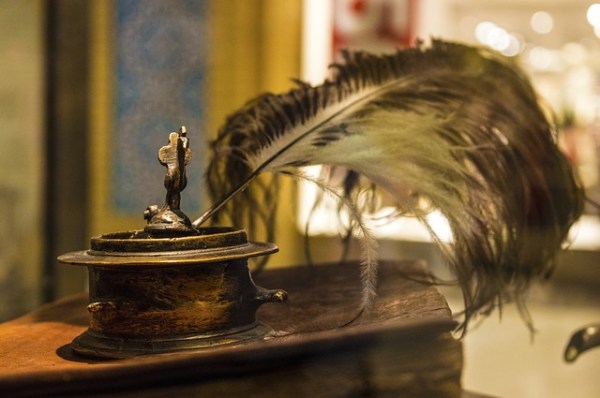
The Thinking Quill

My dear Readers Who Write,

Moonbeam Farquhar Metheringham IV at your service, author of the science fantasy classic (or SciFan as we cognoscenti prefer to say) ‘Fatswhistle and Buchtooth’. Mummy was the one who identified the genre for me when she had been sipping on her fourth pernod and organic Greek yoghurt smoothie. “Moons, if you think that anyone is ever going to call that poop science-fiction you are living in a frigging fantasy.” I recall she spat the stone of an olive she had fished out from the bottom of her glass with the final words, so they impacted me deeply.

Today mes estudas, after our brief plunge into the murky pond of reviews and reviewing, we will return to the primrose paths of prose preparation.  To those of you who have had the supercalfragilistic fortune to be winnowing worth from my words of wisdom I say welcome back, and to those who have only just discovered my delightful calligraphy I say sit quietly at the back of the class and be sure to revise later.

And thus, my happy followers, my RWW, I propose to you the finest flora and bejeweled gems of my inestimable intellect. Read carefully, learn assiduously, and ingest intestinally that you may benefit from the experience of one whose writing skills are superior and sans pareil.

How to Start Writing a Book – Lesson 6. The Write Character

When creating fantabulous fiction, one of the building blocks one should consider perspicaciously is the characteristics of one’s characters, the pontification of one’s protagonists, and the mentality of one’s mendicants.  May one humbly suggest the ritualistic dismemberment of the dichotomy of despair is the first essential in the realisation and roundaboutification of perfect protagonists.

As we are fast becoming closely intertwined, one feels comfortable in sharing some of one’s own little ritual-ettes for the construction of credible character traits. Place upon the table a virgin sheet of the most beautiful of papers and upon its sensitive surface inscribe certain informations about the person growing in one’s psyche. Once you have these facts inside your cranium attempt to dress your shrinking physique in the insubstantial anatomy of your putative creation. Once having assumed this physical envelope, model it as carefully as if you were a supermodel on the catwalk and allow it to permeate every pore of your being. Only then can you begin to set it down with its contemporaneous companions inside the delicate framework of your histoire. Tread gently and allow each one of your persons to speak in their own tones, to walk in their own shoes, to listen with their own ears, to feel with their own hearts, and to expostulate to you of their hopes, dreams, passions and personalities.

Never, mes enfants, permit yourself to press your own expectations upon the psyche of those who inhabit your writings. Rather let them fly on their own wings and listen with your inner ear as they speak to you of their lives and their loves.

Ah mes estudas, quel excitement, quel bonheur, as your little people walk the pages of your magnum opus and clamber around in the canyons of your consciousness. Let your creativity be as verdant as the grass, and allow your imagination to be impregnated by the words of those persons who have grown up to inhabit your worlds with the organic ossification of their beings.

And there we will leave the characterisation of Calliope and her sisters until next time when we shall consider the impact of those most precious people of our imaginations on the mundane and dour dross of everyday life.

Ecrit bon!

Moonbeam Farquhar Metheringham IV

Join my adoring fan club.


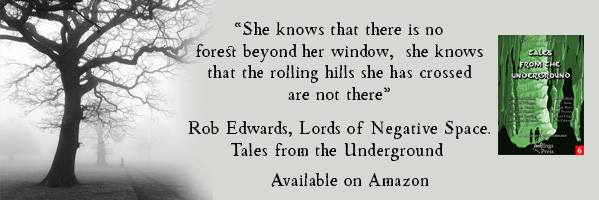
From Tales from the Underground “The Lords of Negative Space”.

The war that rages between the Faerie and the human species is subtle and abstract, but bloody all the same. It has rarely been a battle for land or resources, but for minds, imagination and the conceptual. Victories and defeats have not always been easy to tell apart, and the champions on both sides of the conflict have been largely misunderstood.
The great battle prayer of the humans, for example, was used in recent generations to inflict suffering on our own young. Its true nature had been forgotten, and people had come to view it merely as a geometry text book.
Though Euclid’s true purpose for collecting the Elements is lost to time, it was nevertheless one of the first great victories against the Fey. Its attempt to impose order onto the way we shape our world and to give us a way to think was anathema to the Faerie.
That the battle prayer has fallen out of favour in our modern schools may simply be due to changes in the way we educate our young, but may in fact be the direct result of a counter-strike by the Fey.
Whichever is true, it remains the case that the girl called Sarah would do well to summon its verses to mind as she stands and takes a step towards her missing folder.
Since she does not, she is lost long before she realises it.
***
Sarah is a little surprised to find the folder still out of reach.
She takes another step, and another. Surely the space she had seen through her window was small enough to cross in three steps, and yet, the notes sit on the moss ahead, still a little out of reach.
She takes a fourth step. The folder seems closer now. But still out of reach.
She is unnerved now, confused. The world is not behaving as it should. She almost turns to look back over her shoulder, to see the window back to her world close at hand. But she dares not, as a small part of her mind, the part that remembers the dangers her ancestors faced, already knows it is too late.
She shakes her head against the sudden vertigo, and begins to jog. Forwards towards her folder. Each step seems to halve the distance to her goal, and yet half the distance still remains.
The ground is uneven, rolls by under her feet, her breath comes faster now, she breaks into a full run, bag bouncing against her back. The folder never seems to move, but she never quite reaches it.
As she approaches the forest edge, she slows. Stops.
Her shoulders ache from the effort of not looking back. She knows, she knows. She knows that there is no forest beyond her window, she knows that the rolling hills she has crossed are not there, she knows that behind her, her window is gone.
Firmly. Resolutely. Sarah looks.
And there is her wall. There is her window. She can see her corridor, her trolley, the rest of her notes. She is not lost at all, the way back to her world is there. Just a little out of reach.
This is a sample from Rob Edward‘s story “The Lords of Negative Space”. It combines his time as a Health Records Clerk in a London hospital, adds a dash of mathematics with a good helping of magic.  In this sample, the girl called Sarah climbs through a window to try to rescue a set of medical record notes that have fallen into the Fairies’ domain:

A bite of… Rob Edwards

Rob Edwards is a British born writer and podcaster, currently living in Finland.

Q1: What is the best thing about having a story in Tales From The Underground?

Tales from the Underground is such a wonderful book, with some fantastic stories across an eclectic range of genres. I know it’s a cliché to say “there’s something for everyone”, but there really is. My story is a modern fairy tale that draws from my working life in a hospital and sprinkles magic and mathematics all over it. But we have some appropriately dark fantasy stories in there too, as well some thoughtful science fiction, with dashes of horror and adventure in the mix.  As I say in the foreword, stories of the dark beneath our feet have been with us as long as stories have been told, and it’s great to be part of that tradition. Still, on a personal level, I’m excited to share an anthology with my dad; his love of stories is why I love stories, and it’s a privilege to be able to bring him into the Inklings fold with his first published work. His tale is a quirky story of family legend, which I think people will really enjoy. So, for me personally, the that’s the very best thing about having a story in Tales from the Underground.

Q2: What is the strangest thing about living in Finland?

I’ve lived here long enough that many of the things I found strange really aren’t any more. The endless snows last winter (although the Finns assure me we “didn’t really get much snow”), the summer nights where it doesn’t get properly dark until 2am (I’m north, but not so far north we don’t get some dark hours), the seemingly random “flag days” where flags mysteriously appear on flag poles everywhere overnight (though even Finns don’t seem to know who or what particular flag days are supposed to celebrate), no I’m taking it all in my stride these days. Even the language, which still baffles and confuses me, I can’t really call it strange any more. If I’m still freaked out by anything it’s the fact that our flat (and many others) has two front doors; when you open the first one, no gap, no vestibule, bang, there’s a second door to open right there. I guess it’s for insulation, and I’m sure we’re not the only place that does it, but still…. strange.

Q1: What do Lingonberries really taste like?

Like angel dreams sprinkled with fairy dust? Actually, I’m not the person to ask, as I’m not much of a berry eater, which practically makes me a pariah in Finland. I have had a slice or two of lingonberry cakes, and they were… fine? If you want to talk Finnish food though, spare a thought for salmiakki: salty liquorice. My wife fed me some as a bizarre initiation test early in our relationship, I think she just wanted to watch my reaction. It’s an… acquired taste. It’s liquorice, but… salty. The Finns go mad for the stuff, and have it in all sorts of forms, including salmiakki ice cream. I’ve not indulged. My dad likes it though, we have to bring him some when we go visit. Oh, did I mention, he too has a story in Inklings Press’s exciting new anthology Tales from the Underground?
You can follow Rob on Twitter and listen to his monthly podcast where he is currently reading chapters of his novel Writ in Blood and Silver, set in another type of underground, the London Underground. Find that at www.storycastrob.co.uk and visit his blog for updates on all his writing 

Coffee Break Read – Enter the Ghosts

Why did you want to see me?’
‘Ghosts.’
She reached over quite steadily and took her cup of tea from my outstretched hand, but her face lost quite a bit of its usual high colour.
‘Oh. That lot. What do you want to know?’
‘Everything.’
‘That could take a while…’
‘Précis then.’
She stared into her tea for a long minute then started to talk, I switched on the voice recorder on my phone, and sat back to listen.
‘My granny was born and raised in this pub, though it was called The Bell in them days. She always said there was a ghost. Sad but not dangerous. Was supposed to be a fine lady whose husband came back from the wars to find her pregnant. Legend has it that he kept the child but killed the woman after she had given birth. Her bones are supposed to be in the walls somewhere. Anyway. After great grandpa sold up the place ticked along quite normal. Until the middle of the nineteen sixties when there was a fire. Insurance job was what the local rumour mill said. Whatever. About half the pub was burned to the ground. They rebuilt, and when they was doing it they found a picture, in the roof someplace. The fair maid and falcon. Like the pub sign. The picture was sold to the New Forest Museum, but they had it copied for the pub sign and changed the name. The museum got some clever people in to look at the painting, and they reckoned the woman in the picture was somebody called Rosalind Acres, who is recorded as having died in childbirth, along with her child, in the nineteenth century. Her husband is supposed to have mourned her till the day he died, and buried her in the garden with her baby, because the church refused to allow an unbaptised child to be buried in consecrated ground. Whatever is the truth of it, after they rebuilt there was said to be a second, gentle ghost. Maybe the fair maid herself. And that’s all I really know…’
‘But’ I prompted gently.
‘But there seems to be at more than them. I think at least two more. One something followed Philip wherever he went, it was black and bad. There was an atmosphere of hatred. It frightened me. And when he killed himself I could feel its anger. Then there was a quieter something singing in my head when Philip died, it seemed to feel some sort of justice had been done. Then it all went quiet. But I don’t think anything has gone.’
‘Me neither.’ I said. ‘Me neither. But thank you for being frank with me. Did you ever hear a name for the first ghost?’
‘My granny said she was called Aline.’
‘Thanks. Now drink your tea and have a chocolate biscuit before Ben comes back and snaffles the lot.’
She relaxed in her chair and accepted a milk chocolate digestive. ‘I’m dying of curiosity’ she said.
‘Well. I’m sorry, but I can’t help now. Maybe later.’
She grinned.

After a few minutes’ chat, she got up and went back to her work. I decided to run some internet searches. Rosalind Acres was fairly well documented and I printed off some fifty sheets of information. Aline seemed to be a relatively common name in the Middle Ages, but inputting the rest of Mrs A’s story brought up two references in learned tomes. I printed both of them. It was a start, I thought.

I began reading the story of Rosalind Acres’ life. She was the beloved only child of a very rich American, who had married (for love the reports said) a thirty-year-old Englishman called Christopher Acres, when she was just seventeen. Her husband was a country gentleman and their home was Midwinter Manor, which seemed, by the old map I had printed out, to have been more or less precisely where the Fair Maid was now located. Her death, at the age of twenty-one, was well documented, and there was more than one mention of a rumour that the lady and her child had been interred in the gardens of the manor. So far, Mrs A’s story seemed to concur with the known facts. I wasn’t sure if that was a good thing, or not.

Rosalind caught my imagination, but the pub sign purporting to be her was rather ineptly painted, and I found I wanted a look at the original from which it was copied, so I hit the museum’s web site. The picture was exquisite, and according to the museum catalogue, the portrait (found in the roof of a local pub during rebuilding), was the young Rosalind Acres nee Barclay, and it was attributed the pre-raphaelite John Everett Millais. Rosalind had, if the portrait didn’t lie, been as lovely as she was young. I printed out a colour copy to show Ben.

I shivered, then pulled myself together, and put ghostly business to one side in favour of pub business.

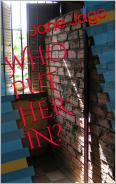
From: Who Put Her In?
myBook.to/WPHI

© jane jago

I am old

I am old, that’s no bone of contention
And I got here without intervention
So why would I think twice
On your so-called advice?
Hush your mouth, I’m not paying attention

© jane jago 2017

From Tales from the Underground -Tongueless Caverns

They were sitting in the park, a child had come running up chasing a creature no one else could see, playing a game in augmented vision. She swiped at something in the air between them.
“Got it!”
Yris watched her run off already obsessed by the next intangible she needed to track down.
“She knows,” Soraya said, as the child danced away over the sunlit grass. “She called me to account for my activities this last cycle.”
The pit of his stomach tightened and he looked at the woman sitting beside him, unsmiling. Her face was haunted by shadows of sadness and fear, beneath the sweep of blue-black hair. He reached out and gripped the two slender hands resting in her lap.
“Then we will have to go. I won’t lose you.”
“But -”
“But nothing. It is time to make a stand. My sister has dictated the course of my life long enough. I will not have her destroy the one thing that makes me truly happy.”
The shadows lifted from her face for a moment, and the smile was as sweet as life itself. “She will not let us go easily.”
“I know. I’ve known her a long time. A very long time, more than four times as long again as you have been alive. So you must trust me when I say I know how to deal with her.”
The blue-black hair swung as Soraya turned her face away, watching the child running after her private ghosts. For a moment, Yris envied that unknown child, her freedom and potential had yet to be curtailed by life.
“I don’t know,” Soraya’s voice came from behind the veil of her hair. “I’m not sure we get to live happily ever after.”
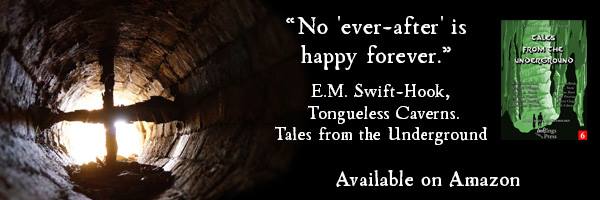
“No ‘ever after’ is happy forever.”
It got dark as he spoke. The air was no longer crisp and fresh, but brackish and still. Shadows flickered from the weak lights.
“But ‘tsa story, Gran’pa. It says so – so they did.”
The small dark eyes looked up at him from a face wearing a defiant expression.

From ‘Tongueless Caverns’ by E.M. Swift-Hook, one of the stories in Inklings Press newest anthology Tales From The Underground: Twelve tales of hidden legends which is available for preorder now.

The Willow Man

The willow man’s breath fogs the window
He scratches the glass with twiggy fingers
You hide your head under the pillow
But the voice of the wildwood lingers
It follows you into the edges of sleep
And echoes in the spaces of your head
Under your straining eyelids it creeps
And flavours each indrawn breath with dread
The willow man’s breath is as cold as cold
And his fingers are knotted and strong
No matter if you be in childhood or old
You will suffer the ice of his song
The willow man’s breath chills coldly
His twiggy fingers scrape your throat
Will you face the willow man boldly
Do you have fear’s antidote?

© jane jago 2017


Coffee Break Read – Tabruth

From ‘Times of Change: Transgressor Trilogy‘

The very worst thing about Tabruth was the smell.

The city was nothing more than a squalid collection of unsanitary slums, huddled together in tightly packed rows and crushed around by restraining walls, which were more effective at keeping the garbage and disease in than any enemy out – and smelt worse than a fresh batch of organically produced fertiliser. Even in the allegedly luxurious rooms which he had been assigned in Tabruth’s castle – it’s most superior dwelling – Elias Bazath found the sewer stench of the place was insidious and inescapable. From a distance, Tabruth might look like a picturesque, historical reconstruction in a theme park, but close to it stank like a rotting corpse.

If the stench was the worst aspect of the place so far, there was a lot more besides that which conspired to turn Bazath’s visit into a trial of endurance. In terms of providing physical necessities and fundamental comforts, Temsevar did not even score on the baseline. If one wished to be clean – a state to which it seemed to him that few of the natives seriously aspired – it was necessary to parade naked through the castle’s very public bath house. The clothing was ridiculously impractical, seldom laundered and usually infested with parasites. The food was served so highly spiced as to be almost unpalatable to disguise the fact that much of what was served up was already half rotten. Fresh water was drawn from a well, swimming with so many impurities such that all who could afford to do so chose to drink the wine in preference. Bazath, careful of his health, simply refused to drink anything he had not treated first.

Temsevar, he decided, was an uncivilised cess-pit which had managed to maintain itself somehow by planting one foot firmly and with grim determination in pre-history and the other, more precariously in a barbaric slave economy and feudal system. The people he had met so far had done little to improve his opinion of the place. The soldiers, craftsmen and above all slaves, which seemed to form the vast majority of the population in the castle, were complete non-entities and seemed even to regard themselves as such. The Castellan was obsequious and weak, cowering behind a thin charade of haughty pride. The Warlord’s man, Commander Caer, was a surly, ill-mannered lout, and unintelligent enough to make no attempt to hide his hatred for Bazath. The Castellan’s nephew, Keshalgis, had the most to recommend him – he was almost intelligent and something of a diplomat, but even he seemed not to realise the importance and urgency of Bazath’s visit and displayed an infuriating lack of concern about the slow progress of negotiations.

He stood there now, wearing a supercilious, almost patronising, expression as he explained, through the interpreter, for the third time that the Castellan could not possibly fit in another audience with the Honoured Lord from the Stars until the following afternoon at the earliest. And would not the Honoured One prefer to spend the day hunting with himself and the Castellan’s charming lady wife instead?

It was at moments like these that Bazath realised, to his great chagrin, that he had far more in common with the filthy terrorist in the dungeons than with any of these posturing morons who considered themselves the nobility of Temsevar. He despised their immense ignorance, barbarism and over-inflated self-importance. Put any one of them on a half-way civilised planet and they would be lucky to find work as a refuse processor. But here they gave themselves grand titles and lorded it over their peers, behaving as if they were the equal of a delegate in the Coalition’s Legislature.

“Tell the simpering imbecile that I have no wish to waste my time chasing wild animals around the countryside,” Bazath snarled impatiently as the interpreter finished speaking. “I came here to transact business – to purchase a slave – and not to sample the dubious delights of primitive culture in the raw. I want to speak with the Castellan immediately.”

Although Keshalgis had reacted to the leashed anger in his tone, it was obvious that the interpreter translated the message without the insults, as Bazath had expected him to. He paid the man to put into diplomatic niceties whatever he needed to say.

E.M. Swift-Hook

The Banker and The Accountant

The lights were shining on the beach
Blinking in colours and white
They lit the sky and lit the sand
And made it all so bright
And this was good because it was
The middle of Saturday night
The deejay jumped just like a flea
Because he said the kids
We’re lucky that he did this gig
As freely as he did

The Banker and the Accountant
Were walking on the beach
And each one wept to see so much cash
Definitely out of reach
With seven miles of razor wire
And a hundred vans selling beer
Do you suppose the banker said
We could make people pay to come here
I doubt it said the accountant, and shed a bitter tear

The time has come the Banker said
To talk of many things
Of VAT and interest rates
And why the viper stings
And why there’s a Canadian
In charge of all these things

Oh teenagers come walk with us
Along the moonlit strand
And we will teach you many things
As you traverse the sand
The teenage children looked at them
But vouchsafed not a note
The drugs had ate their brains away
Goodbye, that’s all she wrote

© jane jago 2017

Start a Blog at WordPress.com.

Up ↑