The Dog Days are the high days of summer and a perfect time to celebrate our canine companions in verse and prose.
We wanted a puppy. But Maw said no. Said we wasn’t responsible enough. Said we neglected the animals we had got, so no puppy.
We sulked a bit, but then Elmer said Maw had a point. So we knuckled down and helped her about the place, learning to care for the cow and the sheep, and the yard dogs, and the horses.
We was so busy we near to forgot about the puppy. But Maw never forgets nothing.
We come in from the yard one time and there’s a box by the fire. Maw smiles as the puppy jumps out…
In a modern-day Britain where the Roman Empire never left, Dai and Julia solve murder mysteries, whilst still having to manage family, friendship and domestic crises…
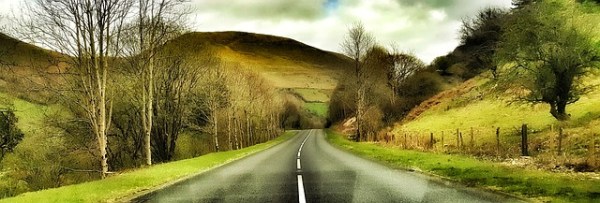
“Sheep.” Dai pointed to the tussock pocked hillside that veered up sharply from the bottom of the valley. These sheep were a hardy local breed with grey-white fleeces and small curling horns. They moved with agility over the rocky slope, their flock spread out into groups, pairs and singletons. It was early morning and the report of a new theft had them driving through the wild country that formed the hinterland between Viriconium and the coast. “The first question I have,” Bryn said, his own gaze firmly on the narrow road ahead as it wound along beside a stream at the bottom of the valley, “is how do you take sheep from a hillside like that? I mean it’s not like they are in a field and you can just wave your arms at them and back up a trailer to the gate. You couldn’t bring something big enough to carry all those along a road like this anyway.” They were heading out to the small crofting farm which had been the victim of the last sheep rustling incident, in the hope of gaining some insight into who might have known where the flock was when it was stolen. “Dogs,” Dai said, wondering if he was right. “Or maybe people on quads?” “At night?” Bryn sounded doubtful. “And over this terrain?” He gestured with one hand to the high-lifting hills on either side. “Drones, then maybe? Though no one seems to have seen any around that shouldn’t be there, I did the checks. It does make you wonder.” They reached the main farm buildings after a bumpy journey over a potholed mud and gravel track that led up from the road. Two skinny herding dogs with lolling tongues and high lifted tails followed the woman who owned the croft out of the door of the small cottage, built from local stone. She stayed by the house as Dai and Bryn parked up and got out, the dogs now sitting beside her. For a moment Dai was reminded of Canis and Lupo sitting beside Julia. These dogs had an owner not much taller than Julia was, but maybe a decade older. She stood, back held stiffly straight and chin lifted with an almost defensive pride, brown eyes fierce, her dark blonde hair half hidden under a woolly hat. Bryn gave her a friendly nod as she looked between them. “You’ll be Hyla Edris, I’m SI Bryn Cartivel. We’re here…” “About last night?” The woman’s voice sounded taut. “That’s right. I was hoping you could help me understand a few things about what happened and then we might be able to get your sheep back more easily.” Hyla Edris shook her head, and Dai was sure he could see an extra brightness of moisture in her eyes. “No. You won’t be bringing my girls home. They’ll all be dead by now. But the fools that took them have no idea what they did.” “What they..?” “My girls weren’t bred for eating They were all bred for their wool. Five different rare breeds I had in my flock, from three different provinces. They were worth a lot, lot more than just meat on the hoof.” “You’ll have insurance for them?” “Oh, for sure, there is a man due out tomorrow to talk to me about it. Seems there was some problem with my paperwork. But that won’t bring my girls back, will it? And even though the money will help, my business is ruined.” “You can get more sheep,” Dai said. “Surely even rare ones?” The woman shook her head as if he was missing the point. Then she gestured towards a recently re-roofed outbuilding. “My business is spinning and weaving. I keep the sheep because I can’t buy in the wool I need. It’s not so simple as you think. But then you lot from Viriconium, you know next to nothing of what life is like for us here in the hill farms. We’re not all inbred yokels chasing round a few sheep, there’s some of us with a bit more going on.” Dai spread his hands in a gesture of apology. “I promise we will do our best to bring those who took your sheep to justice.” Which was when she saw the silver band of Citizenship on his finger and her face changed. A quickly hidden mix of fear and anger. “Roman justice. Killing people for entertainment. That’s not going to help me… dominus.” She made the honorific sound more like an insult. Bryn cleared his throat. “I need to ask you a few questions about what happened. Where were the sheep last night?” The woman drew a tight breath as if to get herself back under control. “I had them in the low field because I was supposed to have them microchipped today.” “So it would have been relatively straightforward for someone to steal them? No need to go all over the hills for them?” “Very.” “Who would have known they were in that particular field?” Dai asked and almost winced at the ferocity of the look the question earned him. “Most everyone in the area.” “Local gossip is that good?” This time there was more of contempt than anger in her face. She put a hand into the pocket of the long coat she was wearing and pulled out a much-folded sheet of paper which she thrust into Dai’s hand. He opened it out noting the Demetae and Cornovii administrative area official logo at the top. It was a notice of compulsory microchipping of all sheep in the district. It included a list of names and dates for all the farms in the locality. Dai passed the letter to Bryn who read it quickly. “At least one other farm on this list has had their flock stolen,” he said. “Now isn’t that just the coincidence.” Hyla Edris sounded bitter.
A sci-fi story of love, betrayal and Space Pirates!
Home hadn’t changed even after five years away. The twins were so much taller than she expected, for all they had kept in touch through links. They had been eight when she left, real children, and now they were teens. Back then it had sometimes been hard to spot the difference, despite their being different genders. But now they looked nothing like each other. Halkoms’s voice had broken and he had shot skywards in height whereas Magenta was beginning to get a very feminine shape. Pan’s other sister, Kiona, two years older than the twins, was having mid-teen angst and mood-swings. It was like coming home to well-loved strangers who she would have to get to know all over again. Of course, Jennay was still the same. A strong, capable, woman, only a few years older than Pan herself, who had taken in and adopted her stepsister’s orphans without a word of protest, setting her own life on hold to make theirs flourish. Although Jennay was a fully trained paramedic, it was not the sort of work that easily fitted in around childcare, so money had always been tight. “I told you that you would fly if you took up that scholarship,” she said, hugging Pan once the first rush of excited greetings from all three siblings had been navigated. She picked up one of Pan’s travel bags. “Come on, let’s get you settled in. I’m afraid you’ll have to share a room with me. Mabs moved in with Ki and Grim is in the cabin room the twins used to share. We left the top bunk and built a desk under it for him.” “Grim?” Jennay laughed. “I know, right? Everyone calls Halkom that nowadays, it’s that stonefaced look of his. Now, here we are. You can have the bed by the window. There’s storage under it as well.” Then she was left alone to unpack and settle. It was good to be home. Sitting on the bed and looking out of the window, Pan wondered if she should uproot them all. Trade this house with a garden where they could grow fresh food, clean air and the views of the magnificent countryside, for an apartment in a city, thirty floors up with synth-meals and virtual scenery through ambianced windows. She didn’t have to. She could settle here on Mulligan’s Reach, get a job in the spaceport doing whatever they would pay her for. She wouldn’t have to uproot the family and the best bit was that there were a fair few freetraders based here. She was sure Tolin could find a bay in the spaceport. She wanted to ask him, but he wasn’t available on link. Not surprising as he would be spending a lot of time in FTL space, planet and systems hopping, where link technology had yet to find a way to connect. The decision was taken from her the next day anyway. She was up early to help hustle the others out to school and was just finishing up clearing away from breakfast when Jennay made her sit down at the old kitchen table. Her face looked as stony as Grim’s. “Look, I didn’t want to spoil your homecoming yesterday, and I’ve been keeping it from the kids, but you need to see this.” ‘This’ was a mail from the landholding wing of the city administration. Their landlord. It gave them notice that the land was being sold for redevelopment and they would need to move out within the next three cycles. Pan met Jennay’s troubled gaze, saw the haunting fear and felt the weight of responsibility settle more heavily on her own shoulders. It struck her that Jennay must have been about her own age when taking on four children. Well, now it was her turn to step up and put family ahead of her personal life. Pushing away her dreams of setting up home with Tolin, she mustered a smile and reached over the table to squeeze Jennay’s hand. “Well, the good news is it doesn’t matter. I’ve got a position with Rota doing mech tech repair and upgrading work on their merchant fleet. We’re moving to Central.”
So with a brave smile held in place on her face like a mask and a heavy heart, Pan signed over her life to Rota for the foreseeable future. She didn’t even have the compensation of an interesting job. The work she was being paid at Central rates to do was well below her level of qualification. It was also made clear to her that the chances of progression were limited. Rota just liked to have an overqualified staff to impress their clients. With so many people such as herself, desperate to gain access to Central, they could pick and choose from the brightest and best in the rest of the Coalition. Worse still, as a new citizen of Central, she was expected to work through her first year without taking any vacation unless on compassionate grounds. Unfortunately, that didn’t include maintaining a long-distance romance. The link chats with Tolin trailed off as the year went on. He kept saying he’d try to come and visit, but they both knew that was never going to happen. Getting a visa for Central was beyond the means of a struggling freetrader just starting up. Then one day he just didn’t reply to her link and that was that. If her own happiness had been stymied by the move, at least she had the compensation of seeing the others bloom. Kiona and the twins took to life in Central as if born to it and were thriving. They were storming their grades in education and making new friends. Even Jennay was blossoming after her time-out raising them all. She had gone back to work as a paramedic and begun dating a colleague. There was even serious talk of marriage. It made it hard for Pan to share her own unhappiness with anyone. She lost her brave smile somewhere along the way and began to settle into the idea of life as it was. After all, she could hardly complain. She had a well-paid job and a home in Central. Most of the galaxy would look at her with unadulterated envy.
They called her Nanny Bee, although as far as anyone knew she had never been a wife or a mother, let alone a grandmother. But she was popularly believed to be a witch – so Nanny it was. She lived in a pink-walled thatched cottage that crouched between the village green and the vicarage. The Reverend Alphonso Scoggins (a person of peculiarly mixed heritage and a fondness for large dinners) joked that between him and Nanny they could see the villagers from birth to burial. Nanny’s garden was the most verdant and productive little patch you could ever imagine, and she could be found pottering in its walled prettiness from dawn to dusk almost every day. People came to visit and were given advice, or medicine, or other potions in tiny bottles or scraps of paper – but they always had the sneaking suspicion they were getting in the way of the gardening. But there again, digging is second nature to gnomes.
Items of feminine apparel were going missing from washing lines. The summer sun and breeze was encouraging the washing of bed linens, winter clothing – and underwear. But the underwear couldn’t always be found when the washing was picked in to be ironed. Somebody somewhere was in possession of many pairs of linen bloomers, but nobody knew who. The village constable investigated to no avail so he did what everyone did when something was above their pay grade – he went to see Nanny. The two of them sat in her fragrant garden, she was puffing on her pipe and he had a leather tankard of ale in one large pink hand. “Us’v laid in wait, but when us does the he never comes. Un seems to know…” “Then I suspect they does know.” The constable scratched his head. “I don’t get it, missis.” She patted his meaty arm. “Never mind. You just leave it with me.” He finished his beer, belched quietly and left. At sundown Nanny had a conversation with a friendly magpie before making her way into the forest. She sat on a fallen tree. “I’m waiting.” Nothing happened for a while, but then a procession of strange little people came into sight. Fauns wearing linen coifs and with white linen bloomers covering their hairily goatish lower limbs. Nanny sighed. It was going to be a long night.
Crossing had never been more than a one-horse town, but when the railway shut down and the boys got drafted into the army it stopped even being that. We women done our best, but with kids to raise and mouths to feed the soil become more important than the saloon bar, and the horse pretty well took over from the truck. Them few of us brave enough to drive a car pretty soon found that there warn’t any fuel to be had anyway. It was all going to the war effort – whatever in tarnation that meant. And that’s pretty much how it looked right up until the boys come home, one dirt street with rusty trucks leaning drunkenly on their useless tyres and hosses picketed under the shade trees outside the deserted saloon.
The winter of forty-five was hard and the men what drifted home warn’t nothin’ like the boys that went off to fight the old men’s war. They come home thinner, and harder, and somehow soured by what they seen and done. And that ain’t counting the ones that never come home. I wasn’t expecting nobody to come home for me and mine. My durn fool of a husband got hisself killed bein’ a hero in some battle a whole ocean away. I think I musta shed a tear when they sent me a wire sayin’ he was gone, and I kinda had to look properly sad when a big fat man in a general’s uniform brung along his medals and pinned them on nine-year-old Jethro Junior’s chest. But, jest between you and me, all I was really thinkin’ was what a pigheaded eejit I had married. Jest couldn’t keep his head down and his nose clean and come home to me and the little ‘uns.
During the spring and summer of forty-six I looked about me and seen what war had done to our menfolks. I was almost glad that my Jethro never come home – him having been a hard sort of a customer even before the scars of war. Seemed to me that what the war broke there wasn’t no amount of lovin’ nor understandin’ gonna be able to put back together. Seein’ as how I was a nurse and worked in the hospital in Big Town (until Pa decided I had to come home and marry Jethro) I seen with my own eyes what the men hereabouts come home capable of. I tended broken bones, bruises in every colour you can imagine, and the ragged cuts caused by bullwhips bein’ wielded in drunken hands. All in all I reckoned I was better of alone.
The winter of forty-seven seen Pa called to his maker, but before the influenza took him he signed a lawyer’s paper leaving’ the property to me. That surprised me some, him settin’ so much store by the male line, but he smiles at me and says I’m more of a son than any man could ever be. Brung a lump to my throat that did, and as I nursed him through the cruel cold I kep’ myself warm with the knowin’ that me and the kids was safe.
Summer rolled around and I was milkin’ the most awkward of our three cows when I heard a engine. Something was toilin’ up the dirt track to the farmhouse. Now we never knew nobody with no truck, so I let the cow go and sneaked around back to where I could pick up Pa’s Colt and make sure she was loaded fer bear.
By the time a rusty rattler of a Holden scraped to a stop I was settin’ on the stoop watchin’ the yard from under the brim of my greasy old Stetson. The man what stepped out might a bin Jethro’s twin. Same handsome face. Same swagger. Same hard, cold little eyes. I pushed back my hat with two fingers.
“Howdy,” I said. “Help ya?” “I sincerely hope so. I’m looking for Dorothy, widow to my Cousin Jethro Tomkins.” He smiled at me, but his smile never reached his eyes. “Might that be you.” “Might be.” I offered him a grin. “Set a spell and tell me what brings you to these hyar parts.” “I come to look over my property.” “Your property?” “Yes. Mine. Cousin Jethro done left it to me in his will.” “That’d be a trick, seeing as how he never owned it in the first place.” I settled my hat back down over my eyes and leaned back in my chair. He was just stupid enough not to go for his gun. Instead he made a grab for me. “Smart-mouth woman needs slapping down hard.” He fisted his hand in the front of my shirt and I shot his fool head off. Me and the kids buried him back aways in the scrubland before the mesquite starts. We keeps chickens in the Holden in his memory…
The Dog Days are the high days of summer and a perfect time to celebrate our canine companions in verse and prose.
Pawprints in the kitchen Pawprints on the floor Pawprints on the furniture Pawprints on the door Pawprints on the patio Pawprints from the shed Pawprints running up the stairs Pawprints on the bed Pawprints on the landing Pawprints in the hall Pawprints by the front door Pawprints on the wall Pawprints running everywhere I don’t know where to start I’d curse the mangy mutt but he’s Run pawprints through my heart.
Out today,The Trials of Arthur Whitty by Tim Walker, is a novella about plain old Arthur Whitty, a man whose dreams are never dull and whose vivid imagination and sense of humour carries him through a series of sometimes challenging situations. Arthur has retired to a pair of slippers and jigsaw table in a quiet cul-de-sac in Berkshire, England. He walks his dog, Max, and lets his mind wander to a series of dreams in which he is more daring, skilful and adventurous that his real-life humdrum self. He is an irritant to his orderly wife, Emilia, and has succumbed to irksome cancer treatment following a run-in with skin cancer. Once a date has been set for corrective surgery, Arthur sets his mind on organising a real-life adventure – a bucket list trip to Machu Picchu in Peru where he finds peace and a calming of the spirit. Arthur’s bullish nature carries him through a series of situations but there is little the retired couple can do about the onset of dementia. But Arthur is well supported by Emilia and their daughter, Holly, as the family rally round to make his declining years as comfortable as possible. And there’s always escape to his secret world of risk, responsibility and danger. The author has drawn on personal experience and observations of elderly men in a support group he helps run for Men’s Matters charity in Windsor, Berkshire. Half of all royalties from the sales of this book will be donated to Men’s Matters, who support older men by encouraging social interaction and connecting them to health and wellbeing support services.
Extract – Arthur at the Cancer Clinic
Arthur lifted a copy of Country Life magazine from the table and idly leafed through it. He held it up and furtively examined the row of six patients on the opposite side of the room over its top. All were waiting their turn for radiotherapy treatment. Arthur decided that out of the six, three looked worried, and perhaps were pessimistic about their chances of beating silent killer, the Big C. The worriers were fidgeting, their eyes searching the walls for meaning, or redemption. Perhaps they would have less chance of surviving, Arthur thought. In contrast, three appeared more robust, healthier, and seemed less concerned. Did he look unconcerned or did he seem nervous? Did he have the demeanour of a survivor? “Mister Whitty” the nurse called, and all eyes were on Arthur as he put down the magazine and slowly rose to his feet.
…the last-minute reprieve had not come from the Governor’s office, and Art Whitty’s lawyer mopped the perspiration on his creased forehead with a red polka dot hankie whilst staring at a crushed cockroach on the concrete floor rather than meeting the hollow eyes of the client he had failed. The plate from Art’s last meal of steak and chips was as empty as his soul; his time was up. It was the most popular choice the orderly had remarked, rather pointlessly, Art had thought, given the gravity of his situation. His tongue licked salt from cracked lips in a final connection of reflex to memory as the sound of metal studded boots echoed along the corridor. “Add a final entry and take my diary to my publisher. Tell them to publish,” Whitty drawled. “Maybe they’ll find out who really killed Mary Lou Randall after I’m gone and the second edition will be a bestseller.”
“Please remove your jacket and lie on the table, Mr Whitty,” the nurse said, pointing to a paper-covered mortuary slab. Arthur followed instructions and was soon staring up at what looked like a vintage hair dryer attached to a robotic arm. A technician in a white coat consulted his file and pointed the gun end of the device at the scar on Arthur’s head where a cancerous lump had been surgically removed a month earlier. “Lie still, Mr Whitty, it will flash and make a clicking noise.” The tech and nurse donned tinted goggles and scrambled behind a screen, crouching to avoid the radiation, as if members of Oppenheimer’s team at Los Alamos. Arthur was left alone with the death ray gun pointing menacingly at his head. Ready, aim, fire. Then a beep, click and flash, and it was over. A short dose for the patient would hopefully eradicate all traces of the cancer, he had been told. Drastic perhaps, like a Medieval kill or cure remedy. But what residual damage would there be to his brain and cognitive function?” It was a question his radiologist had ducked. “Only three more treatments,” the nurse said as she returned Arthur to the waiting room. He felt moved to give his fellow condemned a smile and thumbs-up. A nervous woman returned his smile, her eyes darting from his face to a ghastly health warning poster. Emilia was waiting for him in reception, and they departed the sacred space in reverential silence, heads bowed, hoping for a sign. “How did it go?” she asked over the roof of their car. Arthur slid into the passenger seat and rubbed his scar. “Fine, dear. I’ll soon have enough radiation to open the garage door with nothing more than a hard stare.”
Author Profile Tim Walker is an independent author living near Windsor in the UK. Born in Hong Kong in the Sixties, he grew up in Liverpool where he began his working life as a trainee reporter on a local newspaper. He went on to attain an honours degree in Communication Studies in South Wales before moving to London where he worked in the newspaper publishing industry for ten years. In the mid-90s he opted to spend a couple of years doing voluntary work in Zambia through VSO, running an educational book publishing development programme. After this, he set up his own marketing and publishing business in Lusaka, Zambia’s capital, then managed a mineral exploration company before returning to the UK in 2009. His creative writing journey began in earnest in 2014, as a therapeutic activity whilst recovering from cancer treatment. In addition to short stories, he researched and wrote a five-book historical fiction series, A Light in the Dark Ages. The series connects the end of Roman Britain to the story of Arthur in an imaginative narrative. It starts with Abandoned, then Ambrosius: Last of the Romans; Uther’s Destiny; Arthur Dux Bellorum and Arthur Rex Brittonum, the last two books charting the life of an imagined historical King Arthur. More recently, he has written a dual timeline historical novel set at Hadrian’s Wall, Guardians at the Wall. His two books of short stories, Thames Valley Tales and London Tales combine contemporary and historical themes and are now available as audiobooks. Somewhere along the way, he co-authored a three-book children’s series with his daughter, Cathy, The Adventures of Charly Holmes. You can find Tim on Goodreads, Facebook, Instagram, X (Twitter), TikTok, BlueSky and his own Website.
Advice on growing old disgracefully from an elderly delinquent with many years of expertise in the art – plus free optional snark…
You are old so you shouldn’t do that You should only like knitting. And cats. It shouldn’t be you With a brand-new tattoo Making love on an old yoga mat