Things are not quite how you might remember them in the 100 Acre Wood for Christopher Robin, Pooh Bear and their friends…
***** ***** *****
Two Women and Some Books
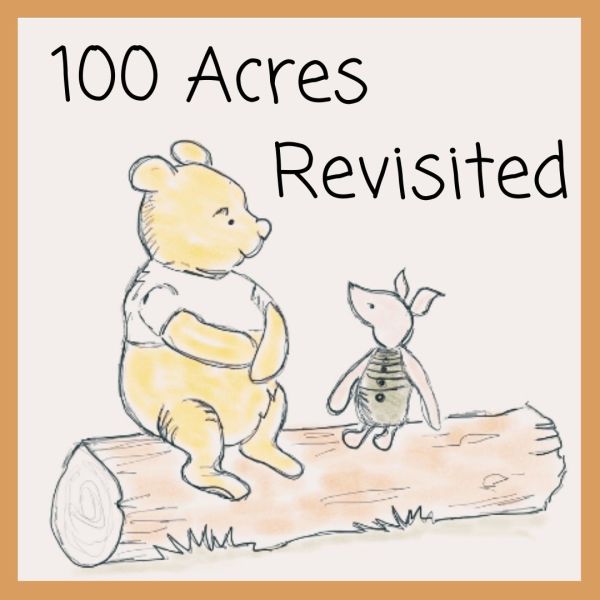
Things are not quite how you might remember them in the 100 Acre Wood for Christopher Robin, Pooh Bear and their friends…
***** ***** *****
Did we but love,
Our love might ease this parting of the ways
Did we but hope,
Then hope might lift us through the darkening days
Could we believe,
Belief might make us fear the ending less
Could we but pray,
We might have just one prayer of some success
If we had care,
Then one bright light the tunnel’s end might show
If we had sight,
We might see in the dark a candle glow
Could we find faith,
Then in that faith we might discern a chance
Could we find calm,
Perhaps we would find healing in a glance
Did we have peace,
Perhaps our fear of death would fade and die
Did we but love,
Why then we’d have the strength to say goodbye
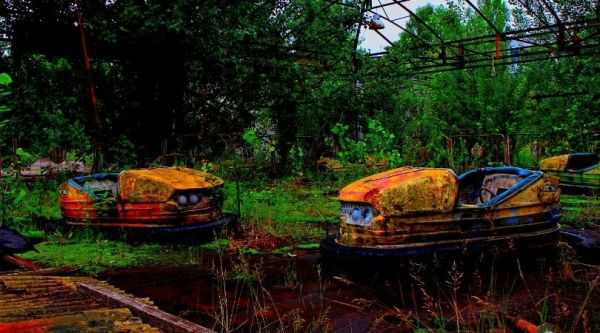
A sign hung down, still half attached to the top of the pay-booth, its broken back clapping against the heavy door set in the side of the small brick cabin. The words were barely visible:
…COME TO ….HELL…
Somewhere an owl shrieked and, despite herself, Jess drew a sharp breath. She took a step towards the broken, flapping sign and played the torch beam over it from end to end:
WELCOME TO SHELLEY’S FUNPARK
The owl screeched again and Jess smiled. You had to love it when the atmospherics played up to the occasion. It would only take a sea mist rolling in to turn this place into something out of an old-school Hammer Horror production. The really chilling thing was not any kind of supernatural danger here, it was the realisation that this was indeed an abandoned and empty place, with no one around who might have a phone she could use to call the roadside recovery and this place was a very long walk from anywhere. Only a year ago that would have meant very little. She might even have enjoyed the bracing breeze and the countryside at night. But not now. Now she would not make it more than a mile before she was crippled with pain.
The laughter carried on the night air, coming from behind the low roofed building immediately in front of her. At a guess it had once been some kind of cafe, but now it was heavily boarded up, metal shutters pulled over the windows, like a creature retreated into its shell.
Shelley’s Funpark? Why did that sound so familiar? Jess would have given it some more thought but the laughter came again, masculine, plural and loud. It was not from someone with any thought of trying to avoid attention. Still gripping the magnalight, its beam dimmed, Jessica made her way past the cafe-building and into the open area beyond.
The shadowy figures moving vaguely on the far side, close by the enclosing wall, sprang suddenly into stark relief and were revealed, as as an orange glow flared behind them. Jess froze, hearing drunken cheers as the fire took hold and watched as, like the ritual of some strange coven of witches, the group of youths all started throwing things into the flames.
She sensed this was indeed a ritual, though not one of any religious kind. Things were passing hand to hand, bottles of water and white cider. It was a scene she had witnessed a few too many times in her career. In her previous career, she mentally corrected and felt the small inner lurch of loss that always left in its wake.
Then someone moved right behind her and a pair of hands gripped her shoulders.
“Hey bros, look what I just found.”
What doesn’t kill you makes you stronger.
No. It doesn’t.
It really doesn’t.
Not when it breaks you inside.
That was all Jess could think, standing, paralysed by her past. There was not even a conscious sense of fear, though she could feel her heart rate slam up and the floor drop away. It was as if her conscious mind had shot out of her body and hung suspended, mid-air, above it. There was nothing she could do. It was going to happen again.
The yelp seemed to come from a great distance away not from right behind, but the moment the grip was gone from her shoulders, it was as if she were restored. Restored to a body in panic. She would have run blindly, but there was a gentle touch on her arm and a girl’s face, looking at her. They ran together.
Jess had no idea where they were going, past half demolished buildings, and broken metal structures that reared like scaffold dinosaurs, against the moon-lit sky. The ‘bros’ were either more worried about what had happened to their companion or already too out of it to be able to give chase, because after a few shouts and some sounds of running feet, the night closed behind the two of them into quiet.
They went past the barrier with an old height restriction sign on it and cartoon-like pictures of stick men standing up in cars on a roller coaster, or leaning out, circled in red with a bar through the image.Then they were clambering over a heap of twisted metal beyond. It was not a hard scramble the way her guide was going, or a long one, which was as well because the shooting pains had started up in her legs as they reached what looked a bit like a metal box, buried in the middle of the debris.
The girl touched her hand again, then opened the door making some kind of sounds, as if reassuring an animal. Then a small glow of light came from inside and Jess went in.
She was not really sure what she had expected. But not this. It was almost obsessively neat and very clean. For a moment, Jess was thinking of paisley furniture and over-polished wooden floors, then chastised herself for assuming that the homeless could not also be house proud. For that was clearly what this was, a homeless person’s private shelter. There was a counter top along two sides and a closed fire on the third wall opposite a comfortable bed. It was more of a sleeping platform really, covered in an odd variety of multicoloured fleece picnic blankets. Two very large cats were curled in the middle and watched her with wary feline eyes.
Jess took it in then looked at her rescuer. The girl looked to be in her mid-teens, a runaway maybe. That realisation pushed Jess out of her bubble of self-concern and she mustered a smile.
“Thank you, I don’t know what would have happened if you hadn’t been there,” she said. The girl said nothing, just glancing briefly to the cats and then back to Jess. So she tried again:
“My name is Jessica Monday, what’s yours?”
The girl kept looking at her, but the silence went on.
From Maybe by Jane Jago and E.M. Swift-Hook.
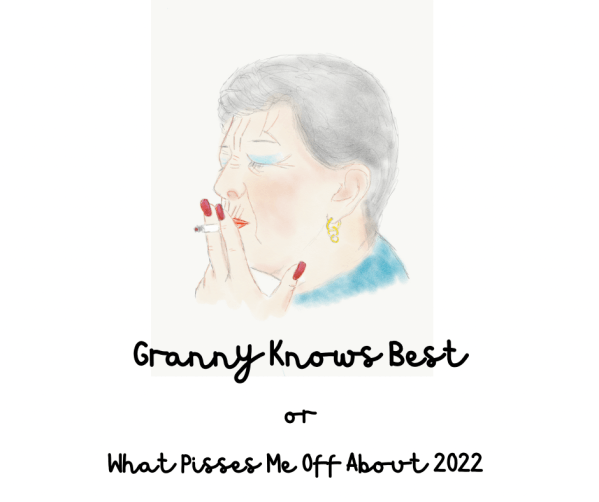
Okay you horrible lot, listen up. Granny is about to impart knowledge.
If you are a married lady of a certain age, look across the room and consider your significant other. How does he appear?
Dashing, debonair and handsome
Rough, tough and dangerous
Slightly grubby and with jam on his vest
Tidily harmless in his cardigan and carpet slippers
If he is any of the first three it’s an even bet you don’t call him your ‘hubby’….
Also for ladies who should be old enough to know better. What do you refer to your lady bits as?
Fanny?
Man Trap?
Minge?
Front bottom?
If it’s any of the first three you probably still have a sex life….
Are you beginning to catch my drift here? What we call things matters.
If you call a man ‘hubby’ he will grow into the neutered tom cat smugness the word suggests.
If you really do call your fanny a ‘front bottom’ the chances of it ever getting a visitor diminish with the years as the terminology becomes more and more at odds with the age and the experience of the speaker.
My late husband – god rest his OCD little soul – once referred to me as the little woman, and wondered why I didn’t come across for a month. Although I am certainly a woman, I am far from being little and the term is pejorative in the extreme. It is like so many words used about women, being designed to remind the ‘fair sex’ of its position in society.
So let’s strip the cute nicknames bare, shall we?
Fur baby. Nope. It’s a cat or a dog or whatever. It is not a baby. Gyp is a dog and he is my best mate (except when he barfs on the floor). I would no more call him a ‘fur baby’ than buy him a pink coat and have his toenails painted. He needs to be allowed to be a dog.
Your tiny daughter has baby fat in bracelets around her wrists. You decide to call her ‘chubbykins’. She has body image issues for the rest of her life.
And so on.
Words have power.
So please stop fecking about.
And if you want to neuter the old man send him to the vet. It’s quicker and more dignified.
You can now have a collection of Granny’s inimitable insights of your very own in Granny Knows Best.
It was ten times ten years since the day when the oasis ran red with blood, and an exquisite woman sat in a red silk tent out on the white shining sands. She was a realist, for all her transcendent beauty, and she knew, as surely as she knew her own name, that this was the last sunset she would ever see.
Fayruzi, named for her remarkable turquoise eyes, stared unseeingly out at the cruel whiteness of the sands and carefully considered her options. She was surrounded by the various means by which she could take her life, and all that remained for her was to choose the one she found least repugnant. There was poison, there were sharp blades, there was even a tiny decorative pistol taken from some long-forgotten ajnabi who had fallen foul of the desert, and there were the sands themselves. The killing sands. The unforgiving mistress of every creature that ran, crawled, swam or flew on her breast.
But wait. Do I hear you ask why such loveliness would choose to die? Of course she did not so choose, it was simply her ill luck to be the jewel of the zenana in a year when sacrifice was called for to propitiate the god and in remembrance of those whose blood stained the waters of the oasis all those years ago. It had been an easy choice for her husband, having no love for women, to give that which another man might have prized beyond his own life as his gift to the pitiless sands.
Fayruzi studied her own white hands and thought about the last possible choice: to simply do nothing. To sit and watch the moon on the face of the desert and await the coming of the dawn and the death priests in their blood-red robes. To await those who would slit her nose before dragging her by the hair to the oasis where they would stone her to death.
She sighed. Just once. And determined to await moonrise before making any decision.
As the moon lifted over the dunes, turning white to silver, Fayruzi lifted the pistol in one pale hand. It would, she reasoned, be the least painful and degrading way to meet her end.
She thought herself fantasising when the sound of hoofbeats came to her ear, and hallucinating when she saw a tall, black horse coming across the sand towards her. Unthinking she stood, and walked out onto the sand to meet her fate. The rider of the horse reached down a hand and she grasped it in both of hers, making a graceful leap onto the saddle in front of the burnous clad figure.
He smiled down at her and she saw his eyes were as black and lightless as the night sky.
As the bedou wheeled his horse and galloped back from whence he had come, it would have been apparent, had there been anyone left behind to see, that the horse left no footprints in the soft shifting sand.
It was ten times ten, and one more, years since the day when the oasis ran red. It was dawn, and the red tent once more stood on the white sand where the desert wind ruffled its silken walls. This year there was no sacrifice but the priests still came as tradition demanded.
The chief among them bent his head and entered the empty tent, except it wasn’t empty. An exquisite woman sat on a pile of cushions in the centre of the floor. She had a babe at her breast.
The old priest felt his heart leap into his throat as he recognised Fayruzi.
“Lady,” he said respectfully.
She turned her face to him, and he saw her eyes – as black and lightless as a desert night.
Buenos Dias!
It is indeed I, Moonbeam Farquhar Metheringham IV, writer, agony aunt and astrologer to the famously credulous. The renowned author of the speculative fiction classic ‘Fatswhistle and Buchtooth’.
One had been racking one’s cranium for a topic for this week’s tutorial (yes, even I sometimes find inspiration needs to pursued vigorously), when a question from Claire prompted one to consider the vital importance of symbols and symbolism to those who would create literature.
Even that bastion of unthinking vulgarity, that outpost of alien mindset, that epitome of hard-handed hard-headedness, that creature one calls Mater has in the recesses of her underused and underdeveloped brain a vestigial understanding of the importance of symbols. Only last week, she was watching some interminably boring panel programme sur le téléviseur, upon which the current Archbishop of somewhere was being castigated about yet another cover-up of ecclesiastical child abuse. Mater looked across the room at me and smiled a twisted smile.
“Moons,” she said a thought sadly. “Moons. If that churchman was to have worn his episcopal regalia, instead of sitting there like a mouse in a poorly fitting lounge suit, I reckon most of them oiks would’ve been a lot more respectful. It’s the symbols of office doncha know.” Then she refilled her gin and Guinness and no more was said.
But that brief moment of lucidity is proof, if proof were needed that the power of symbols reaches deep into the psyche – even of those as sunk into alcoholism and depravity as one’s unlovely parent.
However. En avant.
When one seeks to create literary magic one needs many tools at one’s disposal. Not the least of which is the noble quest. A device by which your hero may be dispatched wherever your imagination chooses in search of some artefact or some creature without which the story can progress no further. But what does that have to do with symbols, do I hear you cry? Yes, of course, I do as your tiny crania cannot hope to make the leaps of understanding that come to one’s mind as easily and gently as a bluebottle lands on a plate of rotting meat.
Of course, the noble quest is to do with symbolism. It is one of the most symbolic of all the storylines.
First. The quest itself is a metaphor (or symbol) for the struggles that beset all humans from cradle to grave.
Second. Your hero’s solid helpmeet – uplifted from the lower orders to become his right hand – is symbolic of the common clay’s need for a god to worship and of the need gods have for worshippers.
Third. Whatever or whoever is searched for, the vicissitudes of the search are the symbolic harbingers of events in human life which must be overcome with stoicism and bravery. Tempting though hysteria and Tia Maria may be.
And finally. That which is sought is the most powerful symbol of all. It symbolises human love and human endeavour. It shows us the beauty that may be found in the depths of the human soul as we try ever harder and climb ever higher in our quest for perfect beauty.
Some common symbols explained
The dragon. Strength, coldness, avarice, and sex.
The virgin. Unattainability, truth, and the desire for sex.
Water to cross. The struggle to be loved, and the desire for sex.
A cup or grail. The thirst for knowledge, and the desire for sex.
A dove. Hope and sex.
A raven. Despair and sex.
A knife. Cutting the thread that binds a child to its mother, or sex.
One could continue almost infinitely, but I am sure you are following by now.
So, my bambinos, choose your symbols with care and write them with delicacy.
Until next. Do not have nightmares and ecrit bon.
Moonbeam Farquhar Metheringham IV
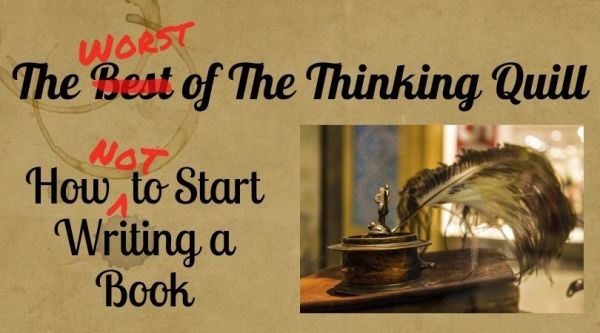
You can find more of IVy’s profound thoughts in How To Start Writing A Book courtesy of E.M. Swift-Hook and Jane Jago.

Built upon an asteroid, these mighty habitation towers are the final stronghold of humanity in a star system ravaged by a long-ago war. Now, centuries after the apocalyptic conflict, the city thrives — a utopia for the rich who live at the top, built on the labours of the poor stuck below. Starway Pathfinders is a science fiction show that entertains the better off and brings hope to the poor…
Home was her sanctuary — their sanctuary. It had been hers alone for so long that Joah could never have imagined sharing it. Then she’d met Zarshay and the naturalness of the sharing had been something she still found strange. It was beautiful, wonderful, amazing, but very, very strange. Their lives enlaced in many sweet ways, enhancing each aspect: work, leisure, friendship, sex.
“You know Heila has been for lunch with a guy from Undergrove Promotions?” Zarshay murmured.
It was so not the kind of topic Joah would have chosen for post-sex warmth and cuddles. She heaved a sigh and sat up, reaching for a throw-on wrap. “All right, if you want to talk about it now. I really don’t mind.”
She heard a snort of amusement from behind her on the bed.
“You are the very worst liar I know. You can’t act worth a thing.”
Warm arms embraced her and for a moment she considered giving in and lying back down again. But it felt wrong to be bringing the stress of day-to-day life into their bedroom.
“If we need to talk work,” she said, turning, “I’d rather do so with a strong drink in my hand.”
Zarshay grinned, her face suddenly that of the mischievous teen she had been when they met.
“Always,” she agreed.
They sat in the windowed alcove of the apartment, on a cushioned couch, taking in the glorious vista of graceful towers and the spans between them, small vehicles dipping like living creatures in the air between.
“Is it serious?” Joah asked.
“For Heila, everything is serious: everything is a melodrama and everything is always on the edge of catastrophe.”
It was, Joah thought, a pretty astute assessment.
“So, we may lose her?”
Zarshay wrinkled her nose in doubt.
“Maybe. But you can’t forget about the Dog factor. There is the huge Hengast and Heila thing all over social media. She loves that and—”
A soft buzz broke into their conversation. Joah looked at the unfamiliar contact details on her phone, then accepted it. It came from the upper floors, which meant it was unlikely to be any kind of time waster. She flashed the screen at Zarshay as she answered, and the other woman’s eyebrows rose.
“Joah Meer Productions, how can I help you?”
“You the people who make Starways Pathfinders? Good. I’m Dain Strand, a personal aide to Toros Strand, and I want to talk to you about a very special project we have in mind.”
Star Dust by E.M. Swift-Hook, originally appeared in The Last City, a shared-universe anthology. This version is the ‘Author’s Cut’ and differs, very slightly, from that original. Next week – Episode 0101
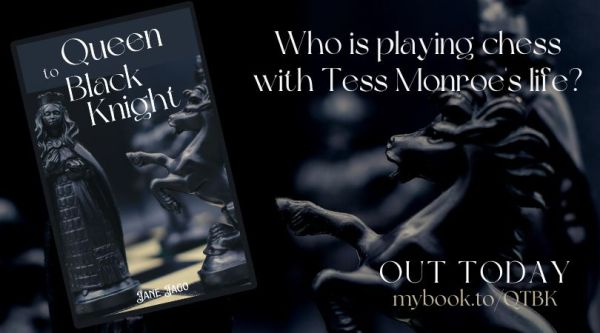
Who is playing chess with Tess Monroe’s life?
Tess Monroe sat at the triple mirror that dominated her dressing room, slowly brushing her smooth, pale hair. She had often thought the greenish glass rather sneered at her, but it was the only thing her husband ever had of his mother so she put up with it.
When her hair was sufficiently tamed she spun it into a complex knot at the nape of her neck which she secured with a pair of emerald-headed hairpins. Shrugging into a fantastically embroidered brocade jacket she picked up her tiny weeny evening bag and walked to the head of the stairs.
The sound of running feet made her turn her head and crouch down to the level of her approaching son. He stopped very still and looked at her for a moment, then his pink lips formed a perfect ‘o’ of surprise.
“Mama,” he said reverently, “you look beautiful.”
“Why thank you, kind sir. Now come and kiss me goodnight because you will be fast asleep by the time I get home.”
He came closer and kissed her carefully. She touched his curly head and kissed a rosy cheek.
“Sleep well babbino caro.”
Philip junior, known as Pip, chuckled, and his teacher-stroke-bodyguard came forward to take one small hand in her own.
Tess straightened up and made her way downstairs to where a car awaited on the raked gravel outside. Her driver, Sylvia, jumped out to open the rear door. Tess smiled, understanding that she was supposed to sit in the back like a proper lady. As they pulled smoothly away, she settled quietly into her seat while the big car ate up the miles to her destination—a place she personally disliked. But she had been brought up to do her duty, however tedious.
This evening’s excursion was a rarity for Tess, as there are few social occasions that are improved by the presence of an extra woman. Tonight, though, the dignitaries of the county were entertaining representatives of a production company, which was filming some parts of a television series on the bleak shoulders of the moor, and she was summoned—no doubt to look pretty and keep her mouth shut.
The drive passed rather too quickly and at the entrance to the restaurant complex, a uniformed doorman leapt to attention. Her driver turned to smile.
“Drop me a text when you are ready to leave. I won’t be far away.”
“Thank you.”
Tess exited the car with the quiet grace she had perfected in her years as the wife of the man who had been touted as the next Prime Minister – until his life had been cut short in a motorway pileup two Christmas Eves ago. As soon as her feet hit the ground, a young man she vaguely recognised as a gofer for the local party chair bustled across. He made to take her by the arm, but she froze him with a glance.
You can keep reading if you snag a copy of Queen to Black Knight, the new book from Jane Jago which is out today!
Nowadays lives are all lived most virtually
Virtual pictures with filters applied
Everyone now can be kept in a pixel
And our photo albums in small phones reside
I recall times that we lived in monochrome
Black and white telly, and black and white snaps
Black and white memories stare from the photographs
Black and white moments our lifetime maps
Back before then they all lived in sepia
Sepia pictures in sepia frames
Formally posed with hands in laps folded
Gazing from history, lost – without names
Further before that they lived life in oil paint
Brilliant colours that spring from the past
Glorious scenes of magnificent ancestors
Whose mighty deeds will our own deeds outlast.

Jim Connolly junior was a big, bouncing redhead of a baby, and seemed quite well aware of his status at the centre of the universe. Even his father would lean over the cradle when nobody was about and touch a huge finger to the baby’s soft cheek.
The family moved from the flat to a house with its own little garden when Baby Jim was a year old and Betty was already thickening with his brother or sister.
It was a hot, stuffy afternoon, a couple of weeks after the move and Betty was taking the kids to the park, via a visit to Donny’s mam. She turned the corner into the street where Donny’s family lived, and Mrs J came out of her house to see her granddaughter. She hugged the little girl and grinned at Betty.
‘I shouldn’t ought to say this,’ the old woman rasped in her tobacco-roughened voice, ‘but I reckon our Donny done you a favour when he got hisself squashed.’
Betty patted her arm. ‘Maybe so. But we miss him don’t we.’
Mrs J wiped a furtive tear. ‘Yes. The bugger was the apple of my eye. And he knew it. Thanks for letting me see little Donna, she’s all I have of him.’
‘Aye. I know that, and you’re all she has of him too.’
They didn’t stay much longer, as the coolness of the park beckoned. Betty sat on a convenient bench, while Donna clambered monkey-like about the tall climbing frame. Once she was sure the little girl was safely occupied, Betty let her mind wander a little – remembering how Donny’s mam had never had any time for her while he was alive, and the callous way the old woman had driven her from the mean little house she and Donny had shared right after he was killed. None of that had been unexpected, but when Mrs J had humbled her pride enough to come to the flat and beg to be allowed to see Donna that had been a surprise. It had never occurred to her to say no, and when the old woman had gone on her way she also remembered the warmth of Jim’s arm about her and how his approval had made her feel. He had kissed her on the top of her head and spoken in a slightly thickened voice.
‘You’re some kind of a girl, Betty. Did it never occur to you that you could have said no?’
She had looked up at him in some confusion. ‘Why’d I want to do that? It ain’t her fault she’s the way she is, and Donna’s her only grandbaby.’
The thumbs he rubbed across her cheekbones had felt like a blessing of sorts.
The next day he brought her flowers, yellow scented roses and oxeye daisies tied with a bow of yellow ribbon. If she concentrated she could still smell those roses.
But that was then, and now it was time to go home and water the garden before she cooked fish and chips for tea. She scooped up Donna and sat the tired little girl in the end of the pram, where she started up a soft-voiced babble of conversation with her baby brother. They were all but home when a pair of figures in a bus stop caught her eye. They seemed incongruous in this settled family area although she couldn’t at first figure out why. The woman fitted in fine, being young and very modestly dressed with her mouse-brown hair coiled in a neat bun and a blue linen hat to shield her from the afternoon sun. No. It was the man who was wrong. He had his back to her, but his pinstripe suit, patent leather shoes and fedora hat marked him as a wide boy to anyone with eyes to see. Then he turned around and her heart did strange things in her chest. It was Donny. He recognised her almost immediately and the smile that lifted one corner of his mouth took her back to the dancehall where they first met. He winked, and bent his head to the girl in the bus shelter.
As the girl lifted her hand Betty could see the gold of a wedding ring. She looked down at the band on her own left hand and that steadied her more than anything else could have. While Donny pitched his new love whatever tale he was weaving, Donna looked up at Betty and grinned.
‘Hungry Mum,’ she said.
And those simple words solidified something in Betty’s chest, showing her precisely what she needed to do. Donny Jackson had walked away from his life, his debts, his enemies, and his responsibilities. Now, if she wasn’t mistaken, he was thinking he could pick up where he left off. Only he couldn’t. His face might still be able to set her stomach aflutter, but she couldn’t forgive what he had done. Not only had he left her with nothing, he had also left his mother to mourn him as dead. Worst of all, though, there was Donna, and without Jim that little girl would have been going to bed hungry at least five nights out of seven.
Betty stiffened her spine and watched Donny come out of the bus shelter walking with his usual swagger. He walked towards her with his hands outstretched and she blanked him, willing her eyes to show no sign of recognition. She drew almost level with him and he opened his mouth to speak. Betty ran the wheels of the pram over his highly polished shoes and then kept on walking.
 Working Title Blogspot