Granny Knows Best – Just Call It Coffee!

I can get my head around espresso and cappuccino, but what are the other seven hundred and forty three things on the bloody menu?

I don’t know. I don’t care. I have no wish to be enlightened.

When you come to take my coffee order and I say I would like a large cup of black coffee with a small jug of cold milk on the side, just nod.

Do not. If you want the big fat tip it is my habit to leave, laugh gently and say.

“Oh you mean an Ameicano with a chilly side.’

I know what I mean….

Shorty

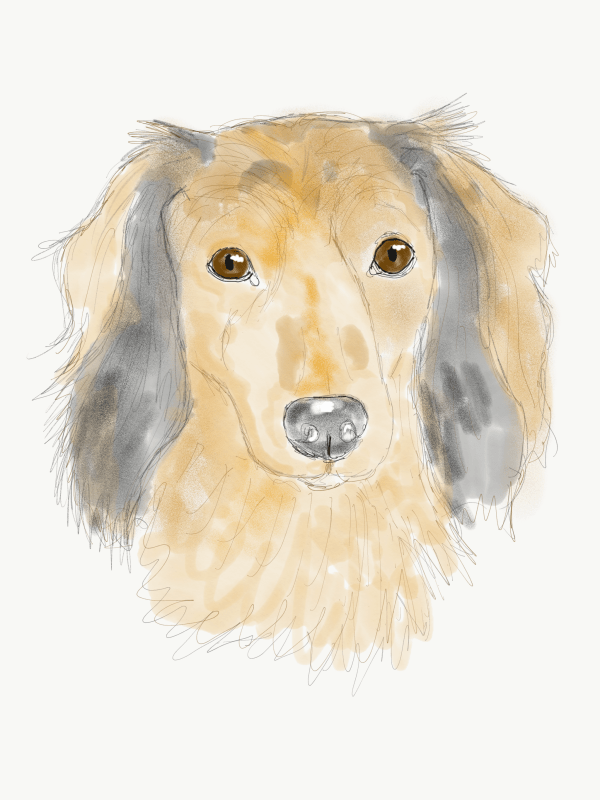
The problem with having little legs is you keep getting left behind. Shorty was so lost he just laid back his head and howled. But missis never heard him. He sat on the cold pathway shivering in the thin rain.

Then a gruff voice spoke.

“Are you lost, little chap?”

Shorty whined. 

“Ain’t passed anybody back that way…”

He picked Shorty up and his legs moved so fast they would surely catch missis soon.

When Shorty heard her voice calling desperately, the man speeded up. 

The advantage of having little legs is that big men rescue you – and missis too…

©️jj 2020

The Time Machine by Herbert George Wells reviewed by Moonbeam Farquhar Metheringham IV

Time is certainly a tricky thing. Mumsie seems to have scant grasp of it for sure. The amount of occasions she has declared she would be visiting the local tawdry tavern for ‘a quick one’, vowing to return within the hour, only to roll back inebriated post-midnight, are too numerous to count.

Indeed, it was whilst awaiting her return one such evening that I came upon a slender tome, a mere novella, which claimed to be a true classic of speculative fiction by a gentleman who preferred to be known by his initials, as is now such a modern trend. I recalled reading some platitudinous parable by the same author when I was at school, the story of a sighted man who discovers a country where everyone else is blind. But this, the cover blurb assured me, was no such. It was science fiction!

My Review of The Time Machine by Herbert George Wells

A man makes a time machine and is doing a lecture tour about it. He uses the device, goes hundreds of thousands of years into the future and lands in a social allegory. Here the effete and pretty Eloi (think elves) are hunted by the troglodytic Morlocks (think orcs). Our hero completely messes up when he tries to save the day, loses the girl (who is killed) and runs off in his time machine. He then stops at a couple more pointless and empty places on equally ridiculous timescales, before he somehow winds up back where he started in time for his next lecture.

One star for encouraging the entrepreneurial spirit by advocating lecture tours for scientists.

Moonbeam Farquhar Metheringham IV

You can find more of IVy’s profound thoughts in How To Start Writing A Book courtesy of E.M. Swift-Hook and Jane Jago.

Pixie-Wu

“You will look after my Pixie-Wu, won’t you?”

Great Aunt Devina was off on vacation and I was the unlucky great-niece chosen to look after her precious lapdog since she knew I was training as a vet.

Pixie-Wu was spoiled rotten and overweight. He hated having no treats and tiny meals, being trained to walk to heel and not to snap.

On the other hand, he loved the ever-longer walks, playing with other dogs and getting muddy jumping in the river.

I don’t think great Aunt Devina ever forgave me – she only left me one thing in her will.

Pixie-Wu.

E.M. Swift-Hook

The Chronicles of Nanny Bee – The Well

They called her Nanny Bee, although as far as anyone knew she had never been a wife or a mother, let alone a grandmother. But she was popularly believed to be a witch – so Nanny it was. She lived in a pink-walled thatched cottage that crouched between the village green and the vicarage. The Reverend Alphonso Scoggins (a person of peculiarly mixed heritage and a fondness for large dinners) joked that between him and Nanny they could see the villagers from birth to burial.
Nanny’s garden was the most verdant and productive little patch you could ever imagine, and she could be found pottering in its walled prettiness from dawn to dusk almost every day. People came to visit and were given advice, or medicine, or other potions in tiny bottles or scraps of paper – but they always had the sneaking suspicion they were getting in the way of the gardening.
But there again, digging is second nature to gnomes.

The village well was running dry. Never in living memory – and some of the villagers enjoyed lengthy lifetimes – had the well ever been anything but brimful of sweet cold water.
What had happened?
A problem at the spring?
A band of hefty young men armed with shovels went to see. They returned puce-faced and angry. The precious water was being diverted to fill a lake her ladyship thought would look pretty in front of the Big House.
The vicar had a word, but returned empty-clawed and apoplectic.
He talked to Nanny. “Stupid woman doesn’t see how a village with no water is any of her problem. And himself is away at parliament until the middle of next month at least.”
“Oh well. What can be diverted can be undiverted.”
“Except she has men with guns guarding the valley.”
Nanny laughed and tapped her finger to the side of her nose.
Once she was alone she removed her boots snd socks and went to stand with her bare feet in the soil. She communed…
An hour later water started flowing into the well again.
“Thanks moles. The village owes you.”
She was answered by a deep laugh from somewhere underground.

©janejago

Mask

Behind the mask
My thoughts can hide
A beautiful illusion
With poison inside
Behind the mask
I whisper lies
A dark delusion
Where joy has died
Behind the mask
The devil’s bride
Her perfect lips
Outlined with pride

©️jj 2023

Weekend Wind Down – The Dog and Onion

The Dai and Julia Mysteries by Jane Jago and E.M. Swift-Hook, a  whodunit series set in a modern day Britain where the Roman Empire still rules.

Less than an hour later Dai and Bryn were drinking in a downmarket dive across town from the Titus insulae. The Dog and Onion was a taberna in what constituted the ‘bad’ side of Viriconium. It shared a street with several nightclubs and most of the local residents could be assumed to be the kind who were not going to be earning their living by methods that were ethical even if they were occasionally legal.
Heads turned to see who had come in and one or two people quietly stood up and began making their way out. Dai was pleased to see that Bryn was getting well known in this community. His own status was probably too far beyond the horizon of these individuals’ social vision for them to know who he was by sight. Besides, as always when he was out doing groundwork, Dai had dressed down.
They took a seat by the main door and Bryn ndded to the woman who was serving behind the bar.
“She’s half of what counts for organised crime in this city. Aoife Broanan. She and her daughters.”
Aoife was in late middle age, overweight and with the hard eyed smile that Dai knew all too well from his years fighting crime in Londinium. She must have seen them arrive because once she had finished with the customer she was serving she came over and sat at their table. She glanced at Dai in brief assessing appreciation of his good looks, then fixed her attention on Bryn.
“Nice to see you SI Cartivel, what you doing here ruining my trade today?”
“Looking for someone, Aoife,” Bryn told her and showed her the three faces on his wristphone.
She pursed her lips and scowled. “Never seen them before. Sorry, can’t help you. But drinks on the house for all vigiles as usual.”
A moment later she was stalking back to the bar with a grace that seemed to belie her bulk.
“That went well,” Dai observed.
Bryn beamed back at him. “Better than I hoped.”
“I suppose it is good to have low expectations, then you are never disappointed. Shall we go?”
“What? And miss a free drink? We vigiles have a reputation to keep up Bard. Start turning down free drinks and next it’ll be no free sandwiches at lunchtime.”
Dai wondered what he was missing, but years of working with Bryn as his right hand had taught him to trust that there was something more here than he could see. So he sat back in his chair and smiled.
“You make a very good point. I hope the wine they have here is worth drinking.”
“The brandy is better. Local stuff.” Bryn’s eyes held high humour, but his face was straight. And Dai had to admit there was more than a touch of irony to think that this den of thieves was selling brandy produced by his own brother.
The drinks arrived, two shots of brandy in deep bellied glasses, brought over by Aoife in person and she set the tray down with a brief smile at Dai.
“Not seen you in here before, but if you come by again on your own sometime know you can have a warm welcome.”
“Now, Aoife, don’t go corrupting more of my vigiles,” Bryn chastised her. The woman turned her smile to embrace them both then winked and went back over to the bar.  The brandy was indeed recognisable as Llewellyn produce, albeit one of the cheaper distillations. Bryn drank his in a couple of quick swigs and got to his feet.
“We’ve not got all day, you know, need to at least look like we’re making an effort to find these people. The Submagistratus is not going to be a happy man if word gets to him we’ve been lazing around in here.”
Dai downed the rest of his drink in one and followed Bryn out of the taberna and back onto the streets of Viriconium.
“So what was that all about?” Dai asked as they were getting into their all-wheeler. Bryn grinned at him and reached into a pocket to pull out a beermat decorated on one side with a local brewery’s logo and flipped it round so Dai could see the other side where the printed image had been pulled back to reveal a neat hand-blocked address.
“I think your baby blues touched our Aoife’s heart, Bard.” Then he ducked to avoid Dai’s fist.

An extract from ‘Dying for a Home’ from The First Dai and Julia Omnibus by Jane Jago and E.M. Swift-Hook

Granny Knows Best – Brown Eggs

Before you go off on one I’m not being racist about eggs. Entirely the opposite.

I contend, and I believe the science supports me, that the colour, flavour, texture, aroma of an egg has feck all to do with the colour of the shell.

The colour of the shell is dictated by the breed of chicken.

The colour of the yolk is determined by the quality and variety of food said chicken eats.

You can get brown eggs from battery hens who live a life of misery, and white ones from happy chickens who frolic in the sunshine…

You choose.

Chunky 

Tom nursed Mollie through the ravages of the cruellest of wasting diseases. When he finally closed her eyes the rest of his life stretched empty before him.

His daughter turned up with a shivering puppy under her arm, and he snarled at her.

“What makes you think I want a dog!”

“I don’t think you do, but I promised Mum.”

So Chunky came to stay.

Tom awoke one morning to the memory of Mollie’s voice.

“We always wanted a dog.”

Tom smiled at Chunky and understood at last.

The only thing he could do for Mollie now was to live.

Jane Jago

Interview with the Vampire by Anne Rice reviewed by Moonbeam Farquhar Metheringham IV

It was a wet weekend so I was poking through the crumbling and dusty ancient tomes in Mumsie’s personal library, some of which even date back in history to before the early 1990s, in search of something worthy of my attention. As I pulled out a slender volume of poetry, a rather wide and heavy paperback was dislodged and fell from the shelf to impact my naked toes.

After I had finished hopping around and cursing my maternal parent for the disorganised teetering piles of books she has adorning her shelves, I picked up the book and examined it. In the absence of anything else appealing, I decided to read it.

My Review of Interview with the Vampire by Anne Rice

The first thing I noticed is that all the major characters in the book are dead. Which one would think might mean they were thus safer than those who were alive. Indeed, the few who first appear alive usually do wind up dead, but those who are dead also end up deader. Confusing? I think it is meant to be.

For example, there is a little girl who starts being alive, then is dead but still a character active in the book – and then is dead and no longer a character active in the book. Except in the past tense where she remains very active.

The hero of the book is truly Byronesque, bemoaning the nature of the human condition – for those humans who are dead as he is. His nobility is the only saving grace of this book. That and the erotic elements. And Lestat.

Read it if you have a wet weekend that needs filling and have no boxed sets left to binge on.

Two stars – one for each day of that wet weekend it filled and a bonus star for the attractiveness of the real hero, Lestat.

Moonbeam Farquhar Metheringham IV

You can find more of IVy’s profound thoughts in How To Start Writing A Book courtesy of E.M. Swift-Hook and Jane Jago.

Start a Blog at WordPress.com.

Up ↑