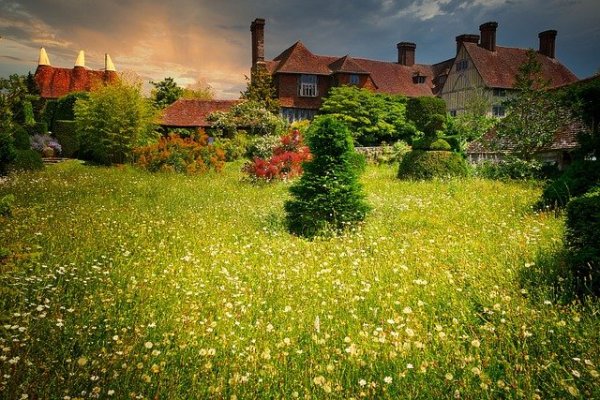
June Meadow

June comes in beauty, decked out with flowers
Bluebells and harebells, buttercups and celandine
Bringing us days with long daylight hours
And lily-of-the-valley and sweet columbine

Every hedgerow and meadow is blooming
Poppies and daisies, cornflower and chamomile
Gardeners know midsummer is looming
Forget-me-nots, campion and hoary cinqfoil

Summer is coming with all nature’s glory
Comfrey and clover, valerian and marigold
Wildflowers blooming tell their own story
Agrimony, saxifrage, and dandelions bold.

So out in the fields and gardens, we ramble
Pansy and tansy, willowherb and cow parsley
Braving the sun and the rain and the brambles
For foxgloves and meadowsweet and bird’s foot trefoil.

E.M. Swift-Hook

Weekend Wind Down – A Bad Mistake

England, September 1642.
The King has raised his standard in Nottingham to summon those loyal to the crown to fight for him against his own Parliament.
Gideon Lennox, a lawyer from London, accepts the job of delivering a message to the brutal and enigmatic mercenary commander, Philip Lord. However, he has no idea about the dangerous world he is about to step into…

The moment he entered the alehouse Gideon Lennox knew he had made a mistake.
The air was thick with smoke as the hearth had a poorly set chimney. Mingled into the smoke was the flat malt scent of cheap ale, the reek of crude tobacco and rancid mutton from the spluttering rushlights. Beneath it all was the human taint of sweat, vomit and piss.
Chatter and laughter faded as he opened the door. By the time he took a pace within, every head turned in his direction. He became acutely aware of how his lawyer’s clothing must make him appear in a place like this.
If things had gone as planned, he would have been here in daylight, but his mare had a loose shoe and he had wasted a couple of hours finding a farrier to restore it. If he hadn’t been running out of time to fulfil his commission, he might have chosen the wiser course of seeking a respectable inn overnight, rather than chancing his fortune here after dark.
Patches of light punctuated the gloom but showed no one who matched the description of his quarry: It is a simple task. You will know him when you find him. He is distinctive. White hair, hook nose and eyes that the ladies would pluck to set into rings if they could.
The room was silent. Cheerful conversation replaced by hostile coldness. These were unsettled times and the rule of law was far from secure—especially here where the sons and grandsons of border reivers had never fully neglected their violent heritage.
Gideon pretended not to notice. He continued forward, trying to draw reassurance from the length of steel he wore on his hip and trying not to recall the scathing comments of his fencing master regarding his ability to wield it. It was too late to regret allowing the man provided by his employer for his protection to wait outside.
A middle-aged woman emerged from the shadows with a jug of ale and a nearly toothless smile.
“How may I be of service, good sir?”
At least Gideon hoped that was what she said. The mix of dialect and missing teeth made for an accent so thick she could have been cursing him for all he knew. He mustered a return smile for her benefit and pitched his voice to carry to the whole room.
“I am making some enquiries, which will be both to my profit and that of your guests—so a drink for all here, if you please. Then if you have a private room, I will have my ale there and be glad to reward any man who may wish to bring me news of one called Philip Lord.”
He had expected the promise of free drink would take a little of the chill from the atmosphere. It usually did. But the woman stared at him and shook her head. Benches scraped as a number of the men stood up. Glancing around, Gideon realised belatedly it was a long way back to the door.
A man blocked his retreat. His muscles would have made a blacksmith weep, although no one would ever envy his face. ‘Homely’ was probably how his mother described him, but Gideon doubted the rest of the world would be that kind. At least not behind his back.
“Philip Lord?” echoed the gargoyle. “Not a name we’ve heard before in these parts. So you can be on your way.”
“Then you have done me a favour indeed,” Gideon said lightly, although his heart was thudding hard. “I can take my leave without wasting the time of any here. Thank you for that.”
He took an experimental step towards the door and its human barricade. The gargoyle showed no sign of moving. Instead, his facial expression shifted into something that might, on any normal face, have been a smile.
“But maybe your—uh—friend comes by one day. If you tell us your name, we could let him know you’re looking for him.”
“You’re too kind,” said Gideon, his mouth dry. It seemed foolish to think a London lawyer would get any consideration from such people. “You can say Sir Bartholomew Coupland wishes to speak with him.”
A hand with a grip like a manacle seized his wrist from behind and before he could react beyond a gasp, his sword vanished from its scabbard, and he was spun around. Off-balance, he staggered back into a solid wall of muscle, losing his hat in the process. A powerful forearm wedged under his chin. The gargoyle’s other huge hand gripped both Gideon’s wrists together behind his back.
The hostess picked up a rushlight. By the yellow flickering glow Gideon stared into a face framed by hair so pale it looked white. The face had gemstone-clear aquamarine eyes that held no trace of emotion as they studied Gideon from behind a finely shaped patrician nose.
Yes. This face was certainly distinctive. Distinctive in a manner that would have women turning to look twice and men wishing they could have a similar distinction. A moment later the face was transformed by a predatory smile of even, white teeth.
He was taller than Gideon himself. His body was well proportioned, and he carried himself as a man with full confidence in his own ability. Gideon placed him somewhere in his early to mid-thirties.
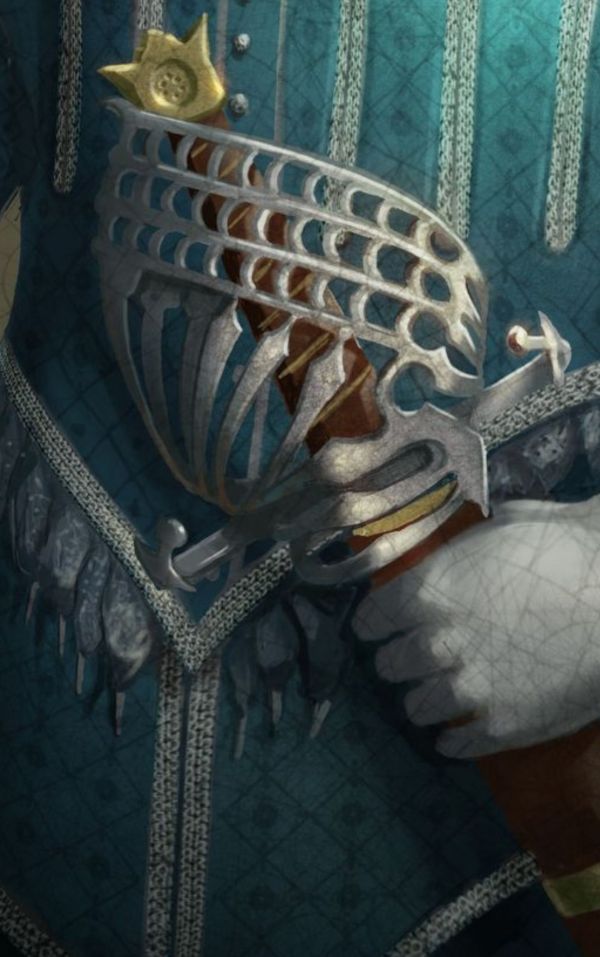
His clothing, by which so much about a man could generally be judged, was extravagant in cut, typical of the new breed of military man, returned from Europe at the first whiff of powder smoke. A pistol was stuck negligently into a broad crimson sash. On his left hip was a long-bladed sword, basket hilted, with a pommel that was curved on the top and had two small triangular points. It looked well used and cared for, the tool of a craftsman. Gideon’s own sword, though it had cost him a deep purse, was like a lady’s embroidery needle next to it.
Gideon needed no introduction to tell him that he had found Philip Lord. The realisation froze the blood in his veins.
“I would know your secret, Sir Bartholomew. It will make me more gold than the alchemists’ stone.”
His accent was northern English but subdued beneath educated southern tones, with traces from across Europe and the Mediterranean. As exotic as the immaculately groomed appearance of its owner.
“My s-secret?”
“The secret of regaining lost youth. Although I think most would prefer to keep their original face rather than find a stranger staring back at them from the mirror.” The chilling gaze flicked to the man holding Gideon. “But there might be those who would welcome the chance to be recast as someone new and start afresh. Eh, Thomson?”
Which earned some laughter. But Gideon stayed silent, his mind spinning with fear, trying to seek firm ground.
“Coupland sent you to find me,” Lord made it a statement, not a question.
“Yes.”
“What are you worth to him in one piece?”
“I—I don’t—”
“Just answer the question,” said the Gargoyle. The arm muscle at Gideon’s throat tightened making it harder for him to breathe.
“Thomson,” Lord said, his tone one of amused tolerance. “Your enthusiasm is appreciated, but let the man get some air beneath his ribs so he may speak.”
The pressure at his throat eased and Gideon gasped. The thick, alehouse atmosphere that invaded his lungs was as welcome as a spring breeze. Philip Lord moved closer, any trace of humour gone, his eyes as merciless as the North Sea in winter.
“Since you are clearly not Sir Bartholomew, who are you?”
“Gid—Gideon Lennox. I am a lawyer.”
At the slightest nod from Lord, Gideon found himself suddenly free and nearly collapsed to his knees at the abrupt release. A strong hand gripped his arm and steadied him, brief and impersonal.
“Thompson, tell Shiraz to deal with the man who was with him.”
A draught of clean air marked the opening of the door as the gargoyle left.
“Gentlemen,” Philip Lord made an elaborate gesture to include all within the room. “We have rehearsed the steps of this dance. Make ready.”
There was a swirl of purposeful movement as Gideon was steered towards the rear of the alehouse.

From The Mercenary’s Blade by Eleanor Swift-Hook – only 99p/c on Kindle. It is the first book in Lord’s Legacy, a six-book series set in the opening months of the First English Civil War.

Art by Ian Bristow.
Much Dithering in Little Botheringham – Three

Ginny felt a little helpless as the removers (or were they movers since it was the first time they’d moved her things?) huffed and struggled with her large white oak dresser.
“Please be careful with…”
“It’s alright Mrs. Withers, me boys know ‘ow to do it just fine.”
She cringed at the use of her married name. It was something she had hoped to leave behind in London, but as all the documents for the house she was selling had been in the name of Virginia Withers, she had found it more practical to do everything around the move in the same name. One of her less good life-choices had been to maintain her married name in daily life to avoid the issue of having people recognise her.
The first thing she planned to do when she had settled in was change the name on everything from her bank account to her utility bills to Cropper. She had been out of the limelight for five years, more than long enough to have sunk from view in the fast moving world of celebrity social media – besides who even read blogs nowadays. All the millennials preferred video format.
Catching a glimpse of herself in the dresser’s built-in mirror as it was carried into the house, Ginny suppressed a shudder at the thought of appearing on a video. She had put on more weight than was acceptable and her thinning hair, now mostly concealed under a brightly coloured scarf, had once been brilliant coppery waves and part of her trademark look.
“Any chance of a cuppa, missus?”
The chief remover who was called Stan or Dan – or was it Ian? – she hadn’t really listened when he introduced himself as she’d been worrying about the standing harp (shewas going to learn to play in the peace of the countryside) at the time.
“A cuppa?” She wondered if she would find her selection of organic detoxers in the ‘ready box’ she had prepared for the kitchen. A nice cup of rooibos would be nice or maybe a comforting ginger flake and lemon peel.
“Yeah. You know. Tea bags. Sugar. Milk. Mine’s two and leave it until its got a colour like it’s been in Ibiza a month.”
Ginny felt her mouth fall open into an O shape and that was the sound that came out of it too.
“Me and the lads been working pretty hard today. Cuppa would be nice. Wouldn’t mind a couple of bourbons or custard creams to go with it neither.”
“Custard creams?” Ginny started panicking. She was sure she had a few oatmeal and natural fruit biscuits in the ready box, but custard creams and builder’s tea?
“There an echo in here?” Ian – or was it Stan, she so wished she had been paying more attention – gave her a cheerful grin. “Passed a shop up the road, if you’re needing milk you could try there,” he said helpfully. “We’ll carry on here, don’t you worry.”
It was one of those situations Ginny loathed. 
The last thing she wanted to do was go to the local shop looking like this. She knew these communities could be very judgemental on first impressions and if she made a bad one it might be years before they accepted her here. But if she didn’t provide the refreshments Dan was demanding, who knew how he’d treat her furniture?
Giving way in the face of grim inevitability, she rescued her shoulder bag from her car and headed back along the road towards the village shop. It had been one of the selling points of both the cottage and the village for her. Firstly that there was a thriving village shop – complete with a post office counter at the back – and secondly that the cottage was no more than five minutes walk away from it. 
The walk took her past the little church which was apparently one of the finest examples of some style of architecture in the country. Looking at it she had to wonder if that was brutalist or utilitarian, then she realised that she was studying the church hall and the church itself was on the other side of the road. 
Feeling embarrassed by her mistake, even though no one need ever know she had made it, Ginny put her head down and increased her pace. Which was why she nearly ran into a solid muscular torso, covered with manly hair coming in the other direction, attached to a pair of equally hirsute legs in shorts and trainers.
Gasping out an apology, she stepped aside at the last moment and glanced up to see a face that belonged on the set of the latest BBC period drama. That made her miss the fact she was on the edge of the pavement and had a strong arm not shot out to catch her, she would have wound up sitting in the road very likely with a twisted ankle.
“S-sorry,” she said and the face gave her a tolerant smile. The sort it probably gave to elderly ladies, young children and journalists. Then she was standing on the pavement again and the runner had gone.
She reached the village shop feeling a little overwhelmed and took a moment to sit on the bench outside. A plaque proudly declared it had been provided by the Little Botheringham Ladies Association and she felt oddly grateful to them for allowing her a place to gather her wits after bumping into Ross Poldark and before braving the village postmistress.
In fact she found the owner of the shop to be quite charming and not at all the severe and judgemental type. Her style was smart casual denim, dark designer jeans with a grey worsted jacket.
“Angela Pendle-Burton,” she said and held out a hand. “You must be she who has taken on Flo Maybush’s cottage.”
“Taken on?” Ginny suddenly realised she was beginning to resemble a mynah bird. But people kept saying such odd things.
“Oh, so you didn’t know?”
“There’s something wrong with it? I had all the checks done so…”
“No. No.” Angela held up both hands displaying a heavy gold link bracelet as she did so. “It’s just Florence was in the Ladies Association so I sort of thought…” She trailed off and smiled then went back to scanning and packing Ginny’s purchases.
“The Ladies’ Association seems to be very active here.”
“Oh yes, very. They look after the village very well. They  funded the cricket pavilion being rebuilt and the new children’s playground. And when there was talk of closing the school they organised a huge campaign to save it. And we are the only outlying village which still has an hourly bus service into Bedchester. Everyone appreciates the work they do for us.”
It came to Ginny that if she wanted local acceptance then maybe this offered a way to get it.
“That sounds very worthy,” she said, swiping her card to pay for the tea, milk and biscuits. “How does one join the Association? I’d love to be involved in village life like that.”
Angela gave her the same strange look as before.
“I’m not sure you’d… But still. Here.” She reached under the counter and produced what looked to be a business card.
The bell that announced someone had opened the shop door jangled and Ginny turned to see the jogger come in, still clad in shorts.
“Oh hello, vicar,” Angela greeted him cheerfully. “Come for your usual?”
“Yes please, Mrs. Pendle-Burton and I’m hoping for something a bit extra today.”
His voice was deep and as he spoke his gaze locked with Ginny’s stirring something uneasy somewhere below her navel. She snatched up her shopping and took the card Angela was holding out, dropping it into the bag as she scurried out of the shop.
Vicar?
Seriously?


Part 4 of Much Dithering in Little Botheringham by Jane Jago and E.M. Swift-Hook, will be here next week.

Doughnut

I might be kinda chunky, but that’s no call to be rude. I’m healthy, and happy as a pig in s**t.

But that don’t stop ‘em, do it?

You gotta be pre-diabetic, they say. And they take the blood and test it and it comes back normal. 

So they tries another tack.

Three times this month I’ve sat in the doctor’s waiting room listening to people hawk and cough, all to keep some skinny woman with  sour mouth happy.

Today my doctor passed away, age fifty. Stress they said.

I had me a cream doughnut in her memory.

©️Jane Jago 

The Collected Poems of Moonbeam Farquhar Metheringham IV – Volume One

Man shall not live by prose alone, so I offer here some bouquets plucked from my garden of the Muses. Perhaps they might inspire you to attempt your own meagre efforts at the high art of poetry. Do not be discouraged if what you dribble onto the page is vastly less illustrious than my own pure poems. It is not given to all of us to be the Chosen One of Erato…

The Seagull

Once upon a picnic beery, whilst I guzzled, drunk and cheery,
Over the tartan blanket spurious, spoke words which could only bore –
While I waffled, sometimes rapping, suddenly there came a flapping
As of some bird quickly crapping, crapping on my fresh coleslaw.
“Tis a bloody gull!” I shouted. “Crapping in my fresh coleslaw.
“Shoot the bugger!” I did roar.

And the seagull, never flitting, still is shitting, STILL IS SHITTING!
All across the tartan blanket and the bowl of my coleslaw!
Soon his evil squawk brings streaming every seagull near, it’s seeming
And the flock of flockers teeming do devour my picnic more,
Thus, my cup of fine Prosecco now is spilt upon the floor.
I shall picnic – nevermore!

Sonnet IV

Within the inglenook of creeping night
I steal Calliope’s wings steeped with flame
And an homunculus enters my sight
Bearing aloft a banner with my name.
I stalk to rocky kloofs of distant height
To claim the fabled phoenix for my own
And by the wounding pens terrible might
I slay the fierce chimera all alone.
Those Labyrinthine paths conquered by right
So now upon my head Theseus crown
Marks my soliloquy of posey bright
As in Morpheus arms I softly drown.
From forth my dreams thus comes triumphs of rhyme
For of the Muses choice, I am the prime.

Hibiscus

Hibiscus bloom of palest pink
I have not words, I have not ink
To speak of love’s bepetalled face
Watch from afar who walks in grace
Who walks in beauty as the dawn
Who in my breast true love doth spawn
Who shines like effervescent gold
Who shall not wither, nor grow old
Hibiscus bloom thy petals ope
And face the sun and dash my hopes
Hibiscus bloom of palest hue
Who murders hope with lies untrue
Hibiscus bloom of stainless steel
Who stamps my love beneath her heel

Moonbeam Farquhar Metheringham IV

You can find more of IVy’s profound thoughts in How To Start Writing A Book courtesy of E.M. Swift-Hook and Jane Jago.

Divorce

It was the divorce of the decade. Two A-listers, whose marriage had been ecstatically happy, were on the rocks. Mainstream and social media were in feeding frenzy. Fans scanned the words in his books and her songs, finding subtle knives aimed at each other.

They met for the last time before the divorce became final on a publicised mediation weekend in a secret location.

“I’m going to miss you,” she said, as she lay in his arms.

“Me too. Just think of the sales so far and how much free advertising we’ll have when we get back together next year.”

E.M. Swift-Hook

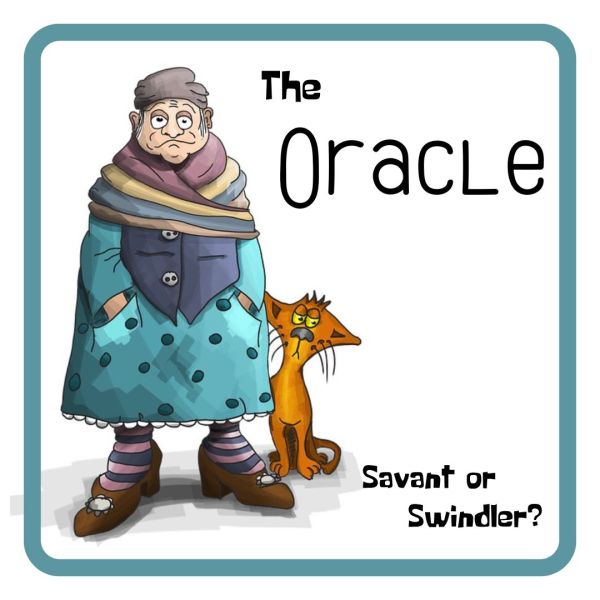
The Oracle – Marriage Guidance

Somewhere high in some mountains near you lives the Oracle…

“What do they call you, boy?”
“Watson,” he whispered.
The oracle stared at him for a couple of seconds before breaking into the wheezing laugh that all but robbed her of breath. When she recovered somewhat she waved a grimy hand.
“Elementary my dear Watson.”
Then she was off again, laughing out loud at his evident discomfort. Even her fat orange cat seemed to find him amusing enough to stare at him from its mismatched eyes. She wiped her streaming eyes on a sleeve.
“What were we talking about? Oh. Yeah. How come I’m still here?”
He nodded and waited patiently whilst she adjusted her time frame and thought back.
“Originally it was a three-month gig while the proper oracle had a bit of a rest. But she never came back. And I wasn’t doing too badly, particularly once I got the knack of rolling my eyes back in my head. The folks who own the mountain came to see me, mouthing some crap about doing me the favour of letting me stay on. I pretended innocent stupidity. When they were gone I talked to the owners of a mountain in the next state, who would have loved to get themselves an established oracle.”
She sniggered as if at a particularly diverting memory, and scratched at something in her armpit.
Before she could continue, the bell that announced a visitor pinged. Watson made himself scarce, sitting just inside the cave from whose darkness he could observe whilst remaining unobserved.
The man who scrambled up the last few feet of the path was overweight and sweating profusely. He knelt in the dust and gravel in front of the oracle’s grimy slippers and bowed his head.
“Who comes to beg the guidance of the mountain?”
He lifted his face and it was evident from his scowl that he didn’t much care for the idea of begging. At first, he said nothing and the oracle waited in a silence that grew heavier by the second.
In the end it was the supplicant whose nerve broke.
“It’s a simple thing, really, but the uneducated fool who I would honour insists that he will only abide by the word of the mountain…”
“Say on, little man.”
He puffed out his chest in an effort to look large and important, then his face paled.
Watson would have been willing to bet rather a lot of money that the old bag had rolled her eyes back in her head. Then she began to speak.
“Return from whence you came. The woman is not for you. You have a wife and three fine sons. That is enough for any man.”
He reddened and for a nanosecond it seemed as if he might attack the oracle. Watson now understood the sawn-off shotgun that reposed among her tattered skirts.
The man pulled himself back from rage and spoke whiningly. “The angel of God tells us that a man may have as many wives as he can support.”
The oracle cackled. “That’s as maybe but the legal law says no.” Then her voice changed again, moving into the singsong reaches of prophecy. “A young wife would be thy death warrant, thou hast not the health for such. Return home to the woman whose care for thee is both tender and kindly. Stray not from her love lest such cost thee thy life.”
The fat man lost all his colour, being pale as milk now.
“Are you sure?” he quavered.
The oracle dropped her prophetic tones and spoke quite normally.
“I’m sure that whatever the spirit of the mountain told you is no less than the whole truth.”
“Whatever? Don’t you know what you just said?”
She leaned forward and a small river of dust ran out of her clothing.
“I have no idea what I said. I’m just a vessel for the prophecy.”
The fat man bowed three times and scrambled backwards out of the presence.
The oracle turned to face the cave and smiled a raptor’s smile.
“Thank goodness for Facebook”, she said mildly before falling abruptly into sleep.

The Oracle foresees she will return next week…

Jane Jago

Irritated Wol

It’s too bright, he said
Rotating his head
The light hurts my eyes
I’m nocturnal he cries
I should sleep in the day
Now please go away
There are times when it’s foul
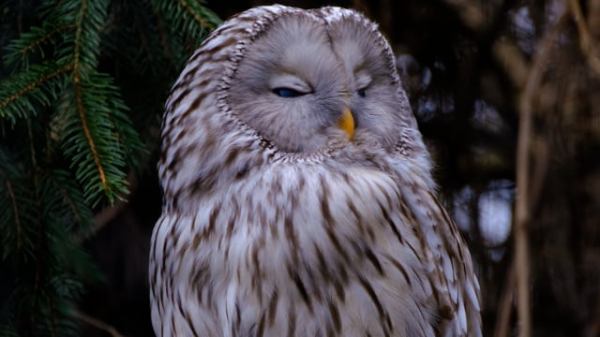
Just being an owl

Jane Jago 2023

Weekend Wind Down – The Widow

When Alice Lancaster woke up on the morning of her twenty-third day of widowhood, she felt as if she had somehow pulled herself out of an uncomprehending fog, and into the pitiless brightness of sunlight. Although this awakening sharpened the pain she welcomed it as a sign of returning life. Alaric was gone and she had to somehow create an existence without him. She dressed herself in the unbecoming clothes that were all she currently owned, and frowned at her reflection.
During an uncomfortable morning, being watched by her husband’s family, Alice considered her options. She could remain in the family home, under the eye of Alaric’s mother, who disliked her, and his brother who liked her rather more than was comfortable. She could go back to her father’s house, but she now had a stepmother younger than herself. Or. She could stand on her own two feet.
None of it appealed, but striking out on her own, although both frightening and confusing, felt like the least of a fistful of evils. Tapping her fingernails against the wooden arm of her chair, she thought grim thoughts. Mother-in-law turned a perfectly coiffed head, atop a long neck decorated, as always, with a six-strand pearl choker – whose ruby clasp shone almost as balefully as Mama’s basilisk stare.
“Will you stop making that infernal noise!”
As this was nominally Alice’s sitting room, it would have been both easy and satisfying to snap back. But she didn’t; instead, she got up and left the room. Picking up her coat and handbag, she walked out of the front door, past the hovering porter, and down to the street corner where she hailed a taxi.
“Where to, love?”
“Hildebrand and Watkins on the Strand, please.”
When the cab dropped her outside the scrupulously whitened office steps, her courage almost failed her, but the thought of ‘Mama’s’ cold gooseberry green gaze stiffened her spine. The stiffly coiffured receptionist spared barely a glance for the hatless young woman who came in so timidly.
“Visitors by appointment only,” she barked.
For some reason, this rudeness emboldened Alice far more than kindness would have and she stalked over to a handsome door that bore the name Augustus Hildebrand LLB. She tapped twice and walked in, leaving the receptionist gobbling like a turkey in her wake.
The man at the desk looked up from his newspaper. His incipient frown changed to a smile.
“Hello, Uncle Gus,” she said softly.
“My dear Alice. Come in, sit down, and tell me how I can help you.”
Alice went to one of the wing chairs beside the fireplace and folded into its cushioned embrace. Her host wrinkled his forehead before going out to reception. His deep voice contrasted with the receptionist’s staccato counterpoint but she was too weary to even try to make out what was being said. Instead, she laid her head against the snowy whiteness of the old-fashioned antimacassar and let her thoughts drift. When she came back to herself, her mother’s only surviving brother was in the other fireside chair watching her with concerned eyes. She summoned a smile for him.
“They told me,” he said, “that you didn’t want to see me.”
“Oh. Which ‘they’ would that have been? Mother-in-law and baby brother?”
He nodded. “I rather think they are hoping to keep you under their thumbs.”
Alice pushed her hair away from her face with a shaking hand. “I’m beginning to think that myself. However, ‘Mama’ can’t resist pinching and poking at me. Thinks that because I won’t argue she can push me around. Only she can’t. And today, it came to me that I have had enough.”
“So, you came to me.”
“I’m sorry for that. If it’s going to cause trouble I will go.”
He held up a hand. “Don’t be silly. We aren’t living in the dark ages. They have no hold on you. You are of age. And besides which, even if there was trouble, you are all I have left of my dear sister so I would help you anyway.”
Tears pricked the back of her eyes. “Alaric always said I should come to you if anything happened to him.”
He smiled and his face lightened. “What took you so long then?”
“I had to get over the shock of losing him first. I rather thought he was immortal, you know.”
“He always behaved like he thought he was immortal too.”
“Maybe he did.” She sighed. “Maybe he did.”
Uncle Gus remained quiet for a while, then spoke gently. “What can I do to help you?”
“I need somewhere to live. I decided just now that I cannot spend another moment in that house.”
She waited for him to tell her not to be dramatic and to just go home and get on with it. But he didn’t. Instead, he nodded his leonine head.
“We can’t do much about finding you a home today, and I’m not exactly set up to receive guests.”
His cheeks pinked, and Alice laughed.
“Do we have a young lady in residence Uncle Gus?”
“She isn’t that young, and she’d be very insulted to be called a lady.”
“I’d like to meet her, then. She sounds as if she would be the perfect antidote to the stultifying pretended gentility of Alaric’s dreadful Mama.”
His bark of delighted amusement made Alice feel much better about herself. When he stopped chuckling, he looked at her for what seemed like an age.
“If you really mean that, then by all means come and stay with us. You would certainly be safe under Gabriella’s wing.”
“Safe?”
Uncle Gus sobered.“Yes, Alice, safe from the machinations of a woman who is already hinting that Alaric’s untimely death has left you mentally unbalanced.”

From Alice’s Choice by Jane Jago 

Much Dithering in Little Botheringham – Two

An everyday tale of village life and vampires…

SIX MONTHS EARLIER…

Em scowled at the knitting pattern. How was any right-thinking person supposed to make head or tail of such a load of gibberish? Screwing up the photocopied sheet she lobbed it into the fire. The wool and the knitting sticks barely escaped the same fate.
“Vanderbilts don’t knit,” she said firmly before going to the kitchen and picking up the phone. She dialled three digits.
“Agnes. How are you getting on with the knitting?”
She listened intently for a moment then laughed a deep belly laugh.
“I’m rather glad it isn’t just me. Do we know anybody who can knit?”
She listened some more.
“You can’t be serious. Arnold the gravedigger is a competitive knitter?”
The tinny voice at the other end of the line gabbled on and on. Em listened patiently for a while before gently replacing the receiver in its cradle. Agnes wouldn’t even know she had gone.
It was a bright sort of a spring day, and in theory ideal for cycling. But Em had never been one for uselessly expending energy. She carefully closed the wood burner, patted Erasmus on his head as he swung from his favourite beam and picked up the car keys in one hand.
Bowling down the badly-maintained tarmac she couldn’t help noticing the ‘sold’ sign on what had been Florence Maybush’s cottage until the meddlesome old bat got herself run over by a tractor she was stalking with the speed gun she had ordered from Amazon. 
Her family had no need of a tumbledown thatched monstrosity that squatted at the end of a huge and totally undomesticated garden. Consequently, they had been delighted to accept an offer from the local builder, only to descend into foetid sulks when that canny individual obtained planning permission for ten neat little homes on the garden. Rumour had it that when the houses were built and sold at a tidy profit, old Fred Maybush ground his teeth so hard he went through a new set of dentures.
Once the Maybush estate was all sold, the builder turned his attention to the cottage, gutting it and carefully rebuilding it so it was even more inconveniently twee than it had ever been. If now weathertight and electrically sound. He then put it on the market at a ridiculously elevated price.
It sold in three days.
Rumour had it that the buyer was a ‘lifestyle blogger’ from London, who was running away from her menopause. Em ground her teeth at the very thought.
But for now she dismissed the whole Maybush situation as being something to deal with later and concentrated on piloting her piss-yellow Citroen Dyan around the potholes and up the rutted lane to the house Arnold shared with his mother.
Em knocked and the old lady came to the door. Her forehead creased in an unwelcoming frown and her hands made various signs against enchantment, but she bobbed a sort of a curtsey.
“Come you right in mistress.”
Em went right on in but showed her teeth to the cringing woman.
“It’s all right you silly old bat, I’ve come to talk to Arnold about knitting.”
“Got a week to spare, have you?”
Arnold came into the cramped hallway, just about filling it with his muscular bulk.
“Go and put the kettle on Ma.”
She went, and he ushered Em into a spotlessly clean sitting room where a small fire burned in the gleaming hearth. The cat that lounged on the hearth rug took one look at Em and ran, hissing and spitting from the room. Em sat down.
“They tell me you are something of a knitter.”
He grinned. “You could say that.”
“And do you knit to commission?”
“Not normally. But I could be persuaded.”
“By what?”
Em was normally wary of being asked for favours, but Arnold had always seemed as stolid and unimaginative as a block wall so she guessed his wants would be as mundane as his face.
“It’s the bats. The ones in the belfry. They hate the vicar, which is fair enough. Everybody hates the vicar. But not everybody is having a dirty protest by crapping all over the church. Only it ain’t the vicar who has to clean up after them. It’s me.”
“Oh. Right. I see. But why now?”
“He reckons he’s getting the exterminator in.”
“Stupid little man. He could go to prison for that. The bats are a protected species.”
“Yeah. He knows that but he reckons nobody will find out what he’s up to.”
Em sighed. 
“I’ll speak to the council, and get Erasmus to have a word with the bats. Will that do you?”
“That seems more than fair. Now what do you want knitting?”
“A toy.”
He raised his fair brows. “A toy?’
“Yes.” Em said snippily. “A toy. For the agricultural show. The basket of crafts. Great Snoringham Ladies have won it so often they are thinking of just giving them the trophy. And we can’t have that now. Can we?”
He smiled a slow smile of complete understanding.
“No. We can’t. Is there a specific pattern?”
Em dragged a piece of crumpled paper out of her cardigan pocket. “Doesn’t seem to be, just says a knitted toy of between six and twelve inches in height.”
“Oh well. Come you into my knitting room and we’ll see what I have.”
Two hours later, and sick to the back teeth of knitting, Em left the cottage with a bulging carrier bag in her hand. 
Driving home, she was amused to see a large removal lorry trying to reverse into Maybush Cottage. It was being directed by a wispy looking female dressed in what looked to Em to be rather a lot of unconnected bits of hand-printed cotton. She also appeared to have beads around her ankles. Em made a disgusted noise in her throat and went home to phone the council about bats.

Part 3 of Much Dithering in Little Botheringham by Jane Jago and E.M. Swift-Hook, will be here next week.

Start a Blog at WordPress.com.

Up ↑