Weekend Wind Down – The Twelve Princesses


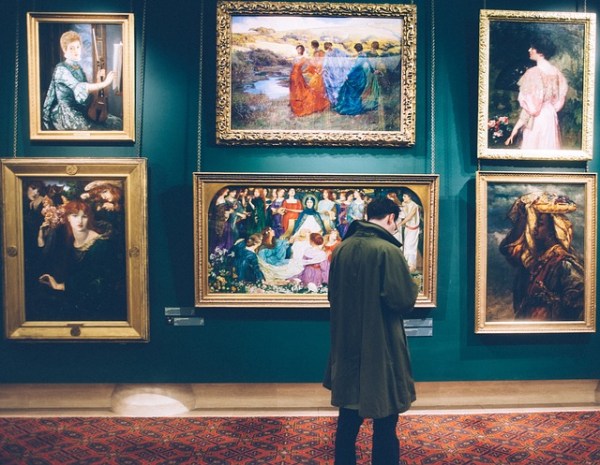
Queen Ingonida having been in the arms of her ancestors for more than a year, parliament decided that the King’s Majesty needed a new wife. King Armand himself was less than keen, but, as his ministers held the purse strings, he found it politic to acquiesce.

Accordingly, proclamations were sent to all the surrounding kingdoms, which process resulted in a dozen offers of eligible brides. As was the custom, each candidate was represented by a portrait painted by her country’s foremost artist, and a letter written in the hand of the princess herself.

Once the portraits and letters had been gathered together, they were delivered to an apartment in the north tower of the palace and the King was summoned.
The Prime Minister spoke: “Your Majesty. There are twelve candidates for your hand. The choice is yours.”
The king stared at him.
“When we leave this room, you will read the letters and study the pictures. From that information you will make your decision. However, you will not leave this place until your decision is made.”
With that the members of the Royal Council turned on their heels and progressed with studied dignity out of the suite of rooms. The king picked up a small stool and hurled it at their departing backs, which at least served to dissipate their dignity. Then the door closed behind them.

The king opened the door by which his ministers had exited, to find himself faced by a couple of men at arms who shuffled their feet and looked a bit embarrassed.
“You are all right, lads” His Majesty said genially. “I’m not going to be awkward. I was just curious. And I could do with a snack. Bread, cheese and beer.”
“Ain’t there wine and stuff in there?”
“There is, but there’s no bread or cheese or beer.”
The brighter of the two guards grinned a gap-toothed grin.
“I’m on it.” And he scooted to the end of the corridor from whence he could be heard bawling for a servant in truly stentorian tones.

His Majesty grinned appreciatively and went to sit in front of the fire in the room with the twelve portraits. It wasn’t long before his snack arrived and as he munched he ruminated on the task before him.
“What do I do now?” he mused aloud.
“Well you could try talking to us.”
His head snapped around as if it was on a spring.
“Talk to who?”
“As if you didn’t know.”
The voice was female and sarcastic.
“Maybe he really don’t know…” another less angry woman.
“Ingonida” the first voice snarled.

King Armand was nothing if not quick on the uptake.
“Is that portraits talking?”
“Don’t play the innocent with us. You must have chosen your first wife in this room.”
He laughed sardonically. “You think I chose Ingonida?”
“Why not? She was beautiful and wealthy.”
“And cold and miserable” he said bitterly. “I’d have traded twenty Ingonidas for a plain face and a merry heart.”
“So why did you pick her portrait then?” The first voice was less angry now.
“I keep telling you I didn’t pick anything. I got up on the morning of my fourteenth birthday to be shoved in a white satin doublet and frogmarched to the cathedral. I was married before I even had my breakfast.”
“Oh. But why didn’t you get the Choice?”
“Think about it woman” it was the man’s turn to snarl. “The fourth son? The third spare heir? I was lucky to get hand-me-downs and my father could never bother to remember my name.”
A third female voice chimed in. “And that will teach you to jump to conclusions Araminta.” Then the tone of that voice changed from mild censure to genuine curiosity. “Did nobody explain the Choice to you my liege?”
“Nobody explained anything. I wasn’t supposed to be king. You can add it to the list of things I have had to make up as I went along.”
The first voice made a sound of disgust deep in her throat.
“Bloody Ingonida could have told you…”
“Bloody Ingonida never told me nothing in twenty years of marriage. So maybe one of you would be kind enough to explain.”
First voice actually sounded conciliatory.
“Very well. This is how it works. The portraits and the letters are brought to this apartment, which is only ever used for this purpose, and the ancient magic that resides within the walls links us to our portraits so that we can both see you and speak to you.”
“I don’t know that I like the sound of that. It seems to me as if you are being manipulated without your consent.”
“Oh we are. And as far as I know you are the first of your line to recognise that. Makes you a much more interesting human being. But we digress. It would be good if you cut the numbers down a bit, twelve egos over here is a bit crowded.”
“Okay. I’m thirty-four and I’ve been the young half of a lopsided marriage. I didn’t like it. So. Anybody under twenty?”
“Six of us are.”
“Who? And how do I go about cutting down the numbers?”
“If you decide a princess isn’t for you, just take her picture down from the wall. Those who are under twenty will show up red.”
“I see.”

He stood up and looked towards the portraits, six of which were now tinged with blush red. The first five left the wall gracefully and with almost a feeling of gratitude, but the last one adhered to his fingers.
“What lady?” he asked gently.
“I would stay longer if I may. I am close to my twentieth birthday and in all that time I have never heard a male gentleman of a royal household even consider the feelings of a woman.”
He thought for a moment then bowed his head.
“Very well lady. You shall have your wish. It ill behoves me to ignore your wishes if I am not to be as bad as all the other men you have known.”
“Thank you.”
“And then there were seven” the first voice purred.
“Behave Araminta” the third voice was gently chiding.

Armand laughed. “My next question is this. How many of you have a man you love, who you might even have been allowed to marry if this stupid contest for my hand hadn’t cropped up?”
Three pictures blushed red and he lifted them gently down from the wall.
“And now there are four. Would you mind introducing yourselves?”
He moved to stand in front of the first remaining portrait.
“My name is Araminta. I am twenty-five years old. On the shelf even.” She laughed a bit nervously. “I’m not usually this aggressive, and this is how I really look.”
The picture changed subtly, the girl was still pretty but her face was rounder and her figure less slender.
“Thank you.”
One by one the girls introduced themselves and the pictures changed to reflect the true appearance of the princesses. The last girl was the young one who had pleaded to keep her place, and her picture was the one that changed the most dramatically. The elf-slim beauty was replaced by a plain faced girl with broad hips and a quantity of mouse-brown curls.
“The picture” she explained softly “is my older sister, who is already promised to the crown prince of a neighbouring country. My father sought to cheat you. But I do have a merry heart.”
Armand was impressed by how she had taken on board what he said, but he felt it was too soon to single out one of the remaining quartet.

He carried on talking to the four, but time and again he found his eyes returning to the picture of the plain, dumpy girl with the engaging giggle.

In the end the other three grew quieter and quieter until the first voice spoke without a trace of its former abrasiveness.
“I have a feeling that three of us are wasting our time. Maybe you really do want a plain face and a merry heart. And I can vouch for the fact that Lyonette does have that merry heart, even living in a household where she is less regarded than the kitchen maid.”

Armand bowed his head, then removed three pictures from the wall leaving only the image of Lyonette de Bouchard.

“My lady, will you do me the honour?’

© jane Jago 2017

Interview with a Snail Shark: A Bite of…. Clyde.

Cornelius slowed his six-legged stride as he entered the cavern. The soft moss lining the floor informed him that he had arrived. The praying mantis twisted his triangular head as he tried to find Clyde in the darkness. ‘Great Leader?’ he called out.
A shape moved at the far end. ‘Goleuadau!’ Clyde ordered. The glow-worms lining the roof responded. Cold blue light shimmered over the snail shark’s shell and glinted on his eyespots. He slithered from the raised platform and flowed up to the mantis.
Although they were nearly the same size, Cornelius still felt his antennae twist nervously. ‘Great Leader, sorry to disturb you and all. Did you eat well?’
The snail’s belly split open, revealing jaws lined with jagged teeth.
‘Birds good.’
‘Glad to hear it.’ If Clyde had a full stomach, he was less likely to snack on a thin insect. ‘Great Leader, some of the trainee soldiers have begged an audience. You know what they’re like, these younguns, as curious as a duck in a hen house. And there’s some lemmings too.’
‘Lemmings,’ Clyde repeated thoughtfully, a small trail of drool pooling at his foot.
Cornelius took a cautious step backwards. ‘These lemmings help to train your army, Great Leader. Please don’t eat them.’
Flashes of red and orange coloured the snail’s grey body. But aloud he said, ‘Okay.’
‘Will you be seeing them?’
‘Yes. Now.’
The mantis left the cave, and gave word to one of the guards. A few minutes later, a half dozen snail pups and an equal number of lemmings crowded into the corridor. As they swirled around Cornelius’ legs, he whispered, ‘Now, y’all remember that the Great Leader’s busier than a one legged cat in a sandbox. Three questions only, right?’
Clyde had returned to his raised platform when Cornelius guided the visitors into the cavern. Peaceful blues and greens pulsed through the snail, and Cornelius breathed more easily. ‘Your citizens, Great Leader. Who has the first question?’
A small snail shark, only six inches high, slid forwards. Colours swirled through her tentacles. Cornelius interpreted her question for the lemmings.
‘She’s asked, “How does the Great Leader spend his day?”’
Clyde reared up, and in a tenor voice sang, ‘“Sowing in the morning, sowing seeds of kindness, sowing in the noontide and the dewy eve; Waiting for the harvest, and the time of reaping, we shall come rejoicing, bringing in the sheaves.”’
‘Yes, Great Leader, there’s much work to be done all day long,’
Cornelius said quickly. ‘But perhaps you can tell the younguns what you did yesterday.’
Various colours surged through the Clyde’s body. Cornelius explained to the lemmings, ‘He started his morning with eating a couple of birds. Then he met with the General to discuss the army. In the afternoon, he visited the relics of the Eternal Leaders.’
‘Eternal Leaders,’ the lemmings repeated, their voices low and reverential.
‘Later that evening, he met with the guardians of the breeding pens. Egg production is up, but still no snail has hatched who could be a mate for the Great Leader. Only snails with spirals on the right.’
Browns and greys traced down the bodies of all the snails. The lemmings’ whiskers twitched in sympathy. ‘Lonely?’ asked one white furred rodent.
Clyde’s body shimmered with blue and purple as he sang, ‘“Abide with me; fast falls the eventide; the darkness deepens; Lord, with me abide. When other helpers fail and comforts flee, help of the helpless, oh, abide with me.”’
Cornelius clicked his forelegs. Fortunately, none of the others present seemed to realise who this ‘Lord’ was. ‘The Great Leader is comforted by the love of his citizens,’ he said quickly. ‘Last question?’
A lemming rose onto his hind legs. ‘Favourite person?’
‘“Can we find a friend so faithful, who will all our sorrows share?”’ Clyde paused, then added, ‘Penny.’ His body streamed colours so quickly that, despite the many months he had spent with the snail sharks, the praying mantis struggled to keep up.
‘He says that Penny White is his best friend,’ Cornelius said. ‘When the Great Leader’s mother, the Noble Leader, was killed in circumstances which we still don’t understand, Penny took him in. She gave him shelter, and a hunting ground, and has always defended him.’
‘Human?’ one of the snails managed to say.
‘Yes,’ Cornelius answered. ‘But from what I’ve seen, she’s as fine as a frog’s hair split four ways. Okay, questions done. Bow to the Eternal Leaders.’
Snails and lemmings lined up, then bent low to honour the images of flying snails which had been carved into the rock walls. As the group filed out, the mantis glanced back at the Great Leader. Clyde’s body was still rainbowed with a final message which Cornelius had not tried to translate.
There was no point. No one in the nation ruled by the Great Leader would understand the phrase, ‘I love her.’

Clyde is the creation of Chrys Cymri and features in all the Penny White Books to date. We meet him in The Temptation of Dragons, which is the first book in the series. He is the special star of the latest book in the series The Vengeance of Snails (Penny White Book 4).

Friday Friends – Penny brings Clyde home, from ‘The Temptation of Dragons’

‘You’ve gone barking mad. Positively, absolutely, barking mad.’
Morey stood on the small table in my study, glaring at the snail pup on the other side of the glass. This was the first he’d seen of the new addition to the household. After the last of the snail sharks had been rounded up, he’d stayed behind to confer with the other gryphons, and made his own way back to the vicarage. So, I’d been alone when I dropped into a pet shop to buy a terrarium.
‘Oh, really?’ I asked. ‘The pup looks quite happy.’
The snail zoomed across the compost, through the plastic tunnel, and then out again. He returned to look up at Morey, and waved tentacles in my direction. ‘Fy mam.’
‘No, she’s not,’ Morey said crossly. ‘Nid dy fam. Mae dy fam wedi—’
‘He’s staying with us,’ I cut in. I had the feeling that the gryphon was about to remind the pup that his mother was dead, and I was trying to avoid that guilt.
‘And what are you going to feed him?’ Morey flew to the top of the tank to bring our eyes level. ‘They don’t eat carrion. Do you want me to catch blue tits for him?’
‘I bought live crickets from the pet store.’ I pointed at the container resting next to the terrarium. ‘He seems to have liked them so far.’
‘So you’re going to let this cardotyn live with us for how long?’
‘I don’t know. And his name is Clyde.’
‘Clyde?’
I nodded. ‘I wanted to continue the Sherlock Holmes theme. Moriarty, meet Clyde. Clyde, meet Moriarty.’
The gryphon growled. ‘Watson, maybe. Or Hudson. Where does Clyde come from?’
I turned to point at the DVD shelf, which also enabled me to hide my smile. Never mind the reasons I’d brought the snail home, annoying Morey was proving to be an unexpected bonus. ‘Third shelf down. Elementary. It’s a modern take on Sherlock
Holmes.’
‘I can see that.’ Morey’s eyes narrowed as he scanned the contents. ‘Clyde is a tortoise.’
‘And this Clyde is a snail. But they both have shells.’
Despite my best efforts, a trickle of laughter had undercut my last sentence. There was a moment of silence. Then Morey asked, ‘You’re enjoying this, aren’t you?’

Priest by day, writer at odd times of the day and night, Chrys Cymri lives with a small green parrot called Tilly because the upkeep for a dragon is beyond her current budget. Plus she's responsible for making good any flame damage to church property. She loves 'Doctor Who', landscape photography, single malt whisky, and her job, in no particular order. When she's not looking after a small parish church in the Midlands (England) she likes to go on far flung adventures to places like Peru, New Zealand, and North Korea. You can read about her travels here. 

You can find Chrys on Amazon, Facebook, Twitter and Goodreads. Listen to her reading from her books on YouTube and sign up to her newsletter and receive a free eBook on her website.

Coffee Break Read – ‘Fraog’ from the Silver Horn by Ricardo Victoria.

An extract from 'The Silver Horn' by Ricardo Victoria.  This story won first place in the Literary Creation Contest in the Fantasy Short Story category, sponsored by the IMJUVE and the Tolkienlindi Society, México in 2003. It is one of the stories in Tales from the Tower from Inklings Press.

During those times lost in the mists of the ancient legends of incongruent events, there was a folk tale about a journey of certain legendary status. Now, these kind of stories are a well-known set-up for inspirational tales about courage, friendship and heroism. But, those only work if the heroes portrayed are charismatic and ooze epicness with a single glance. Those kind of heroes were the shiny beacons of hope for despairing lands. And telling a story like that would be fine. Of those, there are plenty and they are more expensive and expansive.

But not this time, not in this case. While this is a story about a journey involving a mystic item (another cursory element in such tales), the heroes are hardly charismatic and far from being paragons of anything. The only shiny thing coming from them were their false, golden teeth. If you met any of them in a bright alley, you would run away. Because for every epic hero with good public relations, there is also a poorer, run-down version, equally worthy of praise, but not as marketable (so no movie deals for these folks, centuries later when their stories were rediscovered). Fraog was one these run-down folks on a mission. He had scruffy hair, languid features and a disproportionately tall height for a regular 18-year-old who wore tattered clothes and worn leather boots. His face was full of freckles and he had a few crooked teeth.

In fact, the only sign of having a quality beyond the rest of his peers was his bright green eyes that gave him an eerie, almost feylike visage during the nights. He had been living at the monastery since he was a newborn after his mother passed away in a cruel winter outside the nearby village, her origin or name unknown. He got his name from a dog-tag tied to his tiny hands (now hanging from his neck) that the monks suspected, were from his father, though the name wasn’t recognized in the region by anyone. It was almost as if he just appeared one day next to a dead body, like those old nursery rhymes that talked about lost princes. However, one thing was sure: Fraog wasn’t a lost prince, because he could sleep soundly, no matter how many peas were placed under his bed.

On his eighteenth birthday, instead of receiving a gift that marked his inclusion into the not-so-responsible adult world, he got a mission. He had been tasked by the Archpriest of the monastery where he was an inmate, as many orphan often were, to carry the neither-so-fabled nor well-known Silver Horn to That Place, located deep into the Humbagoos rainforest, before the next lunar eclipse.

Fraog was chosen because everybody in the monastery and the nearby village knew he wasn’t going to fail. And they were so sure because he was more stubborn than a mule with authority issues. That was the main reason behind the Archpriest’s decision to send Fraog… well, that and the barely mentioned fact that he was eating too much food, especially the abbot’s favorite chocolate dessert and needed an excuse to get rid of him, and while the mission was really important, the abbot was a lazy man that preferred to spend his time reading magazines instead of you know, carrying out the Archpriest’s mission.

In all honesty, Fraog didn’t have any remarkable magical ability and he was a lousy warrior to be fair. But his stubbornness reached level of mythic proportions, to the point that his own body refused to acknowledge any injury so it simply healed it as fast as it happened.

Fraog was surrounded by his own legends among his peers because of this. For example, the other orphans used to scare each other telling the tale of their older ‘brother’ who once grew back his left pinky finger that he cut off while practicing with a rusty sword as if he were a legendary warrior of the ancient times. In hindsight, his ability was certainly useful, since the road to the rainforest was plagued with dangers, wastelands, evil towns of inbred mutants, cannibal deli restaurants and every single non-touristic spot any travel guide worth travel writer would actually go there and verify the entry cost to the local attractions).

Other than that, Fraog was a simple boy with simple dreams: travel around, meet a lovely girl of the sorcerous kind, have a lot of sex and a couple of kids and a castle, you know, the whole Grenadian Dream often dreamt by boys in monasteries.

Fraog had been traveling for several weeks now, as he lost his transport early on when he traded his donkey for a bag of magical potatoes that had the properties of always pointing to the place you didn’t want to go in first place and of looking like the faces of a popular folk band of itinerant bards. Not very useful indeed, but Fraog, although a good person, was as naïve as they come and the donkey ended in the hands of a poor married couple that were trying to get to some old farm where the wife would give birth to a legendary once and future king as prophesized. But that is other story and you paid only for this one.

You can find Ricardo Victoria on his website, his blog or follow him on Twitter.

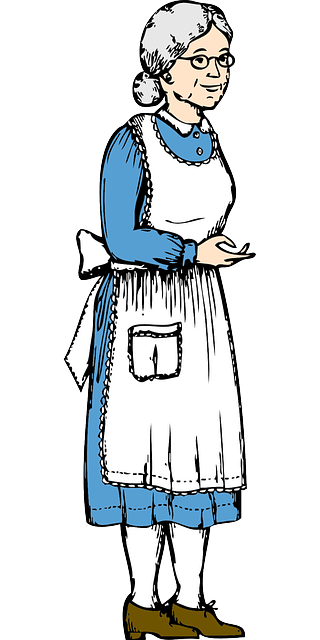
Grandmother’s Household Hints..

#847: Planning Christmas Dinner

Menu:

Prawn cocktail

Roast turkey, sausagemeat and apricot stuffing, chestnut stuffing, sage and onion stuffing balls, pigs in blankets, roast potatoes, mashed potatoes, roast parsnips, mashed swede, Vichy carrots, braised red cabbage, ratatouille, leeks au gratin, cauliflower cheese, Brussels sprouts with bacon and walnuts, peas, gravy, bread sauce, cranberry sauce, apple and orange sauce.

Christmas pudding with brandy butter, custard and clotted cream

I would be willing to wager a good portion of my pension that this approximates what at least some of you young things think you need to provide.

Well I’m here to tell you it’s unnecessary.

Simplify.

One: You. Do. Not. Need. A. Starter. Half of your guests will be too pissed to handle anything delicate, and none of them need their appetites blunting. We don’t want to be eating turkey until Valentine’s Day.

Two: Only serve what people will eat. Thus. Small helpings of turkey (breast meat only), a good handful of roast potatoes, twelve peas, as many pigs in blankets as will fit on the rest of the plate. Some gravy. The only exception to this being if you have guests from the colonies who will eat mashed potatoes.

Three: Nobody. Eats. Christmas. Pudding. Give them vanilla ice cream with a generous dollop of dried fruit you have soaked overnight in rum.
This will push even those who are not quite pissed yet over the edge and with only average luck they will fall asleep at the table, leaving the prosecco and mint chocs for you.

Result

Moonbeam Farquhar Metheringham IV’s review of ‘A Christmas Carol’ by Charles Dickens

This, for some obscure reason beyond one’s not inconsiderable intellect, is one of Mummy’s all-time favourites. She starts reading it on the first of December each year, carefully husbanding it so that she reads the last few pages on Christmas Eve – inevitably drunk and crying snottily. I have been a party to this inexplicable ritual for most of my life, and, until I reached adulthood, Mumsie was in the habit of sitting on the side of my bed and reading this to me in instalments. In retrospect, this may perhaps have coloured my perception of Mr Dickens’ slight little thing. However, we shall persevere – because discipline is good for the soul.

A Christmas Carol.

A Christmas classic.

Let us examine why.

In one’s estimation , his book taps into all the overused and overexposed ideas of Christmas sensibility. A major character called Scrooge. A major character notable for his meanness and lack of empathy…. Tell me how that is not jumping on the bandwagon of that name denoting meanness and lack of empathy. Yuletide ghosts. The deserving poor. A crippled child that is so sickeningly cute one almost wishes it would meet with an accident. The lack of originality in this thing almost beggars belief. And the story. The story is the apotheosis of predictability, it is the absolute nemesis of creative thought. Does it not glorify the mundane and deify that which is unbeautiful? Is it not the histoire of a plain old man with little to recommend him beyond his wealth? And by the end of this horrible little book is he not giving his wealth away? One. Does. Not. Comprehend.

In synopsis: An unpleasant old man meets some ghosts and becomes somewhat less unpleasant as a consequence. A story peopled with every overused Christmas stereotype the author could find.

Conclusion: Not for one of one’s exquisite sensibilities. However one must acknowledge its appeal to the undereducated, the maudlinly sentimental, the intoxicated, and those with an oleaginous attachment to an unrealistic ideal of Christmas.

Star rating: No stars for originality. No stars for narrative arc. No stars for one’s own literary tastes. However one must award this author many shiny bright celestial beings for his ability to grasp the populace by its collective scrotum and insert his scribbling into the conscious of a whole nation. One must bow one’s head in the face of such financial acumen.

Read it and weep tears of frustration.

Moonbeam Farquhar Metheringham IV

Adoring Fans can join my Facebook Group.

Grandmother’s Household Hints…

(Christmas version)

#43 The Christmas Cake

Conventional wisdom will tell you that you should have baked a fruit cake of the size and consistency of a breeze block sometime last January and that you should have been feeding it brandy weekly ever since. That you should have handcrafted marzipan from ground almonds and other ingredients too numerous to mention. That you should have spent many hours making Holly Leaves and Christmas Roses from sugar paste. And that your icing should be as smooth and hard as a frozen pond.

Pfft, I say. And again pfft.

Number one. Nobody eats Christmas Cake.

Number two. If they did it’s fattening.

Number three. Whatever…

But:

If you must make a cake, just chuck together whatever is your usual fruit cake recipe and shove a quarter bottle of rum in the mix. Buy a slab of ready rolled marzipan, ditto icing. Shove on cake. Sprinkle Maltesers, chocolate raisins, and dark chocolate buttons. Job done. If you can be arsed.

More sensibly, pop along to Waitrose and buy a (insert name of famous chef here)  thing. It will taste like shite but the neighbours will be impressed….


White Christmas


Minna was sitting on her grandfather’s lap. They had eaten supper and now they were watching the sky spit shards of ice onto the frozen fields.
“Gramps,” she asked softly, “what’s a white Christmas?”
“A white Christmas is one where there is snow on the ground.”
“Have you ever seen such a thing?”
“No, I have never. I’m eighty-four years old and I’ve only seen snow twice in my life.”
Minna thought for a long time, then asked. “What’s snow?”
Gramps grunted as he marshalled his thoughts. “It’s frozen rain.”
“Like hail and ice storms?”
“No. Not a bit like that. It’s white and it’s soft and it makes everything look beautiful.”
“I wish I could see that.”
Gramps rested his chin on her head. “I wish you could see it too.”
They were quiet for a long moment then he lifted his head and spoke again. “There’s another thing we have to talk about.”
Minna looked into his worried eyes.
“It’s about Father isn’t it? Father has to choose a new wife.”
“Where did you hear that missy?”
“Father came and sat on my bed the last time he was home and we talked.”
Gramps looked amazed and Minna giggled.
“It’s our secret, Gramps. Big strong Hunters aren’t supposed to talk to little girls. But Father said I could tell you because you would understand.”
Gramps gave Minna a big hug then he smiled down at her.
“Oh yes. I understand. I used to have secret talks with your Mama when she was a little girl. Now tell me what you think about Father marrying again.”
Minna wrinkled her forehead. “Does it matter what I think? If it doesn’t matter whether or not Father wants a wife, why would anybody care what I think?”
For a long time Gramps didn’t answer. When he did speak his voice was slow and sad. “It matters to me what you think. And I’m sure it matters to your Father.”
“It’s all right Gramps. Just as long as Father chooses well it will be all right.”

Winter wore on and Minna kept a smile on her face, but inside she wasn’t at all sure it would be all right. She had seen all the unmarried girls fluttering their eyelashes at Father. And she had heard their whispered conversations about her and Gramps.
“Be nice to the brat and the old man.”
“Give him a couple of strapping sons and the girl can be fostered and the old one sent away.”
“Smile at the fool.”
“Make him think you are as soft as the one that died.”
Minna listened and shivered, but she held her peace. Father was having a difficult enough time knowing he had to take a second wife without her burdening him with her fears.

It was nearly time, only days before the Yule Log would be lit in the meeting house, and Father would announce his choice of bride to the world. One girl appeared to have outstripped the others in the race to be that bride. Her name was Annelise, and the families thought her ideal. She was pretty, and clever, and her father was rich. It seemed not to matter that she was cold, and vain and cruel, or that her blue eyes grew as hard and icy as marbles whenever they rested on the child whose stepmother she hoped to be.

Christmas Eve, and Father only returned from the hunt a scant hour before the lighting of the Log. He bathed, and dressed, and Minna combed his beard and braided his hair. He kissed her, then smiled a wicked smile before swinging her up onto his shoulders and heading for the meeting house.

Inside, it was packed to the rafters with all the Families from across the valley. There was music and mead, and laughter. Minna forgot her woes as she and Father shared a sweetmeat purloined from the Christmas tree.

And then the chief of all the elders stepped forward. He spoke directly to Father.
“Hunter. Have you made your choice?”
“I have.” Annelise preened, but his eyes passed over her to where a sweet-faced young widow sat, with her infant daughter in a basket at her feet. He bowed very low.
“Ellath,” he said and his slow deep voice sounded very loud in the suddenly silent room. “Will you be my wife.”
“I will.”
The elder spoke, “Hunter and Ellath are here declared betrothed.”
Minna joined in the joyful congratulations with a full heart.

When Father said it was time to leave, Minna pulled on his sleeve. He bent to listen to her.
“You should stay, Father,” she whispered. “You should stay and dance with your betrothed. I will take Gramps home and make sure he gets to bed.”
Father laughed, but when he spoke it was as if he had a lump in his throat and he kissed her with great tenderness. “Go along then. Take your grandfather home.”

Minna and Gramps carefully negotiated the frozen street, Gramps had his stick and Minna carried a lantern held high. When they got indoors Gramps produced a small flask from one of the capacious pockets of his greatcoat, and a packet of squashy white marshmallows from another
“Chocolate,” he said proudly, “hot chocolate.”
Minna fetched mugs, and before long the two of them were in their favourite seat looking out onto the frozen landscape as they sipped their rare treat. Gramps turned the lamp down low, so they could better see stars in the navy blue of the sky and the skeleton trees in the moonlight. While they watched and sipped the clouds scudded in from the east and the landscape outside the big window grew dark. Just as Gramps was about to turn up the lamp again, a slice of moonlight illuminated the sky, and Minna could see flakes of whiteness drifting down to lie pillowy on the frozen earth.
“Oh look,” she sighed. “Snow.”

© Jane Jago 2017

Sins

You are old and the grooves in your skin
Speak volumes of cigarettes and gin
But you feel no blame
Not one inkling of shame
At the outward display of your sins

© jane jago 2017

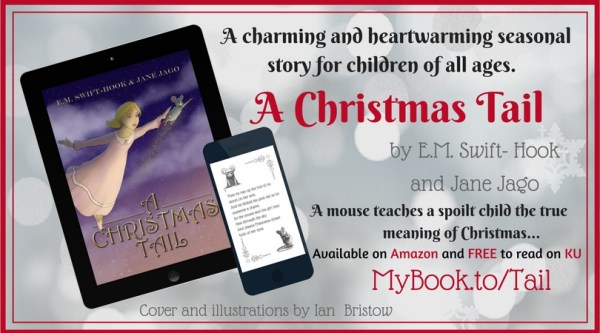
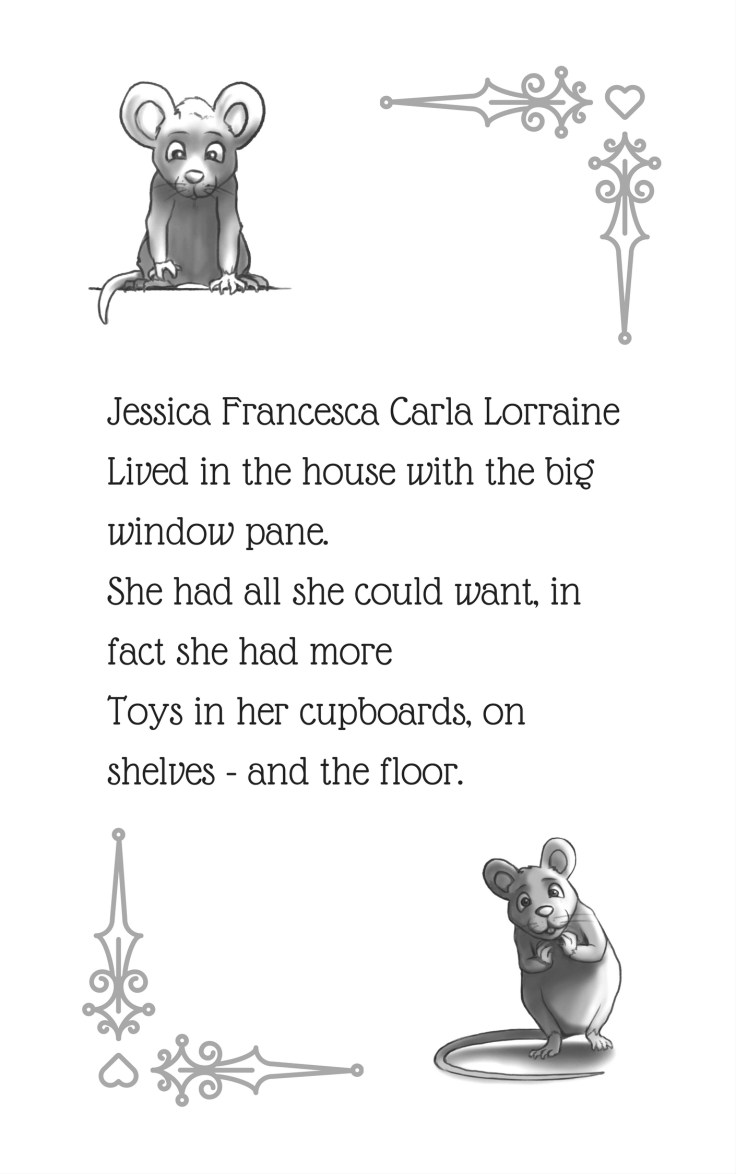
A Christmas Tail – a festive read-aloud for children and their grown-ups.

A collaborative effort between two authors – E.M. Swift-Hook and Jane Jago – and a brilliant illustrator, Ian Bristow. This is a story in rhyme that is perfect for reading out loud to children of all ages over the festive season.

ACT1

You can snag a copy of A Christmas Tail or read it free on Kindle Unlimited if you are a subscriber.

Start a Blog at WordPress.com.

Up ↑