Weekend Wind Down – The Crumbling Wells

THE CRUMBLING WELLS

The water in the crumbling wells is sweet, and in the time of our mothers’ mothers, women of incomparable grace fetched that water in the dawn light, balancing the ewers on their slender shoulders. But the world changes, and as time went on, water was piped to the village, after which the two-mile hike to the wells rather went out of fashion, with only a few of the older women clinging to the belief that well water tastes better than that from a pump in an a tap house at the centre of the village.

Nobody thought too much about the wells until one Sulieman, son of Sulieman, a handsome smooth-skinned, well-to-do young man of little conscience but some local importance, bought the field next to the wells from old Ibrahim. This young man had some entrepreneurial ambitions, and declared the wells his property too. He informed the village that from now on water would cost one Lek per ewer, and that he was going to build a bottling plant and sell crumbling wells water in the city. Even this would have bothered nobody much, had not one of the old women who still regularly collected the cold sweet water been the mother of the village headman.

To say she was furious was to understate the case enormously, and she berated her son as a coward for allowing such a thing to happen. He shrugged and did nothing, as men will. His mother carried on going to the wells every morning, until the day a crowd of hired bravos blocked her way and beat her with bamboo staves until her face was running with blood. For the first time in sixty years, Fatima returned to the village without her water. The whole village was in immediate uproar that such a venerable lady should be so mistreated. They forgot how spiteful Fatima could be in their anger at her bleeding face and limbs. She allowed herself to be fussed over and fed the villagers’ indignation with a show of uncomplaining bravery. It wasn’t until after dark that she gathered certain things together and began to work her malice.

The elders sent for Sulieman. He appeared in front of them with a somewhat truculent expression on his smooth, round face. To his surprise, no mention was made of Fatima’s injuries, instead he was told that as the owner of the wells he was responsible for repairing their crumbling brickwork. Until such time as the repair work was carried out to the satisfaction of the whole village no charge for water could be made. The young entrepreneur bridled, but the elders stood firm. They would fetch in a law writer from the city to enforce their ruling if they were ignored. Sulieman knew himself outmanoeuvred, but determined that he would not be beaten.

That night Fatima, and a lush-bodied young girl Sulieman had used and discarded, made their way to the place of the wells. They were there for some time.

Sulieman called in a family of well diggers from a neighbouring village. They looked at the wells and promptly declined the job. Three more groups declined the contract, before a family from many days’ walk away accepted the job unseen. They arrived at the wells and were obviously shocked by what they saw. They sat together on the dusty ground and pondered. In the end, they packed up their tools and left. Sulieman stood in the middle of the road and tried to stop them leaving.
‘You cannot go. You agreed.’
‘You didn’t tell us about the curse.’ Then the oldest of the well builders shut his mouth firmly and led the way back through the forest to his own village.

While all this was happening, many, many people decided they now wanted to drink well water and a steady stream of containers was filled every day. It started in the pearlescent light of dawn with the old women and their pottery ewers, and carried on all day as the more modern ladies fetched water in plastic containers balanced precariously on the seats of foul-smelling mopeds. Sulieman watched helplessly as his dreamed of profits slipped through his smooth, oiled fingers.

Greatly discomposed, he dipped deeply into his pockets and called on the services of a professional curse-lifter from a town many miles away. The old man arrived in a battered minivan, accompanied by two of his wives and a live chicken. He strode into the place of the wells with confidence writ large in every inch of his scrawny frame. He was back within two minutes with a white face and shaking limbs. He got back into the minivan and drove away. Sulieman never saw the man again, or his money.

After spending ten days alternately ranting and sulking, Sulieman did what he should probably have done in the first place, and made a visit to the holy man who inhabited a modest cave in the foothills of the great mountain two days’ walk from the wells. Of course, Sulieman didn’t walk, indeed the two-hour climb from the road to the hermit’s cave was almost too much for him and he reached the holy man on his hands and knees. He wasn’t there long, returning to his waiting jeep at great speed, slipping and sliding and snarling. His driver and guard both kept closed mouths and Sulieman sat biting his nails as the jeep sped back along the dirt road. Nobody cared to ask him what the hermit had said. Whatever it was it had dire consequences.

Sulieman’s luck went bad. His goats sickened, his fields bore no crops, his fiancé found somebody she liked more, and even his hair started to fall out. He stood this for one half of one year before calling a meeting with the village elders at which he apologised for any misunderstanding in the matter of the crumbling wells and withdrew all claim to the wells and their water. Then he packed a small bag and left the district never to return. Fatima burned the doll with his hair and fingernails in its belly, and life in the village returned to normal.

The water in the crumbling wells is sweet, and women of incomparable grace still fetch that water in the dawn light.

©️ Jane Jago 2016
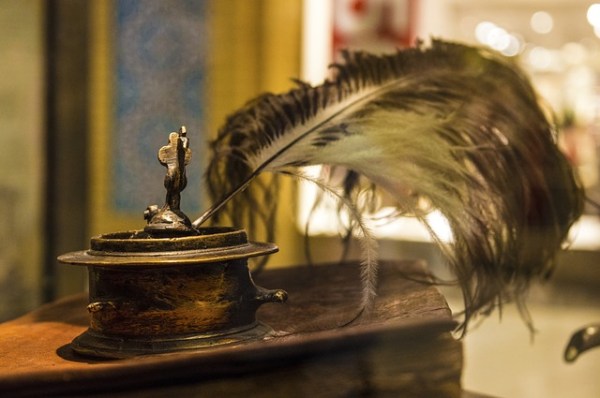
The Thinking Quill

Dear Reader Who Writes,

It is I, Moonbeam Farquhar Metheringham IV, here to induct you into the greater mysteries of the literary art. I am, of course, already well known to you as the much-feted author of  “Fatswhistle and Buchtooth”, which one kind reviewer once described as ‘unique’ and ‘unforgettable’ although much of the rest of the review is unrepeatable in polite company.

Mumsie made an interesting point over breakfast the other day. She had just put two more tablespoons of sugar over her frosted-flakes and added a generous dose of Tia Maria to her morning cup of coffee. I had been reading the paper and tutting over all those dreadful unwashing poor people who keep complaining about how unfair things are, when she said: “Don’t you think it’s really odd, Moons, that men get called heroes?”

Being polite I shook the paper vigorously to indicate I was reading, but Mummy was not to be dissuaded: “It’s odd cos Hero was a woman, right? In the myth – she was the heroic one who tried to save that Leander. So why are men called ‘heroes’?”

Knowing I would not be left in peace until I had proffered a contribution, I sighed and reluctantly peered at her over the table. “So why?” I asked.

“No idea. It’s just fucking odd. Maybe it’s a possessive ‘s’ in Hero’s?”

Needless to say, I made good my escape back to my writing cubby in the refurbished coal cellar just as soon as I had crunched my last mouthful of toast and marmalade.

I have to admit to not being so well acquainted with the female of the species. My education took place in the monastic gender-solitude of a school which snapped at the heels of Eton, Westminster and Rugby – and we usually had our faces trodden on by their students on the rare occasions our teams met on sports-fields too. So my main window into the wonderful world of womanhood has always been my beloved Mumsie and the women in books, TV shows, films – and some special magazines and websites which I study purely for research purposes.

Which is why today’s lesson for you my devoted disciples of the pen, is intended for those who, like me, are biologically unable to understand the mysterious feminine. It will give you much-needed guidance on how to write these other gendered humans as realistically as you write your men.

How To Write A Book – Lesson 19: The Write Way to Write Women

The first thing to remember, dear Male Reader Who Writes (MRWW), is that women are not the same as men in any but the most basic respects. Yes, like us they will acknowledge the lower levels of Maslow’s Triangle, but once away from the necessities of existence such as food and shelter, the feminine operates upon an entirely alternative agenda to the masculine.

To be brief and blunt – you will never understand women, they are a psychologically alien species. So don’t even try. Make your heroines the epitome of your self-conceived notions of femininity and you will not go too far wrong.

The recent trend to have a ‘strong, female, protagonist’ does, however, need to be addressed. This is very simple to achieve.

Rule One: She must be devastatingly beautiful.

Rule Two: She must be able to physically beat up men.

Rule Three: She must be rude to everyone – but especially to men.

Rule Four: She must be selfish and ambitious and not care who she hurts to get her way.

Rule Five: She must do a job that is male-dominated and do it well.

Rule Six: She must have no feminine attributes except large breasts and high-heels.

Rule Seven: She is probably a Lesbian.

And with that, amigos, I bid you adieu.

Moonbeam Farquhar Metheringham IV

Adoring Fans can join my Facebook Group.


The Meeting from ‘Charon Unguarded’ by A.H. Johnstone

Charon was once the Ferryman of the Underworld. Now he’s the doorman of a disused office block. If only the old Gods hadn’t lost that drunken bet all those centuries ago, things would be very different. For a start, Ragnarök probably wouldn’t be on its way.

The Meeting.

Charon swore. The monitor he had been battling with for the last hour had flickered off yet again. There was a pop from under the desk followed by the smell of burnt plastic. ‘Typical.’ He groaned as he crawled under the desk and fought with the mass of wire. Eventually, he found the correct lead and followed it to the power socket. The plug had melted. Struggling to his feet he picked up the telephone and hit one of the autodial keys.
‘Yes. It’s the front desk. Again. Put me through to IT please. Quick as you like. It’s not as though any of us have work to do or anything.’
He waited for ten minutes on hold, listening to a very tinny, off-tempo, instrumental version of Rhinestone Cowboy. It played on a loop, accompanied by Charon grinding his teeth. A curse on the demon who came up with this damnable tune… A crackling line broke him off mid-thought. Finally, someone answered. The voice at the other end was muffled.
‘This is IT. I hear you have a problem. Sorry to hear that. Can I ask you the nature of your problem, and I will put you through to the right department?’
‘For the tenth time this week, you mean? You keep a record of calls, don’t you?’
‘Yes, sir, but it might be a different prob—’
‘For the last time, my security monitor has finally burned out. I’ve been chasing you lot for new ones for weeks.’
“I’m sorry to hear that, sir. Would you like to visit our website and complete the customer satisfaction survey?’
‘No, I would not! I work for this company, I am not a customer!’
‘Sorry to hear that but—’
‘I don’t want to hear how sorry you are! I want it fixed or replaced, or whatever in seven Hells you lot bloody do all day! Today!’ he snapped.
“Well I’m sorry but we have to prioritise our attention where it can be most profitably invested’ he whined. It sounded almost like he had a peg on his nose, ‘maintenance of hired equipment is not our problem…’
‘Not your problem, huh?’ he sighed, ‘Exactly what is your problem? I mean we appear to have an IT department who won’t do any IT. At least not beyond telling me to turn it off and back on again. When you can eventually be pressed to send an engineer, there is never one available on the day and when they are they never appear. You do seem to have plenty of your ‘Sorry you were out’ cards which magically appear all by themselves.’ The voice, however indistinct, seemed extremely familiar to him. Charon found himself flexing an otherwise innocent biro to near breaking point. He was about to hurl it across the foyer before he realised he’d only have to go and get it. The voice probably knew him too and was, therefore, doing this on purpose and probably found
it extremely funny. Should he keep it to himself?
‘Oh, bugger this!’ Charon hadn’t meant to say that out loud but centuries of keeping to himself had led him into a habit of thinking aloud or rehashing conversations he had wished had lasted longer, just for the company.
‘Sir! Please moderate your…’
‘Hermes? Is that you?’ He hadn’t seen his friend in nearly a century. Since being dragged from the Underworld to the back of beyond to guard the foyer of one officially disused office block after another, he hadn’t seen much of anyone. It was dull, but he didn’t complain. Who would he complain to?It paid and there was relatively little actual work to do. Weekends off too. There was a clatter at the other end of the line.
‘What?’ his shock was audible, ‘How do you know my name? Who told you?’ Paranoid as ever; some things never change.
‘It’s me, Herm. It’s Charon. How did you end up on an IT helpdesk?’ he laughed.
‘Charon? Well, I’ll be damned!’

Charon Unguarded by A.H. Johnstone is out tomorrow.

A Bite of… A.H. Johnstone

Q1: If you could invite any mythological character to dinner who would it be and why him/her?

It would have to be Loki.

He’s just so deliciously ambiguous that it would be truly irresistible to get to know him as a person. Throughout the poetic Edda he is constantly getting the gods in and out of trouble with his schemes and ideas.

Q2: What is the best thing you ever did on a Viking re-enactment?

The kind of re-enactment I do is living history which involves a huge amount of homework because I am demonstrating to the public and have to be able to explain what I am doing and why. I have also had to learn a craft (in my case a working knowledge of 9th century textiles techniques: spinning, nalbinding and tablet weaving and more to go). I have also developed a three-dimensional character and backstory based on my chosen era and region: 9th century Iceland.

 The steepest curve, but by far the most fun has been the combat skills. While I am not the greatest on the battlefield – I die a lot – the weapons training has helped me develop a bond with a truly great bunch of people. It takes trust an communication in order to do what we do an make it look good for a live audience. This is where I learned the hard way that it is a bad idea to hold a shield at chin level and charge an opponent who has seen you coming and had time to brace. That said, shield walls are fabulous for de-stressing: there is nothing like hitting something hard with an axe to burn off angst.

Q3: Mead or ale and why?

Or? What is this ‘or’?


When not swinging her axe at Viking re-enactment, A.H. Johnstone is busy experiencing silent dismay over the lack of honest pillaging in the world. She would dearly like to see an end to poverty and abuse and has wielded her fundraising axe in support of ‘Responsible Charity’ several times.

It is her fond hope that education will become free for all as the opportunities for Viking raids are slim and don’t offer much of a career choice for modern school leavers.

Her first book Charon Unguarded is out tomorrow. You can read an extract here.

You can follow her on Twitter, Facebook,  Google+, her website and  Goodreads.


Coffee Break Read – Who…

When the soldiers threw him into the cell, he broke his forehead on the low ceiling and scraped his knees on the harsh stone of the floor. Having little option he crawled forwards. Suddenly the ceiling opened up and he found himself in a room filled with light. There was not enough headroom for him to stand, but he was sure he could sit in comfort without hitting himself on the roof.

He blinked, unused to sunlight as he had been kept in total darkness for however long they had held him. Except for his time in the hands of the divulgers, but their place was lit only by the flames from the forge in which they heated their instruments of torture. He looked down at his, now nailless, hands and wondered what they would with him now.

As his eyes grew accustomed to the light he saw he was not alone. An old man sat in a bench in front of the barred window. With his face raised to the sunlight.

As if he felt the weight of the newcomer’s glance the old man spoke. “Be welcome, if such could ever be appropriate in this place.”

The young man struggled to find a reply then he asked the thing that was at the top of his mind. “Why is it light here? I have not seen light for many days.”

The old man turned his face so the black holes that had once been his eyes were visible.

“Refined torture,” he said gently. “When you can no longer see the sun or the sky, what is more painful than knowing it is there before you.”

“So why have they thrown me in here with you? What benefits them to give us companionship?”

The old man sighed. “Who are you that you are in the hands of the divulgers and their cohorts?”

“They say I am the masiach. On the day of my birth a star burned in the east…”

The old man chuckled. “It has been a long time since I had eyes to see, but are there not always stars in the sky?”

“Aye father, there are, but a new star?”

The two men were silent for a long time. Then the younger spoke. “How came you here?”

“Somebody thought I could see the future, so they brought me here and took my eyes just in case.”

The young man stared at him. “And when was that?”

“I think, as the days are numbered outside this place, it was thirty or so years since.”

The young man fell back against the rough-hewn wall of their shared prison. “Do you tell me I am fated to spend the next thirty years within these walls?”

“Oh no, child, not you. They will crucify you tomorrow.”

© jane jago 2017

Glad

I am old, but my life’s far from bad
I have so much make me feel glad
Like the walk I just took
Or a shiny new book
Or just grabbing what fun’s to be had

© jane jago 2017

Reviews of ‘The Rose Thief’ by Claire Buss

The Working Title women offer their thoughts on The Rose Thief by Claire Buss.

This is an engaging romp whose wild inconsequentiality had me in a little bubble of laughter throughout. It’s an avowed homage to the late, lamented Terry Pratchett, but is none the worse for that. Don’t get me wrong, this isn’t ‘fan fiction’ by any stretch of the imagination. The author takes us on a journey of her own making, peopled by a cast of the odd, the weird, the insane and the downright creepy – all of whom, one hopes, grew from her imagination. I’d hate to think the poor woman knows them all in the ‘real’ world.

To précis. Somebody is stealing the Emperor’s roses.  This is Not A Good Thing – and Ned Spinks and his band of thief-catchers are tasked with apprehending the thief.  Or else.

The story jumps along happily, although I did sometimes think plot got a bit sacrificed for jokes. But. Hey. Jokes, and funny ones of those.

The writing is crisp and clean and my only caveat there is that I did, once or twice, get a bit muddled by exactly whose head I was in at any given time. Although that’s only a minor blot on the escutcheon of a truly talented writer.

I very much enjoyed this book and I really hope Ms Buss has more of the like in her locker. Four and a half stars rounded up to five because I’m a Pratchett fan too. Highly recommended.

Jane Jago.


Sir Terence Pratchett would Approve!

‘Surely a state dinner would mean all dignitaries so not only Lower Circle and Stalls but all the Guild Heads as well.’

The roses in the Emperor’s garden are being stolen one by one. That means the Rose of Love that someone stupidly imbued with all the love in the world, could be next. And if the Rose of Love is taken then all love would fade away too.

Utter disaster.

Enter Ned Spinks and his trusty band of Thief Catchers – a sprite called Jenni, a firefly called Sparks, a wood nymph called Willow a slacker called Joe and even a mermaid, Pearl. Together with friends who are allies, but might really be enemies and allies who are allies and maybe friendly – and enemies who have to be allies and might one day be friends, the Thief Catchers of Rosehaven set out to catch the Rose Thief.

‘Ned looked around for Jenni, she was kissing a frog. He sighed. Ten to one the frog was a prince from some far flung land who had upset the sprites.’

I loved this book. It has humour, adventure, romance and fantasy and the same kind of warmth that Pratchett achieved so effortlessly. The characters are fun and worth getting to know, the setting is marvellous and unfolds like a flower as the story progresses.

The humour is both obvious and laugh-out-loud and subtle, in either a slowly spreading smile or even a muted groan kind of way. It plays on fantasy tropes and it also brings in real-world oddities – such as the way the place officials are named after seating in the theatre.

‘Sometimes it was comforting to be around what you knew and right now Willow needed root, trunk and branch to comfort her. Sparks stayed in the office. He was too buzzed to go outside right now.’

To my mind, this book has only one flaw. The head-hopping. The story is told from Ned’s perspective – except when we hop into the head of whoever else at any moment and with no warning – twice in the same paragraph even. Sometimes the humour of the moment carries it, but often it just spoils the flow of the book and on most occasions, IMO, it added very little to the narrative.

That one issue aside this is a perfectly wonderful book and I can not recommend it highly enough to those who enjoy Pratchett-esque fantasy.

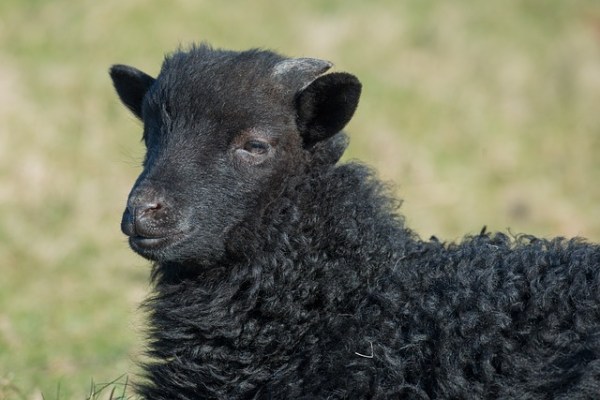
Baa-Baa

Baa-Baa black sheep, have you any wool?
Yes, my fleece is soft and thick, and very warm and full.
I also have a mind I keep, within my ungulate brain
It helps me think and helps me know and means that I feel pain.
And my eyes are very good at seeing what I see,
So I recognise your face – but don’t think you do me.

Research into a sheep's ability to recognise faces. "The results show that the animals' face-recognition abilities are similar to those of monkeys, apes - and humans."

Coffee Break Read – Children with swords and pistols…

Outside it was dark and the air was cold. Ralik took a moment to find his charge since Zarengor was braced against the wall, his lean body almost invisible against the rough stonework.
“Don’t you have a home to go to?” The Black Vavasor’s voice sounded weary. “I am old enough to be out on my own, you know.”
Ralik said nothing. There was nothing to say. It was easy enough to understand the level of frustration that the other man had to contend with.
“Don’t you just love these Harkerans? They think themselves so civilised and superior – regard war as unreasonable, think a man who can write poetry or design a building is of more value than one who can use a sword, they regard their women as their equals in all things and even give legal rights to their slaves and their animals.” His voice was very slightly slurred betraying the amount of alcohol he had consumed. “But when it comes to good old-fashioned affairs of the heart, they are as quick as the next man to leap to the wrong conclusions and draw their blades.”
Ralik watched a group of young Harkeran noblemen leave the inn. They were obviously looking for something, or someone and two carried lights.
“It is getting late, Honoured One,” he said carefully. Zarengor, when drinking, could be persuaded but never pushed.
“Then you go home,” the other man suggested, his voice quite friendly, “I was thinking of finding another Harkeran matron of high standing to ravish, your Castellan’s wife perhaps.”
Ralik stiffened at the insult but said nothing, knowing it was deliberate, knowing Zarengor was goading him and knowing also it was the frustration and the drink that spoke through him. The Harkerans were getting closer and the mood Zarengor was in, it could easily end with blood on the street – their blood.
“Death of the gods, Ralik, what does someone have to do to get under your skin?” Zarengor sounded amused more than irritated.
The Harkerans had heard the voice if not the words and were moving now with intent. Ralik moved closer to his charge, who seemed to notice the threat for the first time and groaned aloud.
“Oh joy, children with swords and pistols. Just what I needed to make my day complete.”
The five young men, none of whom could have seen more than twenty summers, moved to confront them, throwing the burning torches to the ground and two of them had drawn swords, a third rested his hand on the butt of a finely crafted pistol. Zarengor still rested against the wall.
“Tell them I’m not hungry, Ralik, I have eaten enough babies today.”
“I’m more a man than you are, butcher,” the ring leader called out. Zarengor laughed briefly.
“Of course you are, that’s why you have your four friends with you. Brave child, go home to your mother and suckle some more then you might grow up big and strong one day.”
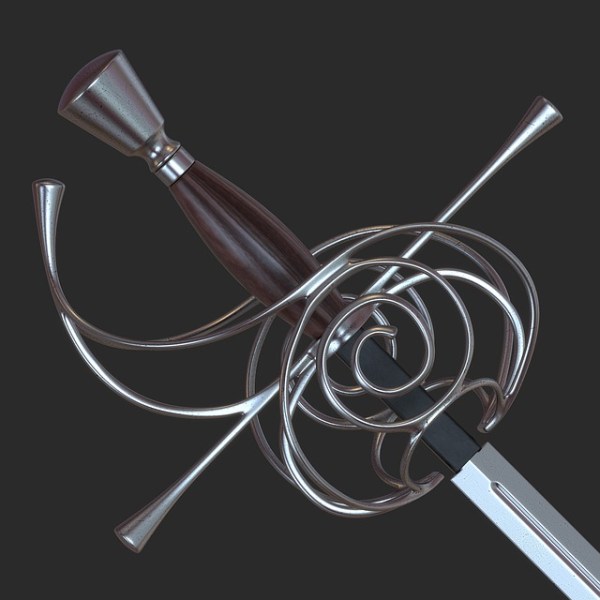
The Harkeran made a sound of incoherent fury and launched himself forward. Zarengor barely seemed to move away from the wall, his sword suddenly in his hand and cutting down through the youngster’s guard, drawing blood on his shoulder. The Harkeran stepped back, but found he could not escape the blade which seemed to be everywhere. Then as his sword went flying and he tried to jump aside, Ralik’s own blade came up and caught the death cut at the last moment and moved ready to parry again as the deadly blade disengaged.
“He is only a boy!” Ralik said the words urgently and ungently, part of his mind furious at Zarengor for allowing himself to drink to the point of such judgement loss and for the rest, afraid that he himself might now become a target for the feral sword. But the Vavasor seemed to come to himself, hesitating to attack through Ralik, and the youngsters took advantage of the moment to escape, disappearing into the darkness at speed.
For a moment, the two men stood facing each other, swords in their hands. Ralik waited with the point of his own blade towards the ground in a defensive gesture. He could not afford to surrender any advantage, Zarengor, drunk or not, was by far the superior swordsman. Then the Vavasor sighed and lowered his sword slowly.
“We should find the ponies,” he said heavily, sliding the blade back into its sheath. Ralik allowed himself to relax and stepped back carefully before putting his own sword away.

From Transgressor Trilogy 2: Times of Change by E.M. Swift-Hook.

Anthropology

I am old and I make no apology
Because I mistrust anthropology
If you study our race
You’ll get egg on your face
You should never mix booze and biology

© jane jago 2017

Start a Blog at WordPress.com.

Up ↑