The sun that shines upon you warms your heart,
The icy blast of cold tears you apart.
The ups are always followed by the downs
The smiles always falter into frowns.
But yet the opposite is also true
And holds out hope when all is looking blue.
You know that feeling, sure as you know pain,
What goes around just comes around again.
You take each day with all you’ve got to give
Push past the grind and find a way to live.
For everything that happens has its end
And time may often seem a fickle friend.
When things go well you’d stop the hourglass
But nothing breaks the law: ‘This too shall pass.’
Weekend Wind Down – The Dog and Onion
Less than an hour later Dai and Bryn were drinking in a downmarket dive across town from the Titus insulae. The Dog and Onion was a taberna in what constituted the ‘bad’ side of Viriconium. It shared a street with several nightclubs and most of the local residents could be assumed to be the kind who were not going to be earning their living by methods that were ethical even if they were occasionally legal.
Heads turned to see who had come in and one or two people quietly stood up and began making their way out. Dai was pleased to see that Bryn was getting well known in this community. His own status was probably too far beyond the horizon of these individuals’ social vision for them to know who he was by sight. Besides, as always when he was out doing groundwork, Dai had dressed down.
They took a seat by the main door and Bryn ndded to the woman who was serving behind the bar.
“She’s half of what counts for organised crime in this city. Aoife Broanan. She and her daughters.”
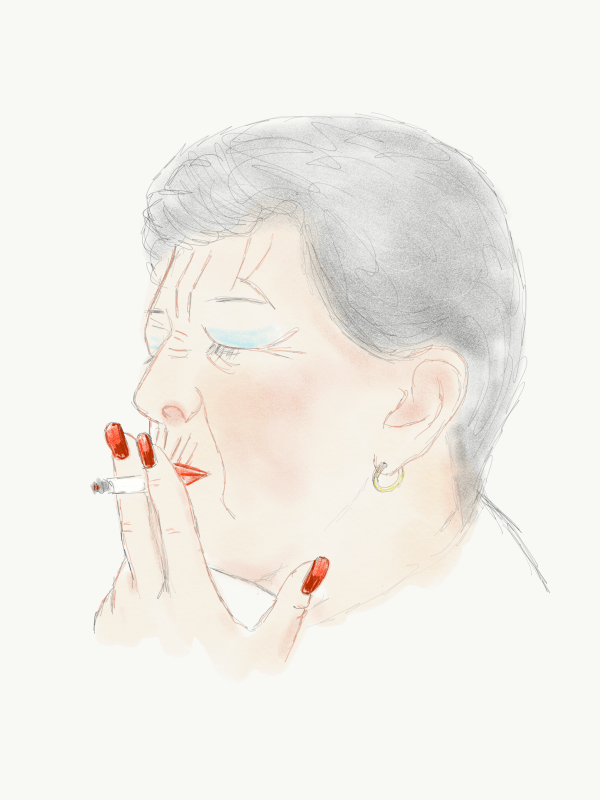
Aoife was in late middle age, overweight and with the hard eyed smile that Dai knew all too well from his years fighting crime in Londinium. She must have seen them arrive because once she had finished with the customer she was serving she came over and sat at their table. She glanced at Dai in brief assessing appreciation of his good looks, then fixed her attention on Bryn.
“Nice to see you SI Cartivel, what you doing here ruining my trade today?”
“Looking for someone, Aoife,” Bryn told her and showed her the three faces on his wristphone.
She pursed her lips and scowled. “Never seen them before. Sorry, can’t help you. But drinks on the house for all vigiles as usual.”
A moment later she was stalking back to the bar with a grace that seemed to belie her bulk.
“That went well,” Dai observed.
Bryn beamed back at him. “Better than I hoped.”
“I suppose it is good to have low expectations, then you are never disappointed. Shall we go?”
“What? And miss a free drink? We vigiles have a reputation to keep up Bard. Start turning down free drinks and next it’ll be no free sandwiches at lunchtime.”
Dai wondered what he was missing, but years of working with Bryn as his right hand had taught him to trust that there was something more here than he could see. So he sat back in his chair and smiled.
“You make a very good point. I hope the wine they have here is worth drinking.”
“The brandy is better. Local stuff.” Bryn’s eyes held high humour, but his face was straight. And Dai had to admit there was more than a touch of irony to think that this den of thieves was selling brandy produced by his own brother.
The drinks arrived, two shots of brandy in deep bellied glasses, brought over by Aoife in person and she set the tray down with a brief smile at Dai.
“Not seen you in here before, but if you come by again on your own sometime know you can have a warm welcome.”
“Now, Aoife, don’t go corrupting more of my vigiles,” Bryn chastised her. The woman turned her smile to embrace them both then winked and went back over to the bar. The brandy was indeed recognisable as Llewellyn produce, albeit one of the cheaper distillations. Bryn drank his in a couple of quick swigs and got to his feet.
“We’ve not got all day, you know, need to at least look like we’re making an effort to find these people. The Submagistratus is not going to be a happy man if word gets to him we’ve been lazing around in here.”
Dai downed the rest of his drink in one and followed Bryn out of the taberna and back onto the streets of Viriconium.
“So what was that all about?” Dai asked as they were getting into their all-wheeler. Bryn grinned at him and reached into a pocket to pull out a beermat decorated on one side with a local brewery’s logo and flipped it round so Dai could see the other side where the printed image had been pulled back to reveal a neat hand-blocked address.
“I think your baby blues touched our Aoife’s heart, Bard.” Then he ducked to avoid Dai’s fist.
An extract from ‘Dying for a Home’ from The First Dai and Julia Omnibus by Jane Jago and E.M. Swift-Hook
White Frost
The first white frost awoke
To beauty, flowers dead and iced with lace
As overnight the days of autumn
Died. And winter took their place
The first white frost bedaubed
The trees with silver shining bright
And round our feet the sucking mud
Grew crisp, and turned from dark to light
The first white frost awoke
To beauty, nature as we walked
And all about our heads our voices
Misted as we talked
The first white frost, a harbinger
Of winter’s freezing bite
Made us lift our heads to to glory
And our hearts to feel delight
Moonbeam Farquhar Metheringham IV Reviews ‘Dying to be Roman’
Duty is not a popular concept nowadays. It is usually viewed much as the albatross around the neck of the Ancient Mariner, a heavy burden which must be fulfilled if one is not to be crushed by guilt. That is certainly true for oneself when contemplating the growing pile of books my students and others have sent me, asking me to cast my eyes upon pages of pallid prose and turgid tropes so as to bestow even the merest flutter of words in a review.
If you are one such, awaiting my good offices, be sure I have not forgotten you, whoever you are and your book will be quite safe for years to come in my keeping.
However, there is one duty read I find myself unable to escape. A mercifully thin book produced by the cohabiting creativity of the two dreadful females whose blog I so kindly support by allowing them to host my words free of charge. I was poorly repaid for this act of generosity by being presented with a copy of their novella, with the unspoken expectation that I should review it.
Review of Dying to be Roman by Jane Jago and E.M. Swift-Hook
What an appalling fiasco!
To begin, we have a setting which is in the modern day (indeed, with tantalising hints of futuristic devices and transport), but then we are also assaulted by inaccurate Latin, as the rather ridiculous premise of the tale is that Merry England is not English – it is a mere province of the still existing Roman Empire. As if!
I was so shocked and appalled by the idea that anyone could cast aside the entire glorious history of my nation and substitute instead a shallow national grave on the ebbing tide of civilisation, that the story itself seemed barely to matter. Something about athletes being murdered and fish sauce…
Avoid at all costs.
Duty called, I have answered.
One star for a clever-sounding title.
Moonbeam Farquhar Metheringham IV
You can find more of IVy’s profound thoughts in How To Start Writing A Book courtesy of E.M. Swift-Hook and Jane Jago.
Jane Jago’s Drabbles – Four Hundred and Two
Anna pushed the last laughing revellers out into the rain.
“Why does Mum have to shove them out?”
“Because they won’t start a fight with me.”
As if to prove a point, the sound of singing turned to swearing and heavy blows.
Jonah opened his mouth, but whatever he was going to say was drowned out by a cacophonous snore from what looked like a bundle of rags in the corner.
“Leave him,” Jonah said. “He’s nowhere else to be.”
And so it was that the old year went gently into the darkness beside the comfort of a log fire.
Coffee Break Read – Flash in the Pan
It was bitter winter when Father returned from the city with yet another painted whore on his arm. Bunyan and Bennifer eyed her shyly, but she was certainly not built of the ilk that notices a seven-year-old boy and even less his sister.
It was late morning when Father came into the warmth of the kitchen to find his son rolling out the dough for ginger biscuits. The man snarled, but before he had chance to do more than curl his lip Grandmother speared him with a glance.
“Do you perhaps wish to take your children and move elsewhere?” Her voice was sugar sweet but the threat was nonetheless explicit.
Father shuffled his booted feet, but he had imbibed some hot spiced wine and was feeling unusually brave. “Should he not be outside with the other boys?”
Grandmother made a clicking sound with her tongue against her teeth.
“Grow up, man. It’s beyond cold. Even the Sergeant at Arms is inside this morning.”
Father seemed to shrink into his cotte like an eel into the mud of the duckpond. Then he lifted a shoulder.
“I see I have been remiss, I shall have to ask after his progress with proper men’s tasks.”
“You just pop along and do that,” Grandmother sneered, “Bunyan is beyond his years in all the manly pursuits, as you would know if you stopped drinking and whoring long enough to take notice.”
For a moment Father eyed his own parent with something like dislike, then he lifted his shoulders in a gesture of defeat. To Bunyan’s great surprise, Grandmother stepped over to him and held out her arms. Father dropped his head on her bony shoulder and held on for a moment before stiffening his spine. Then he did something even more surprising, he reached out and ruffled his son’s chestnut curls.
“Never mind, boy,” he spoke with a rough kindness Bunyan had never heard before. “It’s none of your fault.”
Then he was gone, leaving a man-shaped hole in the kitchen air.
The children looked at Grandmother with their mouths agape. She smiled albeit grimly, and wiped a furtive tear.
“He was a fine man once. Before your lady mother died.” She made a visible effort to cheer up, but Bunyan felt that his father had a great deal to answer for.
Some hours later, with the baking done and the kitchen scoured. Bunyan and Bennifer sat at the table with mugs of foamy milk and gingerbread biscuits.
“Look Bun I made this one like Father,” Bennifer put one pink-tipped finger on a gingerbread man with a beard and fur-trimmed cotte iced on its brown body. Bunyan picked it up and stared, still feeling unsettled by the near row and Grandmother’s silent tear. He smiled before he snapped the head off the gingerbread man and thought, that’ll teach him.
Life in Limericks – Twenty-Nine
The life of an elderly delinquent in limericks – with free optional snark…
When you meet someone who’s talking crap
With full psychobabble and pap
There is nothing to say
So just walk away
Or else you might give them a slap
Coffee Break Read – Lethal Beauty
Winter was the bejewelling of Temsevar, its crystalline magnificence turning even the most sordid and mean peasant’s wooden hovel into a glittering palace of diamond. The snows softened the harshness, smoothing all into a glorious billowed largesse of white. From every branch and twig, every roof and casement, every eave and doorway, came the glitter of silver icicles, their growth arrested every night and scarcely allowed under the scant warmth of the red sun each narrow day.
Every ugliness was made mild by the glory of a shimmering white crown, every roughness made smooth and the uneven made plain. The winter was levelling, but it levelled in a way that paid vast tribute to the might of the elements. Rich and poor alike were equal before the onslaught, for both could share in the splendour which outshone the most regal opulence of the greatest noble. To watch the sunrise, blood red over the virgin white and silver landscape, washing it with a mystical ruby glow, was to be awed and left with wonder. To trace the pearlescent shimmer of the twin moons over the snow, where the whiteness caught and reflected back to the darkened sky the moist brilliance, until even the night might seem to dazzle, was to feel one had walked, waking, in a dreamscape or broken through to some celestial realm of deity.
But the beauty, if free, was also lethal. The cold wore down the resistance of the weak and made them prey to illness or starvation and the frozen ground would not open to bury the dead, who were burned in high pyres on the ice, in batches like cakes.
Here the rich and the poor parted company, for the wealthy had portals against death in the cold. They had piles of wood to burn, stores of bottled, dried and salted food, they had flour to bake with and flesh to cook. Not for them the privations of starvation in the snow-stricken land. A house could be counted wealthy by the fire that burned in its hearth, driving back the demons of cold and darkness. Even the meanest hovel that could light a fire all day was accounted rich when the chilling shroud of snow and ice descended.
It was in the winter that those who were free-born and poverty-stricken would envy the enslaved. For, worth money and offering labour, even the most meanly treated slave could expect to be kept warm and fed through the White Moons, where their free-born cousins could hope no more than that this winter might be light and their meagre stores of food and fuel might not be gone before the thaw. What value was freedom when the cost was one’s life or the lives of one’s children?
So winter was the glory of Temsevar and its greatest influence. Without it, perhaps the slave economy might have evolved and changed, but with it – and the utter dependence it brought of the weak upon the strong – the frozen arms of ice which embraced Temsevar for two-thirds of the year, also embraced the culture and values of its people, freezing them into patterns as cold and merciless as the brutal winter itself.
The ice cracked the marrow from the bone of the planet, riving rock and stripping life from the land, animal and vegetable. The rivers froze solid and the seas slowed as if sleeping and then surrendered to the embrace of ice. Only the hardiest in nature could survive and most of the larger animals only lived by entering the deep sleep of hibernation through the worst of the cold moons. You would not see tizarts playing in the snow or find therloons leaving ice-tracks under the twin moons.
Most people dreaded the onset of winter as much as they dreaded the onset of old age. For the annual revisiting of the Great White was a similar experience – the pace of life became slow and painful, cold and bleak. In the great Halls, poets would pass the wine, mulled with the herbs and berries of the autumn and sing with lysigal of the great deeds that had been done that summer and would be contemplated the next. But elsewhere, it was as though the planet slept and its people dreamed beneath the alluring counterpane of snow, fringed with its tassels of ice and embroidered with frost.
From Dues of Blood, the third book in Transgressor Trilogy by E.M. Swift-Hook.
New Year’s Limerick
So why must they all sing ‘Auld Lang Sine’
Whilst so overindulging in wine?
And why when they’re built
for a suit, wear a kilt?
When jeans would be perfectly fine…
Grandmother’s Household Hints for a Successful New Year’s Eve!
With Christmas over you might assume it safe to stick your face back up over the parapet.
Wrong.
When your finances are at their lowest ebb, and your face and figure are showing the ravages of Asti and chocolates the new year and its attendant horrors sneers at you from the pages of the calendar emblazoned with inspirational quotes that his mother bought – meaning you can neither throw it in the bin nor deface it horribly.
However. I digress.
The best advice is to be anywhere but at home. Sadly that isn’t going to happen. And when your dearly beloved suggested inviting a ‘few’ folks around for New Year’s Eve you should really have pinned him down on the word few.
So – you have just discovered that ‘a few folks’ consists of the rugby club, the darts team, his running buddies and most of the local Young Farmers. Unfortunately, this doesn’t constitute grounds for justifiable homicide (or divorce)…
What to do.
After you finish kicking his ass, make him empty the garage and borrow his Aunty Betty’s caravan awning. This party is coming nowhere inside your house. Get straw bales for seating. Hire a couple of horrible portable toilets and some space heaters. Get the ancient ghetto blaster out of the attic. And dress warmly
Catering should be basic.
Booze wise offer only beer. Anybody wanting anything else can effing well buy it themselves.
Food? Tempting though it is to go down the route of crisps, nuts and the sweets nobody likes from the selection boxes this is a dangerous way to go .
Better by far is to construct a huge vat of stew with the leftover turkey and as much root veg as you can blackmail the husband into peeling. Vegetarians can be catered for with a bean pot of equally large proportions. Serve in paper bowls with plastic spoons and huge chunks of bread.
Job done. Zero washing up and enough stomach lining to prevent alcoholic poisoning, drunken orgiastic behaviour, or the annual drunken brawl…
A final word of warning.
Let nobody in the house or you will discover said person asleep under the stairs on about January 5…